
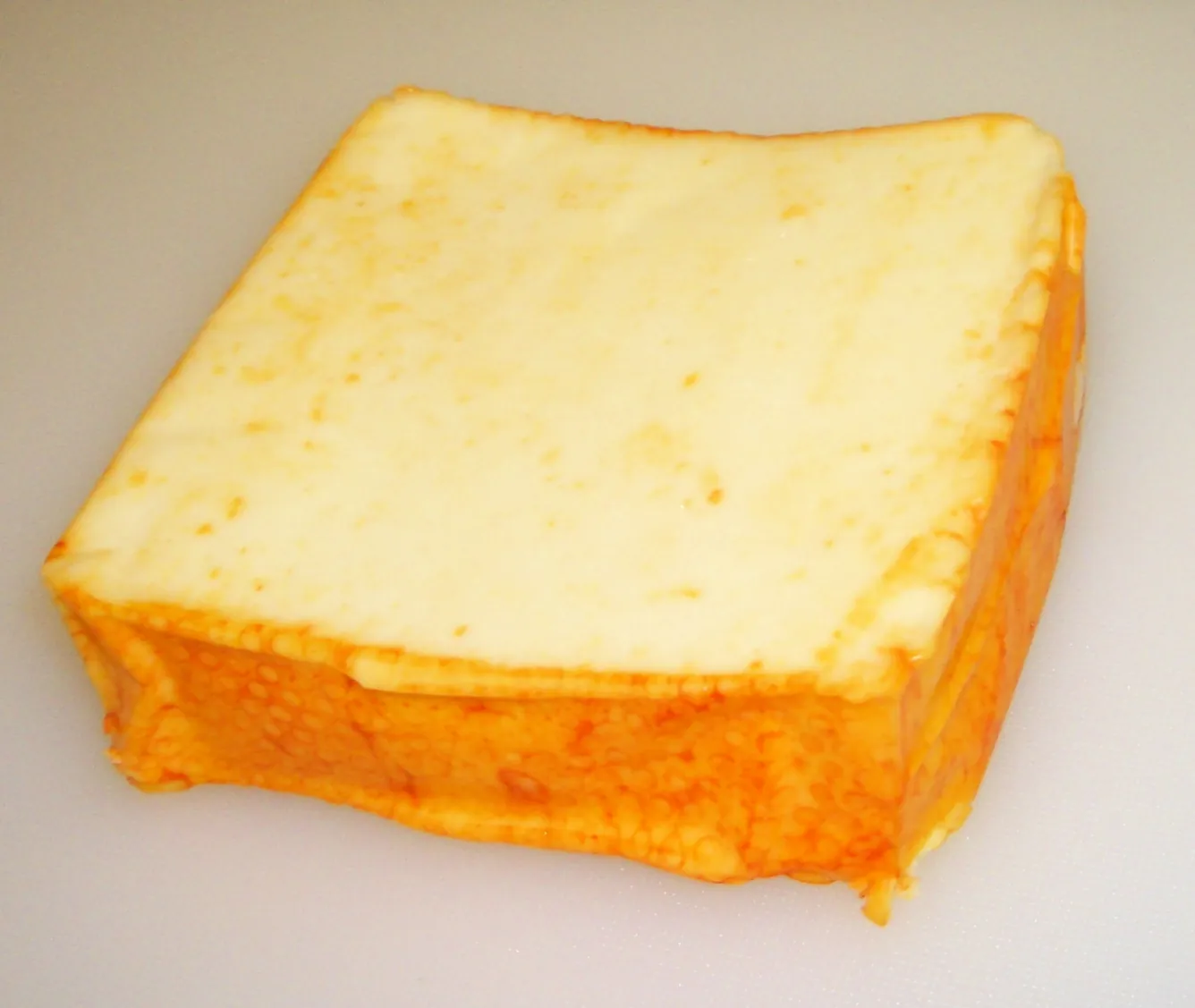
In August 2026, the Bureau of Labor Statistics put the average price of processed American cheese at $4.75 a pound and natural cheddar at $5.98, so a pound of either costs well under $10.
Price per pound is only half of value, though. A cheese is cheap when it costs little per use: sold in a big piece, slow to spoil, and strong enough that a little does the job. That is how feta, Swiss and a wedge of Parmesan earn their places below.
The cheapest cheeses compared
This table compares the cheapest cheeses by why they cost less, the smartest way to buy them and what an ounce delivers, using USDA nutrient data.
| Cheese | Why it is cheap | Buy it as | Protein per oz | Sodium per oz | Best for |
|---|---|---|---|---|---|
| Processed American | Lowest price per pound in BLS data | Slices or a loaf | 5.1 g | 474 mg | Burgers, grilled cheese |
| Cheddar | Made by the billions of pounds; mild ages just 3 to 6 months | 2-lb block | 6.5 g | 185 mg | Snacking, sauces, sandwiches |
| Monterey Jack | Aged just two weeks to a month | Block | 6.9 g | 170 mg | Quesadillas, nachos, melts |
| Low-moisture mozzarella | Mozzarella is the most-made cheese in the US | Whole-milk block | 6.1 g | 201 mg | Pizza, baked pasta |
| Feta | Strong and salty, so a little goes far | Block in brine | 4.0 g | 323 mg | Salads, eggs, grain bowls |
| Swiss | Domestic wheels, ready at 60 days | Block or deli slices | 7.6 g | 53 mg | Sandwiches, melts |
| Domestic Parmesan | A spoonful seasons a whole dish | Wedge to grate yourself | 10.1 g | 333 mg | Pasta, soups, gratins |
Why some cheeses cost less
Some cheeses cost less because they are made in huge volume and sold young. The US made 14.8 billion pounds of cheese in 2025, and two kinds led by far: mozzarella at 5.0 billion pounds and cheddar at 4.0 billion, according to USDA's Dairy Products 2025 Summary. Time matters too: Monterey Jack is aged just two weeks to a month, while US rules require Parmesan to cure at least 10 months. Dry, long-aged cheeses also concentrate a lot of milk: one 89-pound wheel of Parmigiano-Reggiano takes about 138 gallons, according to its consortium.
The best cheap cheeses, by type
The best cheap cheeses below are sorted by type, each with what to buy, how to use it and its weak spot.
Domestic cheddar
Domestic cheddar is the benchmark cheap cheese: at the August 2026 average of $5.98 a pound, an ounce costs about 37 cents. Wisconsin's dairy board describes mild cheddar as aged 3 to 6 months and sharp as 9 to 12, and the sharper block gives more flavor per bite, so you can use less of it in a sandwich or sauce. Buy a 2-pound block; by King Arthur Baking's weight chart, a pound grates into about 4 cups. Weak spot: very old cheddar can turn grainy when melted, so keep a younger block for sauces.
Monterey Jack and Colby
Monterey Jack and Colby are cheddar's milder, moister cousins, and USDA counts both among the "American types" it tracks alongside cheddar. US rules allow Jack up to 44 percent moisture and Colby 40, against 39 for cheddar, and Wisconsin's dairy board praises Jack's melting. Buy it for quesadillas, nachos and burgers. Note that dry Jack, aged 6 to 9 months, is a different, sharper cheese. Weak spot: mildness. In a sauce, blend Jack with sharp cheddar for flavor.
Block mozzarella
Block mozzarella, the low-moisture kind, comes from the most-made cheese family in the country: mozzarella was about a third of all US cheese in 2025. US rules put low-moisture mozzarella at 45 to 52 percent moisture, drier than fresh mozzarella at up to 60, so the block grates cleanly and does not flood a pizza. Buy whole milk rather than part-skim and grate it yourself, chilled. Weak spot: it is mild, so a pinch of grated Parmesan on top adds the flavor it lacks.
Feta
Feta is the strong-flavored bargain, salty and tangy enough that a couple of ounces season a whole salad. Wisconsin's dairy board says feta is aged in whey and brine for 2 to 12 months and that the brine it is sold in keeps it from drying out; Wisconsin feta is made from cow's milk. Buy a block in brine rather than dry crumbles, crumble it yourself, and keep the leftover piece submerged. Weak spot: salt, at about 323 mg of sodium per ounce in USDA data, against 185 for cheddar.
Swiss
Swiss is the cheap cheese for anyone watching salt: about 53 mg of sodium per ounce in USDA data, the least of any cheese on this list, with 7.6 grams of protein. US rules require Swiss to be at least 60 days old, made with propionic acid bacteria among its cultures and dotted with holes, and the country made 321 million pounds of it in 2025. Buy a block, or have the deli slice it thin so each slice covers more bread. Weak spot: a gentle flavor, so for a nuttier melt, mix in a little Gruyère.
Parmesan-style vs. Parmigiano-Reggiano
Parmesan-style cheese and Parmigiano-Reggiano are different purchases, and the thrifty move is to use each where it counts. Domestic Parmesan follows a US recipe: cured at least 10 months with no more than 32 percent moisture. Parmigiano-Reggiano is the Italian original, aged at least 12 months and made from raw milk, salt and calf rennet only. Grate domestic Parmesan into sauces, meatballs and soups, where it melts in, and save a small wedge of Parmigiano-Reggiano for shaving over pasta or eating in chunks, where its age shows. Choose a wedge over the shaker: US rules let grated cheese carry anticaking agents, while a wedge needs none. Weak spot: a cut wedge dries out, so wrap it well; the real vs. fake Parmesan guide shows how to read the labels.
Processed American cheese
Processed American cheese is the cheapest cheese by the pound, at $4.75 in August 2026 against $5.98 for natural cheddar. Under US rules, pasteurized process cheese is cheese ground and heated with emulsifying salts, and it remains the classic burger and grilled cheese slice. Read the full name before you compare prices, as explained below, and see processed vs. natural cheese for how the two differ in the pan. Weak spot: salt, at about 474 mg of sodium per ounce, more than two and a half times cheddar's.
How to pay less per ounce of cheese
To pay less per ounce of cheese, change how you buy it more than what you buy.
Buy the bigger pack
Buying the bigger pack is where USDA's weekly survey of grocery ads, which covers over 22,000 stores, shows the clearest saving. In the week of October 2, 2026, a 1-pound block of natural cheese averaged $4.60 in ads and a 2-pound block $7.07, about $3.54 a pound. Bigger packs pay off only if you finish them, so cut a big block into half-pound pieces and freeze the ones you will not reach in a few weeks; the warehouse cheese guide covers storing and freezing big blocks.
Buy wedges cut to order
Buying wedges cut to order at the deli or cheese counter lets you pay for exactly the amount you need. Ask for 4 ounces of a strong cheese you will finish this week rather than a prepacked 8-ounce piece that dries out in the drawer, and ask for a taste before you commit. For pricier cheeses, a small fresh cut usually beats a big stale one, as the guide to pre-cut vs. cut-to-order cheese explains.
Use the rind
Use the rind of a hard cheese instead of throwing it away. The Parmigiano-Reggiano consortium says its rind is edible once cleaned, so scrape it, simmer it in minestrone, beans or broth for an hour, and fish it out before serving; the pot picks up the cheese's savory depth. Keep rinds in a bag in the freezer until you have a few. More ideas are in what to do with cheese rinds.
What most cheap cheese advice gets wrong
Most cheap cheese advice stops at "buy the block," and the federal price data tell a more useful story.
Shredded is not always the pricier choice
Shredded cheese is not always the pricier choice: in USDA's October 2, 2026 ad survey, 2-pound bags of shreds averaged about $3.33 a pound, slightly less than 2-pound blocks at $3.54. Size mattered far more than format. The real premium sat on small bags: 6- to 8-ounce bags of shreds averaged $2.74, which works out to at least $5.48 a pound. Shreds still cost you in waste, though. Clemson University's cheese handling guide notes that large pieces keep longer than shredded cheese, and moldy shreds must be thrown out rather than trimmed.
Cheaper per pound is not cheaper per gram of protein
Cheaper per pound is not cheaper per gram of protein: at August 2026 prices, processed American cheese and natural cheddar both cost about 5.8 cents per gram of protein. Processed American is about 21 percent cheaper by the pound, but USDA data give it 5.1 grams of protein per ounce against cheddar's 6.5, which cancels the discount. If you want a cheap slice with less salt as well, Swiss is the one.
The name on the label tells you how much cheese you are buying
The name on the label tells you how much cheese you are buying, because federal standards set the cheese content for each name. "Pasteurized process cheese" is made from cheese plus emulsifying salts. "Pasteurized process cheese food" and "pasteurized process cheese spread" need only 51 percent cheese by weight, with milk, cream or whey making up much of the rest. Part 133 of the federal rules has no standard for "cheese product" at all. At the same price per ounce, the first name gives you the most cheese.
Questions about cheap cheese
These are the questions about cheap cheese that come up most often.
Which type of cheese is the cheapest?
The cheapest type of cheese is processed American, which averaged $4.75 a pound in August 2026 in Bureau of Labor Statistics data. Among natural cheeses, cheddar averaged $5.98.
What is the most affordable natural cheese?
The most affordable natural cheeses are the ones the US makes in the greatest volume, mozzarella and cheddar, along with Colby and Monterey Jack, bought in 2-pound blocks.
Is block cheese cheaper than shredded?
Block cheese is cheaper than shredded in small packs but not always in big ones. In USDA's October 2, 2026 ad survey, 1-pound blocks averaged $4.60 against $5.44 for 1-pound bags of shreds, while 2-pound bags of shreds came in slightly under 2-pound blocks; the block vs. pre-shredded comparison covers melting too.
Where do you get the cheapest cheese?
You get the cheapest cheese by buying a 2-pound pack when it is advertised, since big packs had the lowest price per pound in USDA's ad survey. Warehouse stores such as Costco sell cheddar in 2-pound blocks, and a deli counter lets you buy just a little of an expensive cheese.
What is the cheapest cheese for pizza?
The cheapest cheese for pizza is whole-milk low-moisture mozzarella bought as a block and grated at home, since mozzarella is the most-made cheese in the US and the low-moisture kind is the right melter for most pies; the pizza cheese guide covers every style.
Is cheap cheese real cheese?
Cheap cheese is real cheese when the label names a cheese, such as cheddar or mozzarella, or reads "pasteurized process cheese." Products labeled "cheese food" or "cheese spread" are only required to be 51 percent cheese.
Your cheap cheese shopping list
Your cheap cheese shopping list starts with a 2-pound block of sharp cheddar or whole-milk mozzarella, a block of feta in brine and a small wedge of Parmesan. Grate the block yourself, keep the feta submerged, and save the Parmesan rind for soup. For a party, the budget cheese board guide turns the same thinking into a spread.
Sources
- U.S. Bureau of Labor Statistics average prices: Cheddar cheese, natural, per lb. (APU0000710212) and American processed cheese, per lb. (APU0000710211), U.S. Bureau of Labor Statistics
- Weekly Grocery Store Dairy Feature Activity, October 2, 2026 (Vol. 93, No. 40), USDA Agricultural Marketing Service, and Dairy Products 2025 Summary (April 2026), USDA National Agricultural Statistics Service
- USDA FoodData Central (SR Legacy): cheddar, monterey, mozzarella, whole milk, low moisture, feta, swiss, parmesan, hard and pasteurized process American, U.S. Department of Agriculture
- Electronic Code of Federal Regulations, 21 CFR Part 133: 133.113 Cheddar, 133.118 Colby, 133.153 Monterey jack, 133.156 Low-moisture mozzarella, 133.195 Swiss, 133.165 Parmesan, 133.146 Grated cheeses, 133.169 Process cheese, 133.173 Process cheese food and 133.179 Process cheese spread, National Archives
- Wisconsin Cheese: Types of cheddar cheese, Monterey Jack and Feta, Dairy Farmers of Wisconsin
- Parmigiano Reggiano Guidelines for the US market (rev. 08/2025), Consorzio del Formaggio Parmigiano Reggiano
- Ingredient Weight Chart, King Arthur Baking
- Handling of Cheese for Safety and Quality (HGIC 3506), Clemson Cooperative Extension