
It melts into a stretchy layer, browns in spots and stays dry enough to keep the crust crisp. The exceptions follow the style and the oven: Neapolitan pizza uses fresh mozzarella, Detroit pizza uses cubed Wisconsin brick cheese, and a little provolone or Parmesan adds flavor to a mozzarella base.
The rule under every pick is timing, because the cheese has to finish melting when the crust finishes baking. Under the official Pizza Napoletana specification, a pie bakes for 60 to 90 seconds at about 905°F (485°C), and the mozzarella only reaches 149 to 158°F (65 to 70°C), so wet, fresh cheese simply melts. A New York pie spends 12 to 15 minutes in a home oven, plenty of time for fresh mozzarella to weep water into the sauce. Longer bake, drier cheese.
Best cheese for pizza by style
Each pizza style below has a cheese that suits its oven and bake time, and this table shows the cheese, how it goes on and how much to use.
| Style | Cheese | How it goes on | How much |
|---|---|---|---|
| New York | Whole-milk low-moisture mozzarella | Grated, chilled, scattered over the sauce | About 5 oz per 12-oz dough ball |
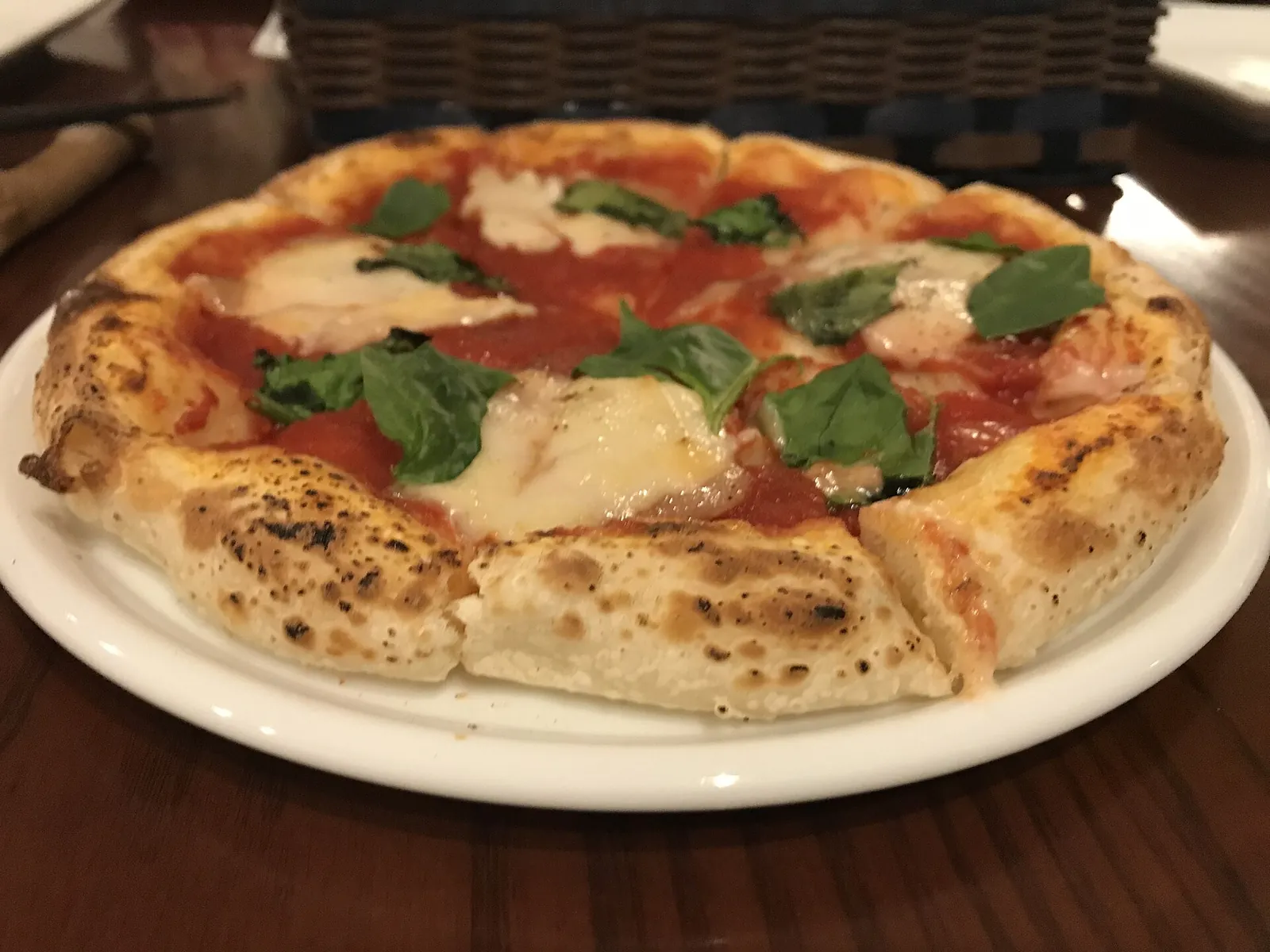
| Neapolitan | Fior di latte or Mozzarella di Bufala Campana PDO | Sliced or torn into strips over the tomato | 80 to 100 g (about 3 oz) |
| Detroit | Wisconsin brick, or half low-moisture mozzarella and half Jack | 1/2-inch cubes on the dough, pushed to the pan edges, sauce on top | 12 oz per 10- by 14-inch pan |
| Chicago deep dish | Low-moisture mozzarella | Slices on the crust, under the fillings and sauce | A full layer of slices |
| Sicilian and grandma | Low-moisture mozzarella, Parmesan to finish | Often under the sauce | A moderate layer |
| Bar pie | Low-moisture mozzarella over a dusting of Parmesan | Grated, all the way to the rim | A heavy layer |
| White pie | Ricotta and mozzarella, plus a hard cheese for salt | Ricotta spread thin, mozzarella over it | Enough to cover the dough |
New York style
New York style pizza uses whole-milk low-moisture mozzarella, grated and spread thin enough that the top looks mottled red, white and brown rather than solid white. J. Kenji López-Alt's New York-style pizza recipe is strict on two points: full-fat mozzarella only, because part-skim doesn't stretch right, and grate it yourself from a block. If the cheese browns before the crust is done, chill the grated cheese in the freezer for 15 minutes before topping; it slows the melt just enough.
Neapolitan pizza
Neapolitan pizza is the one style built around fresh mozzarella. The EU specification for Pizza Napoletana allows only Mozzarella di Bufala Campana PDO or "Mozzarella STG," 80 to 100 g of it sliced over the tomato, and the AVPN's international regulations call for buffalo mozzarella or fior di latte, cow's-milk mozzarella, cut into strips that aren't too thick. A pinch of grated hard cheese is optional. For the differences between the two mozzarellas, see buffalo mozzarella vs. fior di latte.
Detroit style
Detroit style pizza owes its crunchy, nearly black cheese edge to Wisconsin brick cheese. In Kenji López-Alt's Detroit-style recipe, 12 ounces of brick cut into 1/2-inch cubes goes straight onto the dough and all the way to the pan edges, with the sauce spooned over it in rows. Brick is soft, tangy and rich: about 30 percent fat in USDA data, against about 25 for whole-milk low-moisture mozzarella. That fat drips down and fries the crust, which is where the buttery flavor comes from. If you can't find brick cheese, his closest substitute is half low-moisture mozzarella and half Jack.
Chicago deep dish
Chicago deep dish puts its cheese at the bottom. Serious Eats' guide to regional pizza styles lists the layers from the crust up: sliced mozzarella, then meats and vegetables, then a chunky tomato sauce, then grated cheese. Use slices of whole-milk low-moisture mozzarella rather than shreds, so the layer stays even under the weight of the fillings, and let the sauce on top keep it from scorching during the long bake.
Sicilian and grandma pies
Sicilian and grandma pies are square pan pizzas that often put the cheese under the sauce. The same Serious Eats guide describes the Sicilian as a thick-crusted rectangle and the grandma pie as essentially a thin-crust Sicilian, sauced last. Grated whole-milk low-moisture mozzarella works for both, with Parmesan grated over the hot pie. Palermo's own version, sfincione, skips mozzarella entirely for a grating of caciocavallo and a crunch of breadcrumbs.
Bar pie
Bar pie, the thin, crackery tavern pizza, runs its cheese right to the rim. At Star Tavern in Orange, New Jersey, the model for Serious Eats' crispy bar-style pizza, a bare dusting of grated Parmesan goes over the sauce, then a heavy layer of grated dry mozzarella. Both spill to the edge, where they crisp into a frico-like crunch instead of a raised crust.
White pie
A white pie has no tomato sauce, so the cheese supplies both the creaminess and the salt. Ricotta is an acid-set cheese that softens but never truly melts, so it stays in creamy pockets; spreading it thinly over the whole pie, rather than in dollops, puts some in every bite. Mozzarella over the ricotta provides the melt, and a grating of Pecorino Romano or Parmesan adds the salt the missing sauce would have brought.
Home oven vs. pizza oven
A home oven and a pizza oven call for different cheese, even for the same style. Home ovens top out around 500 to 550°F, the same range as a New York slice shop, so pies bake for several minutes and want low-moisture mozzarella; a pizza oven that bakes a pie in about 90 seconds is the place for fresh mozzarella. For pans, stones and timing, see the best cheeses for homemade pizza.
Low-moisture vs. fresh mozzarella
Low-moisture and fresh mozzarella start as the same stretched curd, and the difference that matters on pizza is water. Federal rules require low-moisture mozzarella to be more than 45 and no more than 52 percent moisture (21 CFR 133.156), while regular fresh mozzarella can run up to 60 percent. Low-moisture mozzarella is soured and dried further, so it is saltier and denser and keeps for weeks. In the oven it stretches without soaking the crust, while fresh mozzarella, in Kenji López-Alt's words, "becomes more soupy than melty." Look for a block labeled "low-moisture mozzarella," or ask the deli for a chunk; the full family is laid out in fresh, low-moisture and buffalo mozzarella.
Whole-milk vs. part-skim mozzarella
Whole-milk mozzarella melts better on pizza than part-skim mozzarella, and the difference is fat, not water. In USDA data, whole-milk low-moisture mozzarella has 24.6 g of fat per 100 g against 19.8 g for part-skim, while their water content is nearly the same (48.4 and 47.1 g). In Kenji López-Alt's tasting, every part-skim cheese scored below every whole-milk one: whole milk stayed moist and stretchy even when browned, while part-skim set into sheets. Check the label, because the leaner cheese has to carry "part-skim" in its name.
Pizza cheese blends that work
A pizza cheese blend works best as mozzarella for the melt plus one stronger cheese for flavor, at roughly 3 parts mozzarella to 1 part of the other.
- Provolone adds tang without hurting the stretch; a quarter of the blend is plenty, and provolone vs. mozzarella for pizza covers the trade-off.
- Fontina melts silky and nutty, but it is richer (about 31 percent fat in USDA data), so keep it to a quarter or the pie turns oily.
- Brick brings Detroit's buttery tang to a round pie at the same quarter share.
- Parmesan or Pecorino Romano belong in pinches, not in the melt, because dry grating cheeses clump instead of flowing. Dust them under the mozzarella like a bar pie, or grate them over the hot pie like a Sicilian.
What most pizza cheese advice gets wrong
Most pizza cheese advice treats fresh mozzarella as an upgrade, and in a home oven it is the usual cause of a soupy pie.
Fresh mozzarella floods a slow oven. In the 60-to-90-second Neapolitan bake, the cheese never gets past about 158°F, so it melts and stops. A home pie takes several minutes, and cheese that can hold up to 60 percent water has time to weep it into the sauce, leaving a wet center and a soft crust. If you love it anyway, tear it into pieces, salt it lightly, drain it on paper towels for about 30 minutes, use about 3 ounces per pie, and add it for the last few minutes of the bake.
The cut is a timer. Shreds melt fastest, which suits thin pies with short bakes. Cubes and slices melt more slowly, which suits the pan styles with long bakes, Detroit and deep dish.
Pre-shredded cheese browns early. Bagged shreds are coated with cellulose, potato starch or cornstarch to stop clumping, and in Kenji López-Alt's tasting they browned faster and formed a crust of their own. Grate your own; why pre-shredded cheese melts poorly has the details.
More cheese is not more melt. A thick layer takes longer to heat through, and cheese held in the oven too long loses its water until the proteins tighten and the fat runs out: the greasy slick on an overcooked pizza.
Questions about the best cheese for pizza
These are the pizza cheese questions people ask most, answered briefly.
What kind of cheese is used on most pizzas?
Most American pizza styles use low-moisture mozzarella, the firm block-style cheese. Pizzerias favor it because it lasts for weeks under refrigeration, while fresh mozzarella is best the day it is made, and Serious Eats calls low-moisture mozzarella the cheese of choice for New York, bar, Greek-style and even Chicago deep dish pies.
What is the best cheese brand for pizza?
The best cheese brand for pizza matters less than choosing whole milk; Kenji López-Alt's tasting found brand made little difference among whole-milk cheeses. In Serious Eats' latest blind tasting of supermarket low-moisture mozzarella, Galbani and Polly-O whole-milk blocks came out on top.
What three cheeses go on pizza?
A classic three-cheese pizza pairs mozzarella for melt, provolone for tang and Parmesan or Pecorino Romano for salt. Keep the hard cheese to a light dusting, since it adds flavor rather than melt.
Can you use cheddar on pizza?
You can use cheddar on pizza in small amounts. San Francisco pizza maker Tony Gemignani uses cheddar around the edges of Detroit-style pies, according to Serious Eats, but aged cheddar tends to turn greasy when melted, so keep it to a young cheddar and a minor share of the blend.
Does cheese go on before or after the sauce?
Cheese goes on after the sauce for New York, Neapolitan and bar pies, and before it for Chicago deep dish, Detroit and many Sicilian and grandma pies. Those pan styles bake longer, and the sauce on top shields the cheese.
Buying the best cheese for pizza
Buying the best cheese for pizza comes down to one request at the deli counter: a pound of whole-milk low-moisture mozzarella, cut in one piece. Grate it on the large holes of a box grater, add a wedge of Parmesan for finishing and a little provolone if you like tang, and make a New York-style pie first. Save fresh mozzarella for nights when the oven is hot enough to bake a pie in about 90 seconds.
Sources
- Commission Regulation (EU) No 97/2010 registering Pizza Napoletana (TSG), EUR-Lex, Official Journal of the European Union
- AVPN International Regulations (2024), Associazione Verace Pizza Napoletana
- 21 CFR 133.156, Low-moisture mozzarella and scamorza cheese, Electronic Code of Federal Regulations (FDA)
- The Best Low-Moisture Mozzarella for Pizzas, Serious Eats
- New York-Style Pizza, Serious Eats
- Detroit-Style Pan Pizza, Serious Eats
- Do You Know These Regional Pizza Styles?, Serious Eats
- Crispy Bar-Style Pizza, Serious Eats