
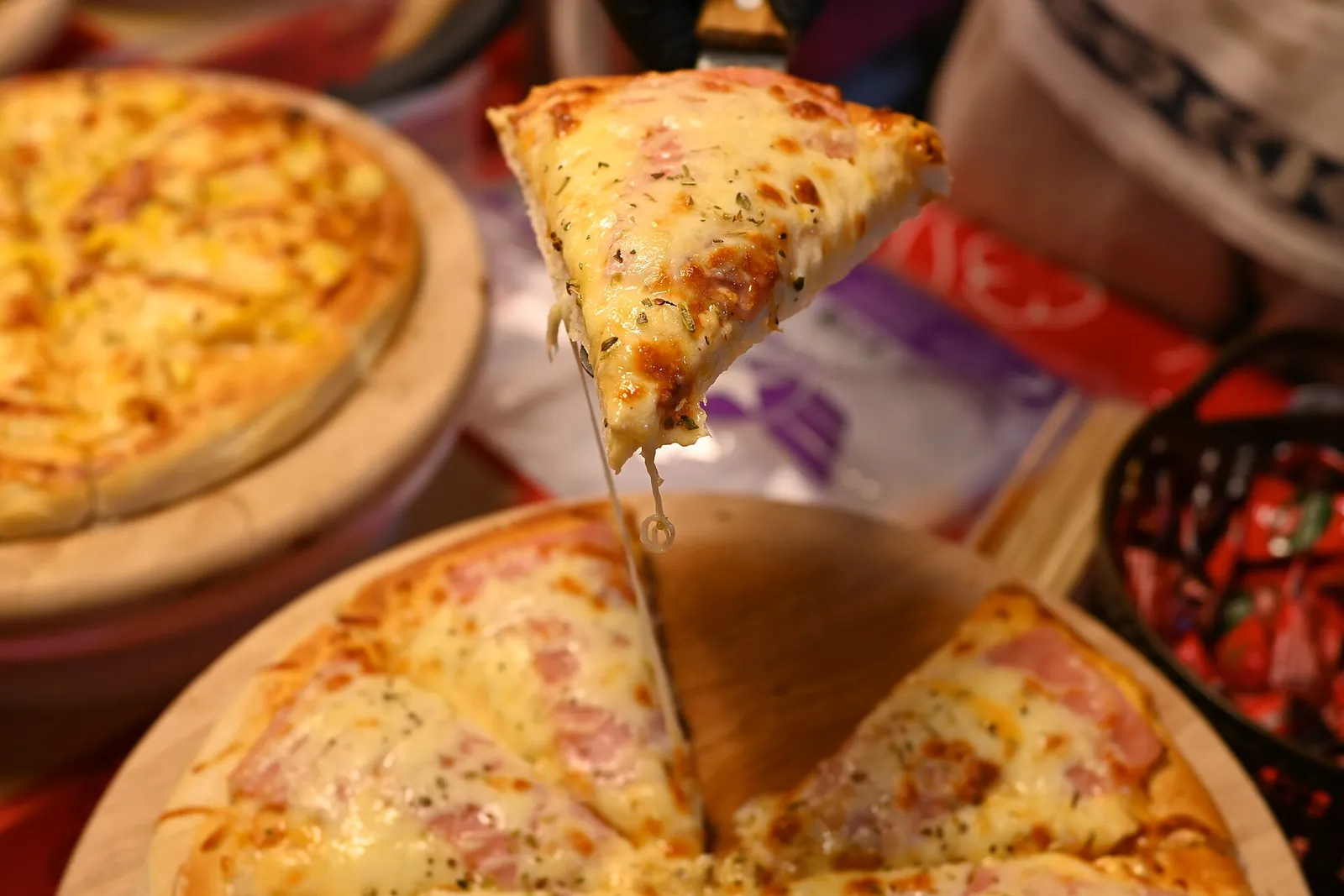
Provolone alone works, but it gives up some stretch.
The reason is water and age. Mozzarella is young and wet enough to flow into a stretchy sheet. Provolone is aged and drier, so it brings more flavor and less give. This page is only about the pie. For how the two cheeses differ everywhere else, see mozzarella vs provolone.
Provolone vs mozzarella for pizza at a glance
This provolone vs mozzarella for pizza table compares how each cheese behaves on the pie, with moisture from the FDA standards and water from USDA.
| Low-moisture mozzarella | Provolone | |
|---|---|---|
| Moisture (US standard) | More than 45 and up to 52% | 45% at most |
| Water per 100 g (USDA) | 48.4 g (whole milk) | 41.0 g |
| Fat per 100 g (USDA) | 24.6 g (whole milk); 19.8 g (part-skim) | 26.6 g |
| Melt | Smooth, elastic sheet | Smooth, softer pull |
| Stretch | The classic pizza pull | Less |
| Browning | Spotted brown in a hot oven | Browns too; cut it with mozzarella to keep a soft layer |
| Flavor | Mild, milky, salty | Tangier; sharper if aged |
| Best role | Base cheese | A quarter of the blend |
Melt and stretch: provolone vs mozzarella on pizza
Provolone vs mozzarella on pizza is closest on melt and furthest apart on stretch. Both are stretched-curd cheeses, so both melt smoothly. Mozzarella has the edge in pull because it holds more water, which keeps the curd elastic while it bakes. Provolone holds about 41 percent water in USDA's table against 48 for whole-milk low-moisture mozzarella, so it sets up a little firmer and pulls less.
That is why the usual blend leans on mozzarella. Whole-milk mozzarella is the better of the two mozzarellas, too. Fat is the difference, 24.6 grams per 100 grams in USDA data against 19.8 for part-skim, and in Kenji López-Alt's Serious Eats tasting of low-moisture mozzarella every part-skim cheese scored below every whole-milk one. Start from whole milk before you add anything.
Browning, oil and moisture on pizza
Browning, oil and moisture are where the cheeses behave differently in the oven. Provolone is a fattier, drier cheese: 26.6 grams of fat per 100 grams against 24.6 for whole-milk low-moisture mozzarella. Piled on thickly, an aged provolone can leave more visible oil on top, so keep it to a share of the blend and blot the pie if it pools.
Moisture is the opposite problem. Low-moisture mozzarella is soured and dried so it can stretch without soaking the crust. Fresh mozzarella can hold up to 60 percent water under the federal standard, and it floods a slow oven. In a home oven at 500 to 550°F, a pie takes several minutes and fresh cheese weeps into the sauce. Provolone never has this problem, because it is drier than either. The full case against fresh mozzarella at home is in best cheeses for pizza.
Provolone and mozzarella blend ratios for pizza
A provolone and mozzarella blend works best at about 3 parts mozzarella to 1 part provolone, which is the ratio the best cheeses for pizza guide gives. A quarter of the cheese is enough tang to notice and not enough to cost the stretch.
Treat these as starting points and adjust to taste:
- 3 to 1, mozzarella to provolone: the standard blend. Tangier than plain, still stretchy.
- 1 to 1: a pronounced cheese flavor with a firmer pull. Good on a pie with mild toppings; too much on a loaded one.
- Mostly provolone: a different pizza, closer to a cheesy flatbread. Fine if you like it; do not expect a long pull.
- Sharp provolone: use a lighter hand, since aged cheese adds more flavor per gram. Mild dolce can go a bit heavier.
Shred both from blocks and grate them together while cold. Bagged shreds carry anti-caking starch that gets in the way of a clean melt.
Which pizza style wants provolone or mozzarella
Which pizza style wants provolone or mozzarella depends on the oven and the pan. These pairings match the style guide on best cheeses for pizza.
- New York, Sicilian and bar pie: whole-milk low-moisture mozzarella, with up to a quarter provolone for tang. Bar pie runs its cheese to the rim, where a blend crisps nicely.
- Neapolitan: fresh mozzarella, in a very hot oven. Provolone has no place here, since the style depends on soft pools of mild cheese.
- Chicago deep dish: sliced low-moisture mozzarella on the crust. Provolone slices work in the same layer for a tangier base.
- Detroit: Wisconsin brick, or half low-moisture mozzarella and half Jack. Provolone can stand in for the Jack if you want more tang.
- White pie: mozzarella over ricotta, with a hard cheese for salt. A little provolone suits it, since there is no tomato to supply tang.
What most provolone vs mozzarella pizza advice gets wrong
Most provolone vs mozzarella pizza advice treats provolone as the upgrade, and it is a trade, not an upgrade.
More flavor costs stretch. Everything provolone adds in tang comes with a firmer pull, which is why pizzerias blend it rather than replace mozzarella.
Deli provolone is not pizza provolone. Thin deli slices lay flat and brown unevenly. Buy a block and shred it (the provolone guide explains the age labels), and choose dolce for a mild blend or piccante for a sharp one.
Age sets the effect, not the name. Dolce is aged about 2 to 3 months and piccante 4 or more, so a quarter of piccante hits harder than a quarter of dolce.
Questions about provolone vs mozzarella for pizza
These are quick answers to common questions about provolone vs mozzarella for pizza.
Is provolone or mozzarella better for pizza?
Mozzarella is better for pizza as the main cheese, because low-moisture mozzarella gives the stretchy, spotted-brown melt people expect. Provolone is better as a quarter of the blend for added tang.
Can you use provolone instead of mozzarella on pizza?
You can use provolone instead of mozzarella on pizza, and it melts smoothly with a tangier flavor, but the pull is shorter. Blending it with mozzarella keeps both.
Why do pizzerias blend mozzarella and provolone?
Pizzerias blend mozzarella and provolone to get mozzarella's stretch and browning plus provolone's tang, at about 3 parts to 1.
Does provolone make pizza greasy?
Provolone can make pizza look greasier when it is a large share of the cheese, since it is a fattier, drier cheese than mozzarella. Keep it to a quarter of the blend.
What is the best provolone for pizza?
The best provolone for pizza is a block you shred yourself: dolce for mild tang, piccante for a sharper pie, used in smaller amounts.
Choosing provolone or mozzarella for pizza
Choosing provolone or mozzarella for pizza starts with one pound of whole-milk low-moisture mozzarella and a small wedge of provolone. Grate three parts mozzarella to one part provolone, bake a New York-style pie, and compare it with a plain mozzarella pie. Raise the provolone only if the first pie tastes flat.
Sources
- 21 CFR 133.156, Low-moisture mozzarella and scamorza cheese and 133.181, Provolone cheese, Electronic Code of Federal Regulations
- USDA FoodData Central (SR Legacy): Cheese, provolone (170850), Cheese, mozzarella, whole milk, low moisture (170846) and Cheese, mozzarella, low moisture, part-skim (171244)
- The Best Low-Moisture Mozzarella for Pizzas, Serious Eats
- Provolone, Dairy Farmers of Wisconsin