
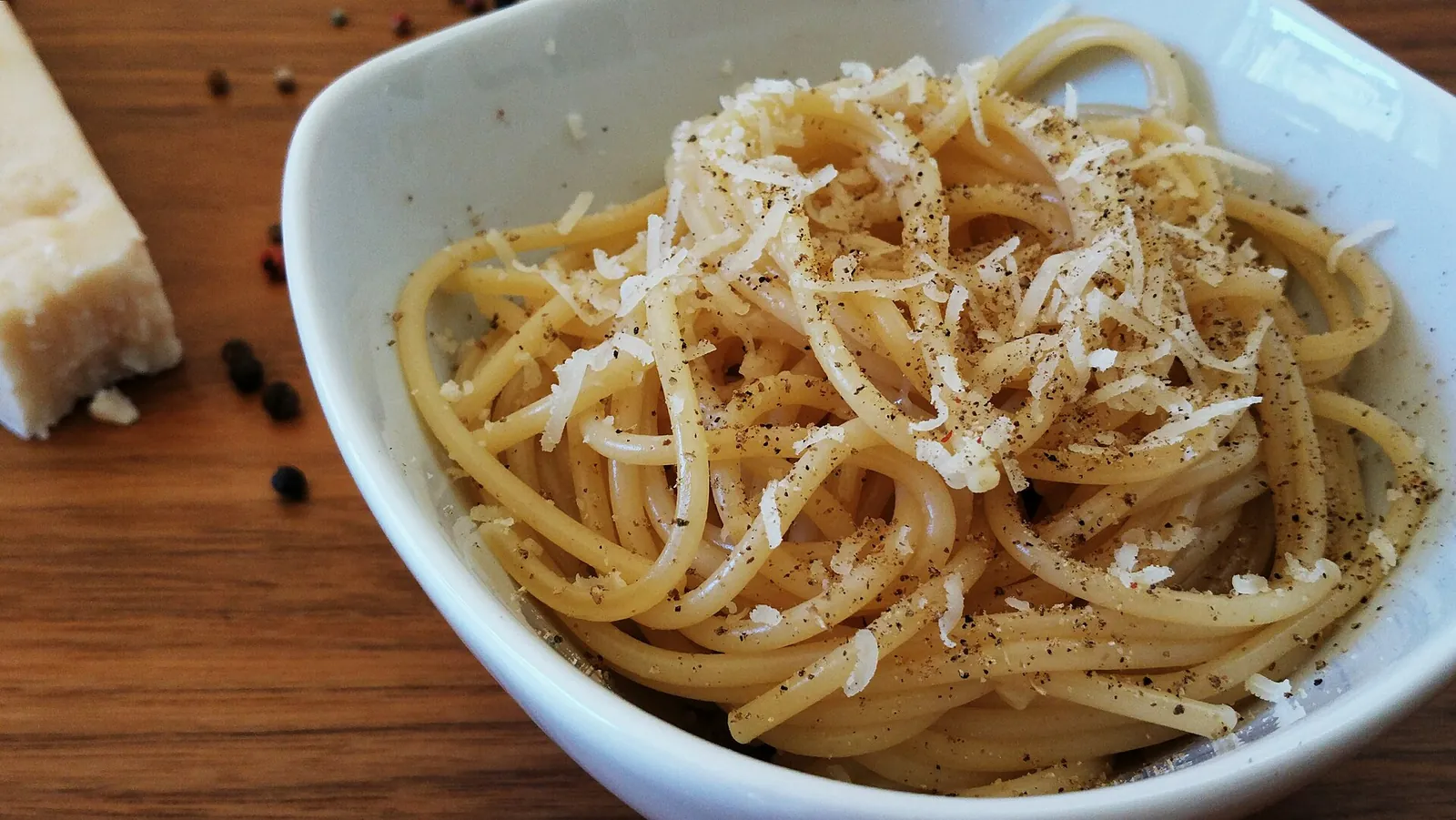
There is no cream, butter or oil in the classic version, so the glossy sauce has to come from technique.
The cheese is the whole difficulty. Pecorino proteins tighten and clump when finely grated cheese meets water that is too hot, and the pasta water carries the starch that keeps fat and water blended. Get the temperature and the order right and the sauce takes about two minutes.
Cacio e pepe at a glance
This cacio e pepe table gives the numbers to plan the dish around.
| Yield | 4 servings |
| Active and total time | 15 minutes active, 25 minutes total |
| Pan | Wide skillet, medium-low heat, then off the heat |
| Best cheese | Pecorino Romano, finely grated (rasp or microplane) |
| Make-ahead | Not suited: serve within minutes |
How to make cacio e pepe
This cacio e pepe recipe uses a cheese paste made before the pasta is done, which is the step that prevents clumps.
Ingredients for cacio e pepe
These are the ingredients for cacio e pepe, enough for four.
- 12 oz (340 g) spaghetti or tonnarelli
- 4 oz (115 g) Pecorino Romano, finely grated, at room temperature
- 2 teaspoons whole black peppercorns, coarsely cracked
- 1 teaspoon kosher salt, for the pasta water
- 3 quarts (about 3 L) water
- Extra Pecorino and pepper, for serving
Steps for making cacio e pepe
These steps for making cacio e pepe keep the cheese away from hot water until the pasta is ready.
- Bring the water to a boil with the salt, which is less than usual because the cheese is salty, and crack the peppercorns coarsely with a pan or mortar.
- Cook the pasta for 2 minutes less than the package says, since it finishes in the sauce, then scoop out 1 1/2 cups (360 ml) of the cloudy water before draining.
- While the pasta cooks, toast the pepper in a dry wide skillet over medium-low heat for about 1 minute, until it smells sharp and warm.
- Stir in 3/4 cup (180 ml) pasta water to the pepper and let it simmer gently, then turn the heat to low.
- Put the cheese in a bowl, add 1/3 cup (80 ml) pasta water that has cooled for a minute, and stir with a fork into a thick, smooth paste with no dry bits.
- Lift the pasta with tongs into the skillet and toss for 30 seconds so it takes up the peppery liquid, then take the pan off the heat and wait 30 seconds.
- Add the cheese paste, toss and stir hard for about 1 minute, adding pasta water a splash at a time until the sauce turns creamy and clings to the strands instead of pooling.
- Serve right away in warm bowls with extra Pecorino and pepper, because the sauce tightens as it cools.
The best cheese for cacio e pepe
The best cheese for cacio e pepe is Pecorino Romano, a hard sheep's milk cheese from Sardinia, Lazio and the province of Grosseto, aged at least 5 months. It is the traditional cheese for the dish, and its sharp, salty bite is the flavor you are cooking for.
Salt matters here. Pecorino Romano is heavily salted, so a small amount seasons the whole pot, and the pasta water should carry less salt than for other pasta. Fineness matters as well: powdery shreds from a rasp dissolve into the liquid, while coarse shreds melt unevenly and form lumps. Buying a wedge and grating it yourself beats a bag, because the anti-caking starch in pre-shredded cheese works against a smooth emulsion.
Parmigiano-Reggiano gives a milder, nuttier and less salty dish, so see Parmesan vs Pecorino Romano before swapping. A common compromise is mostly Pecorino with a handful of Parmigiano-Reggiano.
Why cacio e pepe clumps and how to fix it
Cacio e pepe clumps when the cheese is shocked by heat or has too little water to spread through. Hot liquid tightens the milk proteins into rubbery strings, much like an overheated cheese sauce.
Three mistakes cause most failures:
- Cheese added over direct heat. Take the pan off the burner first, then add the paste.
- Too much pasta water drained away. Starchy water is the emulsifier, so keep more than you think you need.
- Cold, coarse cheese. Cheese straight from the fridge in thick shreds will not blend. Grate it fine and let it warm up.
If the sauce does clump, add a splash of warm (not boiling) pasta water and keep stirring off the heat. If it is thin and watery instead, toss over very low heat for 20 seconds to let the starch thicken it.
Cacio e pepe variations
Cacio e pepe variations change the cheese or the pepper, not the method. Use tonnarelli or bucatini if you can find them, since thick strands hold the sauce well. Mixing three parts Pecorino to one part Parmigiano softens the salt. Toasting pepper longer gives a deeper, rounder heat, while pre-ground pepper tastes flat and dusty beside freshly cracked.
Cacio e pepe leftovers and reheating
Cacio e pepe leftovers are not worth keeping, because the sauce sets firm and turns pasty. If you do have some, USDA FSIS says leftovers should be refrigerated within 2 hours and eaten within 3 to 4 days. Reheat gently in a skillet with a few tablespoons of water, stirring until the sauce loosens, and heat until the pasta is steaming hot.
Questions about cacio e pepe
These questions about cacio e pepe cover the cheese, the clumping and the water.
What cheese is used in cacio e pepe?
The cheese used in cacio e pepe is Pecorino Romano, finely grated. Its sheep's milk tang and salt are the traditional flavor, and the name itself means cheese and pepper.
Is there cream or butter in cacio e pepe?
Cacio e pepe has no cream or butter in the traditional version. The creaminess comes from emulsifying cheese with starchy pasta water, and a recipe that adds cream is a different dish.
Why does cacio e pepe turn watery?
Cacio e pepe turns watery when too much pasta water goes in or the sauce was never tossed long enough. Stir over very low heat for 20 seconds so the starch tightens it.
Is Parmesan allowed in cacio e pepe?
Parmesan works in cacio e pepe if you accept a milder, nuttier and less salty result. Use less salt in the water either way, and grate it as fine as you would Pecorino.
Does cacio e pepe need pasta water that is salted?
Pasta water for cacio e pepe should be only lightly salted, since you reduce it into the sauce along with a very salty cheese. Taste before you add any more salt.
Make cacio e pepe tonight
Cacio e pepe rewards a plain plan: grate the Pecorino fine, make the paste, take the pan off the heat and toss hard. For more on the cheese itself, the Italian cheese guide places it among the other Roman and regional cheeses.
Sources
- Pecorino Romano PDO single document, European Commission
- Pecorino Romano: PDO Rules, Salt, Uses and Substitutes, cheese.help
- Leftovers and Food Safety, USDA Food Safety and Inspection Service