
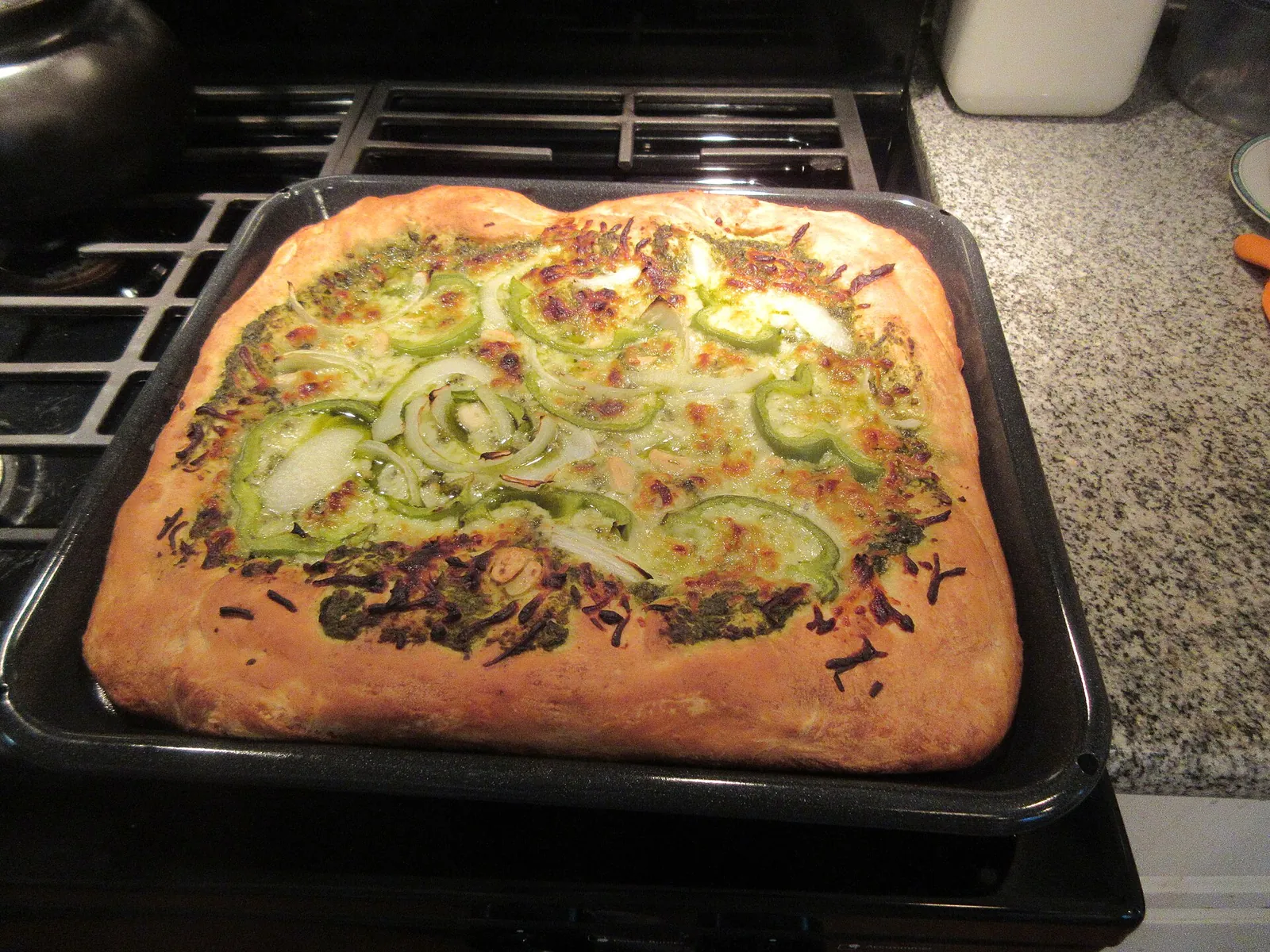
A 10-inch pie needs about 3 1/2 ounces, a 14-inch about 7 and a 16-inch about 9, because the cheese has to cover the area of the pie, which grows much faster than its width. Pan pizzas take more, and fresh mozzarella takes less.
The starting point is J. Kenji López-Alt's New York-style pizza, which spreads a third of a pound of grated mozzarella over each 12- to 14-inch pie and bakes it on a stone at 500°F for 12 to 15 minutes. That long bake is what sets home pizza apart. A Neapolitan pizza oven finishes a pie in about 90 seconds, so at home the cheese has to survive many minutes of heat without flooding, greasing or burning, and every choice below follows from that.
How much cheese for homemade pizza, by size
How much cheese for homemade pizza depends on the size of the pie, and this table keeps the layer the same thickness from a 10-inch round to a 16-inch one.
| Pie size | Surface area | Low-moisture mozzarella | About this much grated | Fresh mozzarella, drained |
|---|---|---|---|---|
| 10-inch | 79 sq in | 3 1/2 oz (100 g) | 7/8 cup | 2 oz (57 g) |
| 12-inch | 113 sq in | 5 oz (140 g) | 1 1/4 cups | 3 oz (85 g) |
| 14-inch | 154 sq in | 7 oz (195 g) | 1 3/4 cups | 4 oz (110 g) |
| 16-inch | 201 sq in | 9 oz (250 g) | 2 1/4 cups | 5 oz (145 g) |
The low-moisture column starts from Kenji's New York recipe and scales by area; the fresh column starts from his home Neapolitan recipe, which tops each 10-inch pie with 2 ounces of drained fresh mozzarella. His recipes count about 4 cups of grated mozzarella to the pound, or 4 ounces a cup, but a scale beats a measuring cup, since a packed cup holds more than a loose one. Keep the sauce in proportion too: Kenji pairs each New York pie's cheese with about 2/3 cup of sauce.
Pan and sheet pizzas carry more. Kenji's foolproof pan pizza uses 6 ounces of mozzarella and 3/4 cup of sauce in each 10-inch cast-iron skillet, about 1.7 times the round-pie layer of cheese, because its thick crust can hold heavy toppings. His Sicilian square pizza uses 8 ounces (about 2 cups) on a 12- by 18-inch sheet pan. For Detroit, deep dish and the other regional styles, see the style-by-style guide to pizza cheese.
Low-moisture vs fresh mozzarella in a home oven
Low-moisture and fresh mozzarella behave very differently in a home oven, and the difference is water. Federal standards hold low-moisture mozzarella to more than 45 and no more than 52 percent moisture, while regular mozzarella can run up to 60 percent (21 CFR Part 133).
Why low-moisture mozzarella suits a 500°F oven
Low-moisture mozzarella suits a 500°F oven because it stretches without giving up enough water to soak the crust during a 12-minute bake. Buy a block of whole-milk low-moisture mozzarella, or ask the deli counter to cut you a pound in one piece, and grate it on the large holes of a box grater (grating without clumping has tips). It keeps for weeks in the fridge, while fresh mozzarella is at its best the day it is made. In Kenji's tasting of supermarket mozzarella, every part-skim cheese scored below every whole-milk one, because the leaner cheese set into sheets when it browned, while whole milk stayed moist and stretchy. The fresh, low-moisture and buffalo mozzarella guide covers how each is made.
How to keep fresh mozzarella from flooding the pie
Fresh mozzarella floods a home-oven pizza because it has many minutes to weep water into the sauce, so the fix is to take water out and time away. These are the moves that work:
- Drain it. Kenji's home Neapolitan recipe cuts the cheese into 1/2-inch chunks and presses them between triple layers of paper towels under a plate for at least 10 minutes.
- Use less. The same recipe uses 2 ounces per 10-inch pie, which works out to about 3 ounces on a 12-inch.
- Bake it hot and fast. A preheated steel under the broiler (below) bakes a pie in about 4 minutes, so the cheese melts before it weeps.
- Or add it late. On a stone at 500°F, scatter the drained cheese over the pie halfway through the bake.
- Salt the pie lightly. Fresh mozzarella is less salty than the low-moisture kind, and Kenji seasons his Neapolitan pies with kosher salt after the cheese goes on.
Keep it off pan pizza entirely. Kenji's pan pizza recipe calls fresh mozzarella too moist for it.
Pizza steel vs stone vs sheet pan
A pizza steel, a stone and a sheet pan bake at very different speeds, and the speed decides how much heat the cheese has to survive.
Pizza steel
A pizza steel is the fastest surface a home oven can offer, because metal conducts heat better than stone and stores more heat for its size. In Kenji's Baking Steel review, a 1/4-inch, 15-pound steel in an oven at full blast baked a New York pie in about 6 minutes, against about 8 on a stone. With the steel on the second-highest rack and the broiler on high, pies took 3 1/2 to 4 1/2 minutes. That speed is the friendliest condition a home oven offers fresh mozzarella.
Pizza stone
A pizza stone at 500°F bakes a New York pie in 12 to 15 minutes, long enough for the cheese to brown before the crust is done. Kenji preheats his stone on the middle rack for an hour. If the top browns before the bottom, he lowers the stone; if the bottom races ahead, he raises it a rack or two.
Sheet pan and cast iron
A sheet pan or cast-iron skillet bakes the slowest and holds the most cheese. Both of Kenji's pan recipes run the oven at 550°F: the Sicilian bakes 15 to 20 minutes in all, and the cast-iron pan pizza 12 to 15. Spread the cheese all the way to the rim on a pan pizza, where it fries against the hot metal into a crisp, browned edge.
When to add the cheese
When to add the cheese depends on how long the pie will bake, since the cheese should finish melting just as the crust browns.
- At the start for round pies on a steel or stone and for cast-iron pan pizza, scattered over the sauce.
- After a 5-minute head start for a sheet-pan Sicilian, which bakes first with just sauce and a little Parmesan. Kenji gives the thick crust that lead so the mozzarella doesn't over-brown before the bread sets.
- Halfway through for drained fresh mozzarella on a stone.
- After baking for Parmesan or Pecorino Romano on pan pizza, which Kenji grates over the pie as soon as it leaves the oven.
Pizza cheese blends for a home oven
Pizza cheese blends work the same way at home as at a pizzeria: whole-milk mozzarella for the melt, plus about a quarter of something with more flavor. Provolone adds tang without hurting the stretch; provolone vs. mozzarella for pizza compares the two. Fontina melts silkily but is richer, about 31 percent fat in USDA data, so a quarter is plenty. On pan pizza, Kenji's recipe welcomes young cheddar, Jack, Muenster or young provolone, alone or mixed with the mozzarella. Treat Parmesan and Pecorino as seasoning, in pinches.
What most homemade pizza cheese advice gets wrong
Most homemade pizza cheese advice gives one amount for every pie, and misses how size, cut and oven change it.
Cheese scales with area, not width. A 16-inch pie has about 1.8 times the surface of a 12-inch, so it needs about 9 ounces, not the 6 or 7 you'd get by scaling the diameter. Going the other way, a 10-inch pie has only about 70 percent of a 12-inch's surface, so the same 5 ounces makes a noticeably heavier layer.
Pre-shredded cheese browns before the crust is done. Bagged shreds are dusted with cellulose, potato starch or cornstarch to stop clumping, and in Kenji's tasting they browned faster and formed a crust of their own. A 12-minute home bake gives them plenty of time to do it; why pre-shredded cheese melts poorly has the details.
Burned cheese is a timing problem. When Kenji's cheese kept over-browning before the crust was done, the fix was to grate it onto a plate and freeze it for 15 minutes before topping the pie. The colder cheese melts a little later, which gives the crust time to catch up.
Questions about cheese for homemade pizza
These quick answers cover the questions people ask most about cheese for homemade pizza.
How much cheese should go on a 10-inch pizza?
A 10-inch pizza needs about 3 1/2 ounces (100 g) of grated low-moisture mozzarella cheese, about 2 ounces of drained fresh mozzarella, or about 6 ounces if it is a thick pan pizza baked in a 10-inch skillet.
How many cups of shredded cheese go on a pizza?
A 12-inch pizza takes about 1 1/4 cups of shredded mozzarella cheese, since a cup of grated low-moisture mozzarella weighs about 4 ounces. A 10-inch takes a scant cup and a 14-inch about 1 3/4 cups.
What type of mozzarella is best for homemade pizza?
The best type of mozzarella for homemade pizza is whole-milk low-moisture mozzarella, bought as a block and grated at home. Save fresh mozzarella for pies baked hot and fast on a steel.
Can you use cheddar on homemade pizza?
You can use cheddar on homemade pizza, especially pan pizza, where Kenji's recipe accepts young cheddar in place of mozzarella. Stick to young cheddar, because aged cheeses melt poorly, as Serious Eats' guide to melting cheese explains.
How many calories does the cheese add to a homemade pizza?
The cheese adds about 450 calories to a 12-inch homemade pizza topped with 5 ounces of whole-milk low-moisture mozzarella, or about 56 per slice if you cut 8, based on USDA data of about 90 calories an ounce. That much cheese also brings about 30 grams of protein and 1,000 mg of sodium to the pie.
What makes homemade pizza watery?
Homemade pizza turns watery when fresh mozzarella goes on undrained or in too large an amount for a slow bake. Drain it, use the amounts in the table above, and preheat a stone for a full hour so the crust sets quickly.
Your next homemade pizza
For your next homemade pizza, buy a 1-pound block of whole-milk low-moisture mozzarella, enough for three 12-inch pies at about 5 ounces each. Preheat a stone or steel for an hour at your oven's highest setting, grate and weigh the cheese, and chill it in the freezer while the oven heats. Once that pie works, try 2 to 3 ounces of drained fresh mozzarella on a steel under the broiler.
Sources
- New York-Style Pizza, Serious Eats
- Foolproof Pan Pizza, Serious Eats
- Easy No-Roll, No-Stretch Sicilian-Style Square Pizza at Home, Serious Eats
- Hacker-Free Neapolitan Pizza for a Home Kitchen, Serious Eats
- Baking Steel Review, Serious Eats
- The Best Low-Moisture Mozzarella for Pizzas, Serious Eats
- 21 CFR Part 133, Cheeses and Related Cheese Products, Electronic Code of Federal Regulations (FDA)
- The Science of Melting Cheese, Serious Eats