
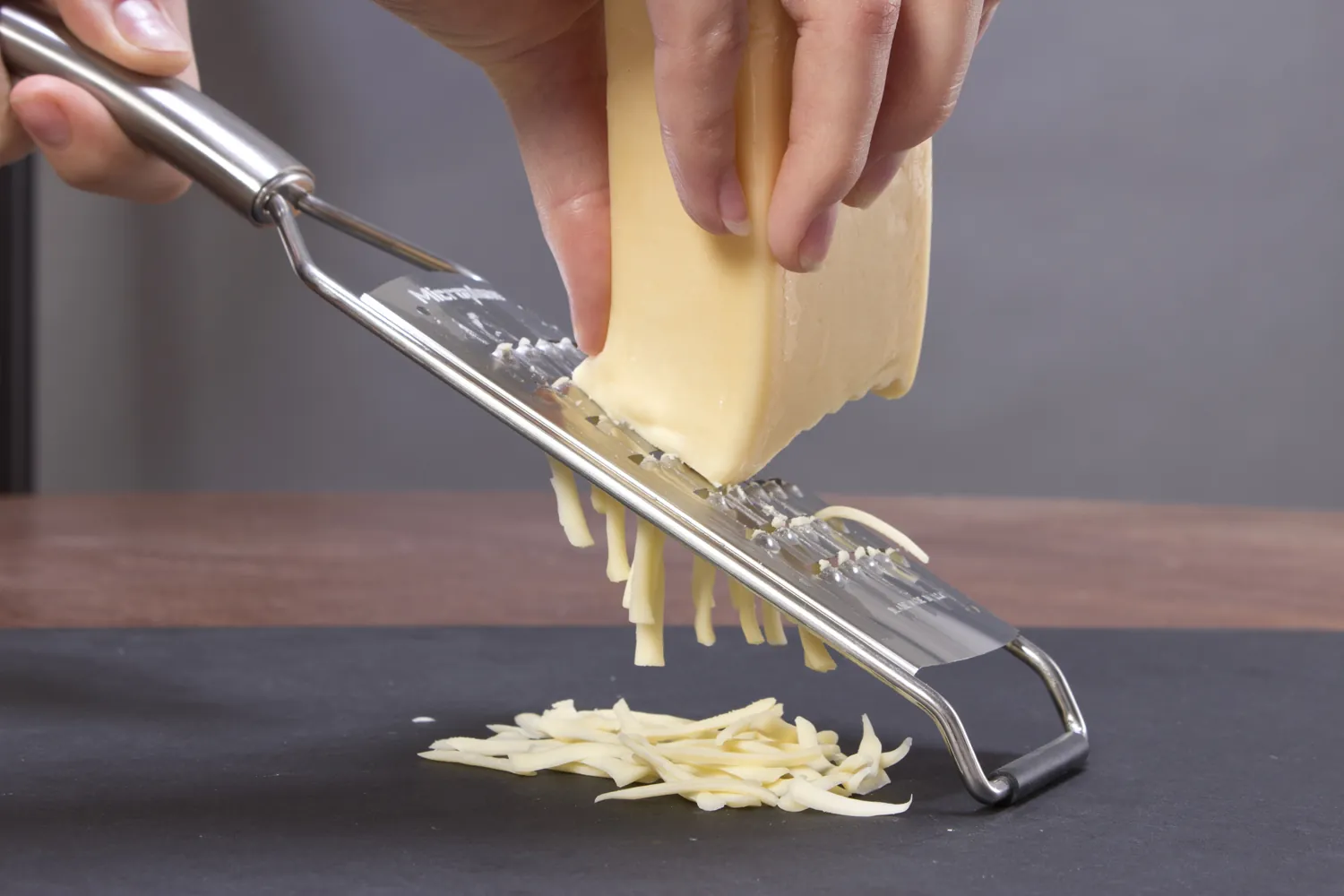
Warm fat is what turns a pile of shreds into a sticky mat.
Most clumping is a temperature problem, not a technique problem. Friction and your hand warm the cheese, the surface fat softens, and the shreds stick to each other and to the grater. The fixes below all keep the cheese cold, dry and moving.
Grate cheese cold to stop clumping
Grate cheese cold to stop clumping, because grating cold cheese is the single biggest fix, because cold fat is solid and shreds cleanly instead of smearing. Keep the block in the fridge until the second you grate it, and grate only what you need from a cut piece rather than holding the whole block in your warm hand.
For cheeses that are soft or elastic, the fridge is not cold enough. Fresh low-moisture mozzarella, young Monterey Jack, Muenster and mild cheddar all gum up a grater at fridge temperature. Put the piece unwrapped on a plate in the freezer for 15 to 30 minutes until it is very firm but not frozen solid. The slicing guide for mozzarella and other soft cheeses covers the cutting side of the same trick.
Do not freeze cheese for longer than that just to grate it. A long freeze changes the texture of some cheeses, and the freezing cheese guide covers what survives and what does not.
Choose a grater to grate cheese without clumping
A grater to grate cheese without clumping needs sharp teeth and an open design, so the shreds fall away instead of packing into the holes. A dull grater tears the cheese and smears fat onto the metal, which is the clog people blame on the cheese.
| Cheese | Best tool | Why |
|---|---|---|
| Parmesan, Pecorino, aged Gouda | Rasp (Microplane style) or fine side of a box grater | Dry, brittle cheese becomes light, fluffy shreds that melt on contact |
| Cheddar, Gruyère, Swiss, Jack | Large holes of a box grater, or food processor shredding disc | Firm but fat-rich, so big holes avoid packing |
| Low-moisture mozzarella, provolone | Large holes, after a short chill | Elastic and sticky when warm |
| Soft and crumbly cheeses | Do not grate; crumble or slice | They have no structure to hold a shred |
A food processor with a shredding disc is the cold way to grate a lot. The cheese spends seconds in the machine, your hands never touch it, and the disc does not heat up the way a hand-held grater does. Chill the disc and the bowl too if you are doing a pound or more.
How to grate cheese without it sticking to the grater
How to grate cheese without it sticking to the grater comes down to a few small habits. Press the cheese flat against the teeth and use the full length of the grater in long strokes, light and steady. Hard pushing squeezes the cheese and warms it.
- Grate over parchment, a plate or a wide bowl rather than into a narrow container, so shreds land loose instead of piling up.
- Stop and knock out the holes when they fill; clogged teeth tear instead of cut.
- A thin film of oil on the grater helps with very sticky cheeses, though a freezer rest does more.
- Wash a greasy grater with cold or warm water and a brush, not hot water, so the fat does not set into the holes.
Switch the cheese's grip as it shrinks. The last inch of a block is where your hand does the warming, so stop there and save the nub for a sauce or for the rind pot of a soup.
Keep grated cheese loose and separate
Keeping grated cheese loose and separate is mostly about spreading it out and keeping it dry. Right after grating, toss the shreds with a fork rather than packing them down with your hands, and spread them in a loose layer if you are not using them within a few minutes.
If you need to hold shredded cheese for a day or more, lightly dust it with cornstarch or flour, about a teaspoon for each cup of shreds, and toss. This is what bagged cheese does with factory powders, which the block vs pre-shredded comparison explains; the trade-off at home is the same, since the dusting keeps shreds apart but can make a sauce a bit less smooth. Skip the dusting for anything going straight into a sauce.
For longer storage, shred and freeze flat. The USDA FoodKeeper lists hard cheese such as cheddar, Swiss and block Parmesan at 6 months frozen, and a thin flat bag breaks apart easily after freezing. Discard shredded cheese that grows mold, since USDA advises throwing out all shredded cheese with mold. More on the general rules is in the storing cheese guide.
Grating mistakes that cause cheese to clump
Grating mistakes that cause cheese to clump usually come back to warmth, moisture or the wrong cheese. The most common ones:
- Grating at room temperature. Cheese left on the counter for a board is too soft; grate it first or chill it.
- Grating very fresh, wet cheese. Fresh mozzarella in brine and queso fresco are made to be sliced or crumbled, not shredded. Use low-moisture mozzarella for shreds.
- Grating too far ahead. Shreds left in a bowl dry out at the edges and fuse in the middle. Grate right before using.
- Using the fine side for a melting cheese. Fine shreds of cheddar mat together; save the rasp for Parmesan.
- Washing the grater in hot water first. Rinse off the cheese with cool water, then wash.
One more point: shred size changes how cheese melts in a dish, which the next guide covers in full.
Questions about grating cheese without clumping
These questions about grating cheese without clumping are the ones that come up most often.
Why does grated cheese clump?
Grated cheese clumps because warmth softens the fat on the surface of the shreds, making them sticky, and friction and hand heat add to it. Cold, firm cheese avoids most of the problem.
How do you grate soft cheese like mozzarella?
To grate soft cheese like mozzarella, freeze the piece for 15 to 30 minutes until firm, then use the large holes of a box grater and long, light strokes. Fresh mozzarella in water is better sliced.
What grater is best for hard cheese like Parmesan?
The best grater for hard cheese like Parmesan is a rasp or Microplane, which turns the dry cheese into fluffy shreds that melt almost immediately. The fine side of a box grater is the next best.
Should you flour or starch grated cheese?
Dusting grated cheese with cornstarch or flour keeps shreds apart for a day or two, which helps with storage, though you should skip it for smooth sauces because it changes how the cheese melts.
Can you grate cheese ahead of time?
You can grate cheese ahead of time for a day or so if you spread it loose in a covered container in the fridge. For longer, freeze it flat in a bag.
Grate cheese cold, and keep it moving
To grate cheese without clumping, keep it cold, pick the grater that fits the cheese, and use the shreds soon or freeze them flat. For the best result in a sauce or on top of a dish, read how to shred cheese for best melt and the best melting cheeses list next.
Sources
- FoodKeeper App, FoodSafety.gov (USDA)
- Molds on Food: Are They Dangerous?, USDA Food Safety and Inspection Service
- Leftovers and Food Safety, USDA Food Safety and Inspection Service