
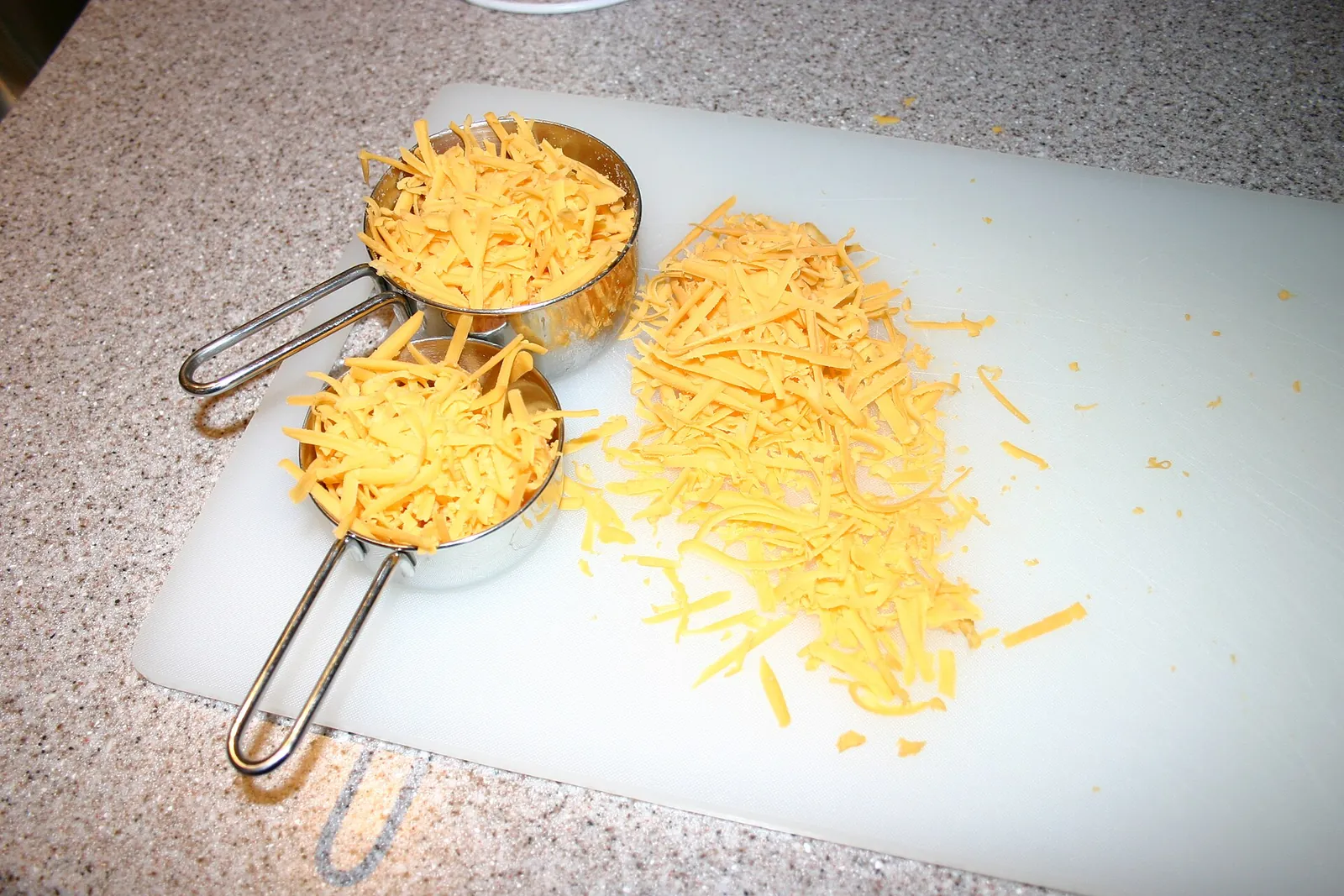
Smaller shreds melt faster, and warmer shreds melt more evenly.
Which cheese you pick matters more than how you shred it, and the best melting cheeses ranking covers that. This page is about the part you control once the cheese is in your hand: size, temperature and how you add it.
Shred cheese for best melt by size
Shred size changes how fast cheese melts because it changes how much surface the heat can reach. Thin, uniform shreds melt more quickly and evenly than a whole block, as Cabot Creamery notes in its melting guide. The practical rule is small shreds for fast, smooth melts and large shreds when you want the cheese to hold some shape.
| Dish | Shred size | Why |
|---|---|---|
| Cheese sauce, fondue, queso | Fine (rasp or small box-grater holes) | Dissolves into the liquid before it overheats |
| Mac and cheese baked with a topping | Medium on top, fine in the sauce | Fine inside melts smooth; medium on top browns without burning |
| Pizza, quesadillas, nachos | Medium (large box-grater holes) | Covers evenly and bubbles without turning to liquid |
| Grilled cheese | Medium or thin slices | Melts through before the bread burns |
| Stuffed dishes, bakes, casseroles | Medium to coarse | Keeps some texture after long cooking |
Very fine shreds are not always better. In a hot oven they can brown and dry out before the dish is done, and on a pizza they leave less of the stretch people want. A coarse shred is a good default for anything baked.
Shred cheese for best melt: cold for shredding, warm for melting
Cold for shredding and warm for melting is the part most advice skips. Cold cheese is firm and shreds cleanly without clumping; the grating without clumping guide covers the technique. But shreds taken straight from the fridge melt slowly and unevenly, and the outside can overheat while the inside is still cold.
So shred first, then spread the shreds on a plate and leave them 20 to 30 minutes at room temperature before they go into a dish. Cabot's guide suggests the same 20 to 30 minute rest for cheese before melting. If the cheese will be out longer than that, remember that perishable food should not sit out more than 2 hours, or 1 hour above 90°F.
Why heat decides the melt more than shred size
Heat decides the melt more than shred size because high heat squeezes the cheese's own fat and moisture out. Cabot recommends the lowest heat possible, since high heat drives off moisture and fat and leaves cheese lumpy, greasy or charred. Melted cheese that looks oily or stringy and stiff has usually been heated too hard.
For a sauce, take the pot off the boil, then stir the shreds in a handful at a time and let each handful melt before adding the next. Dumping in a whole pile cools the sauce, so the cheese sits in clumps while you keep heating it, and then it overheats. Cabot's stovetop method makes a base first (butter and flour cooked into a roux, then hot milk) and adds the shredded cheese last at the lowest heat setting, stirring often. The flour in the base also helps hold a sauce together, as the cheese sauce guide explains.
Shred cheese for best melt in common dishes
Shred cheese for best melt differently in each dish, because sauces, pizza and bakes treat the cheese differently.
Shred cheese for best melt in sauces and mac and cheese
For sauces and mac and cheese, shred fine, let the shreds warm, and add them off direct heat. Pair this with a cheese that melts smoothly, and for the full choice see the best cheeses for mac and cheese. For the chemistry of why sauces break, read the science of a smooth cheese sauce.
Shred cheese for best melt on pizza
For pizza, use a block of low-moisture mozzarella shredded on the large holes, which covers the pie evenly and browns without pooling. The best cheeses for pizza page compares the options.
Shred cheese for best melt in bakes and casseroles
For bakes and casseroles, use medium or coarse shreds and put them on top of the dish, where they brown. Mixing a fine shred into the filling and a coarse shred on top gives creamy inside and a good crust.
Mistakes that ruin shredded cheese melt
Mistakes that ruin shredded cheese melt are mostly about timing and heat, not the cheese itself:
- Shredding too early. Shreds dry at the edges and fuse in the middle. Shred right before use, or freeze flat. Throw out any shredded cheese with mold, as USDA advises.
- Melting straight from the fridge. The outside overheats before the inside softens.
- Too much heat. Shreds that are heated hard turn greasy and stringy.
- Adding all the cheese at once. The sauce cools, the cheese clumps, and you heat longer to fix it.
- Shredding a cheese that will not melt. Parmesan, Pecorino, goat cheese and feta do not melt smoothly, according to Cabot, so use them as a finishing grate, not a melting base.
- Using bagged shreds in a sauce. The coating can change the texture; see pre-shredded cheese melt fixes and the block vs pre-shredded comparison.
Questions about shredding cheese for best melt
These questions about shredding cheese for best melt cover the choices people ask about most.
What size should shredded cheese be for the best melt?
Shredded cheese melts best in a fine size for sauces and fondue and a medium size for pizza, quesadillas and baked dishes, since small shreds melt quickly and larger ones hold their shape.
Does shredded cheese melt better than sliced?
Shredded cheese melts more quickly and evenly than a whole block, according to Cabot, because thin, uniform shreds expose more surface to heat. Thin slices work well for sandwiches.
Should cheese come to room temperature before melting?
Cheese should come to room temperature before melting if you want an even melt; a rest of 20 to 30 minutes after shredding is the guidance Cabot gives.
Is it better to shred cheese yourself?
It is better to shred cheese yourself for sauces, since block cheese has no coating. For toppings under heat, a bag is fine under long dry heat.
Why does shredded cheese melt greasy?
Shredded cheese melts greasy when heat is too high, which drives fat out of the protein network. Lower the heat and add the cheese gradually.
Shred, rest, then melt low
To shred cheese for the best melt, use a block, shred it cold, let the shreds rest 20 to 30 minutes, and melt them over low heat. Start with a medium shred for anything baked and a fine one for any sauce.
Sources
- How to Melt Cheese Like a Pro, Cabot Creamery
- Leftovers and Food Safety, USDA Food Safety and Inspection Service
- Molds on Food: Are They Dangerous?, USDA Food Safety and Inspection Service