
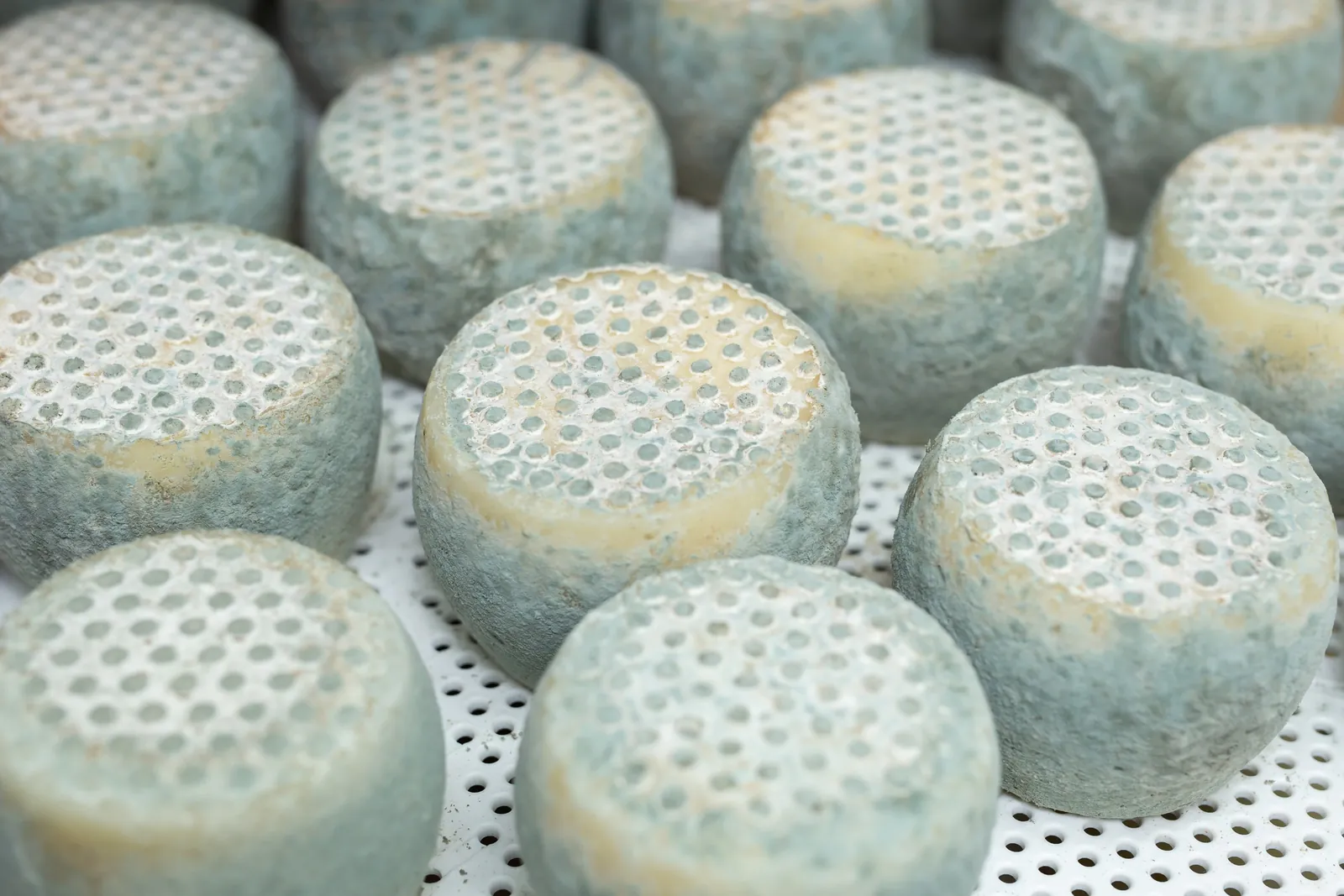
A small dedicated fridge with a temperature controller does, and the work after that is turning, wiping and waiting.
Aging is slow chemistry. Enzymes and microbes break down proteins and fat while moisture leaves the cheese, so flavor concentrates and texture firms. Warmer than a fridge speeds that up, and too dry or too humid ruins the rind. Whichever way you go, the aim is a steady, cool, damp room in miniature. That is what a cheese cave is.
Age cheese at home: temperature and humidity
The temperature to age cheese at home is about 50 to 55°F. A home cheesemaking supplier describes a cheese-aging cave as around 50 to 55°F, and its aging FAQ puts a converted fridge at 52 to 55°F. A kitchen fridge sits near 40°F or below, which is where it should stay for food safety, but it is too cold for aging.
Humidity depends on the rind you want. As guidance, firm natural-rind cheeses do well in the lower part of a high range, and bloomy, washed-rind and blue cheeses want it higher and wetter. Too dry and the rind cracks; too wet and slime and unwanted mold take over. A hygrometer, a small digital gauge that costs little, tells you which way you are drifting.
| Setup | Temperature | Humidity | Good for |
|---|---|---|---|
| Kitchen fridge | About 40°F or below | Low | Storing, not aging |
| Lidded box in the fridge | Warmest spot, still cold | Damp towel or crumpled wet paper towel | A few weeks of extra aging |
| Wine fridge or mini fridge with controller | About 50 to 55°F | Added with a water tray or humidifier | Months of aging |
Wine fridge cheese cave setup
A wine fridge cheese cave setup starts with the fridge, but not every wine fridge works. The supplier above warns that the warmest setting on a standard wine chiller is about 40°F, which is too cold. Its own build used a 2.7 cubic foot mini fridge, a temperature controller and a humidity controller, for a total of $179.38. So the practical choice is one of two things: a wine fridge whose range reaches the mid 50s, or a mini fridge plus a plug-in temperature controller.
A basic wine fridge cheese cave setup has these parts:
- A fridge that can hold 50 to 55°F, set by a controller that reads a probe inside.
- A hygrometer at shelf level, not on the wall.
- A humidity source: a shallow tray of water, a small humidifier, or a controller that runs one.
- Open shelves or a wooden board, so air reaches all sides of the cheese.
- A little air exchange: open the door for a minute every day or two.
Give each cheese its own space, and keep strong cheeses apart from mild ones. Aging a pungent washed rind next to a young cheddar flavors the cheddar.
Aging store-bought cheese
Aging store-bought cheese works only with cheeses that were built to last. The aging FAQ from the same supplier notes that a dry English-style cheddar can be aged 2 to 5 years or more, while most American varieties are made to be eaten when released for retail. A good starting place is a block of sharp cheddar, a clothbound cheddar or a firm Gouda, all of which you can read about in the Gouda guide and the aged versus young cheddar page.
Buy it uncut if you can, with its rind or wax intact, and put it in the cave. Soft cheeses ripen on a schedule set by the maker and gain little from more time, and a cheese sold wrapped in plastic film does not breathe, so aging it adds moisture trouble rather than flavor.
Aging homemade cheese
Aging homemade cheese asks more of you than aging a purchased one, because the cheese must be made right first. Let a new wheel dry on the surface at cool room temperature until no wet film remains before it goes into the cave.
Once in, turn each wheel about once a week and wipe a natural rind about every two weeks after the first month, per the supplier's FAQ. A cloth dipped in brine removes excess mold. Taste a plug of cheese now and then, rather than guessing from the rind.
What most home aging advice gets wrong
Home aging advice tends to blur two separate jobs, keeping and ripening. Cheese in a fridge crisper is being kept, as the storing cheese guide explains; cheese in a cave is being ripened. If you do both in one box, you will do each badly.
The second error is trusting the label on the box. Ripening makes a cheese more pungent, drier and sometimes grainier, which is the goal for some cheeses and a flaw in others. Taste before and during aging, and stop when you like it.
Safety when you age cheese at home
Safety when you age cheese at home rests on the cheese and on cleanliness. The University of Wisconsin Center for Dairy Research notes that cheese is a fermented product, and fermentation inhibits or inactivates pathogens, with active starter cultures working against them. Its guidelines assume a cheese made with good practices and heat-treated milk, so a home-made wheel from untested milk does not carry that assurance.
For raw milk, different rules apply; see raw-milk cheese. Beyond that, wipe tools and shelves, keep the cave at the target temperature, and handle mold with the prevent mold guide. Discard cheese with off smells, pink slime or a sticky, ammonia-heavy surface that turns slimy on a cheese that is not meant to have it.
Questions about aging cheese at home
These questions about aging cheese at home come up most often among new cave owners.
Can you age cheese in a regular fridge?
Aging cheese in a regular fridge works only for a few weeks in a lidded box with a damp towel, in the warmest spot. The supplier's FAQ suggests an airtight container that is 40 percent cheese and 60 percent empty space.
What temperature is best to age cheese at home?
The best temperature to age cheese at home is about 50 to 55°F, with the controller set and a probe inside the fridge.
Can a wine fridge be used as a cheese cave?
A wine fridge can be used as a cheese cave if it reaches the mid 50s, since many only warm to about 40°F. Otherwise add a plug-in temperature controller to a mini fridge.
How long should you age store-bought cheddar?
Store-bought cheddar can be aged for months, and a dry English-style cheddar for years, though most American cheddar is made to be sold young.
Do you need to turn cheese while it ages?
Turning cheese while it ages, about once a week, keeps moisture even, as the aging FAQ advises for wheels.
Start aging cheese at home
To start aging cheese at home, buy a small mini fridge, a controller and a hygrometer, and age one block of sharp cheddar for two months. Taste it against an unaged piece, then decide whether to go further. For plain storage, the fridge is enough.
Sources
- How to Make an Inexpensive Cheese Cave, New England Cheesemaking Supply
- Aging Cheese FAQ, New England Cheesemaking Supply
- Cheese Safety and Storage, Wisconsin Center for Dairy Research