
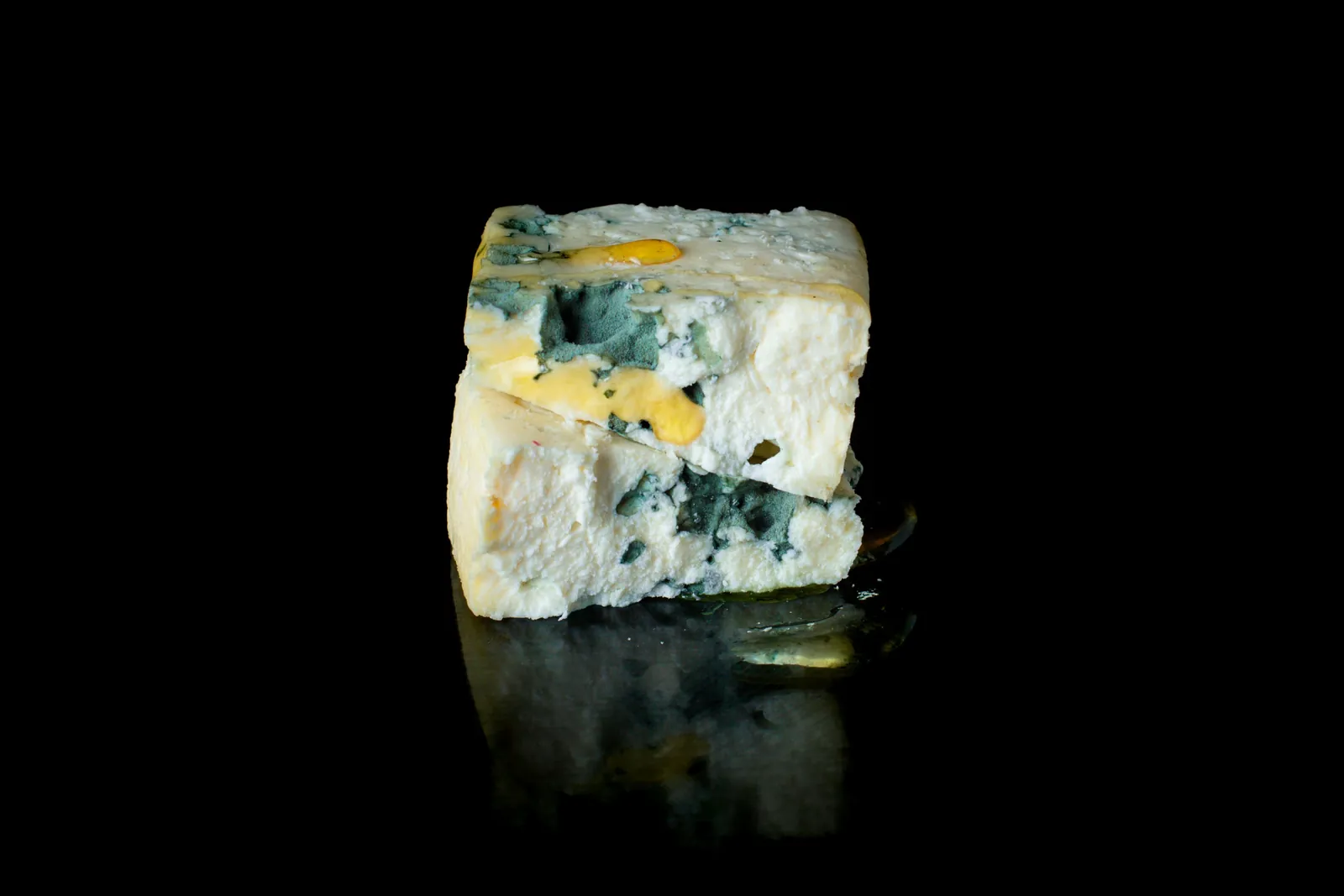
Mold needs moisture, warmth and spores, and good storage takes away the first two while clean handling removes the third.
Mold will still show up now and then, and what you do next depends on the cheese. Hard cheese can be saved with a knife. Soft cheese cannot. The rules below come from the USDA, and they are stricter than most home habits.
How to prevent cheese mold at a glance
This how to prevent cheese mold table lists the habits that matter most and the reason behind each.
| Habit | What to do | Why it works |
|---|---|---|
| Wrap | Cheese paper or parchment, taped shut | Lets the cheese breathe without drying out |
| Separate | One wrapper per cheese | Keeps spores from moving between cheeses |
| Cold | Fridge at 40°F or below, crisper drawer | Slows growth, holds moisture |
| Clean knife | A knife that has not touched mold | Keeps spores off fresh cut faces |
| Rewrap | Fresh paper after each use | Old paper holds moisture and residue |
| Time | Use within the storage times below | The longer it sits, the more chances mold gets |
Wrapping cheese to prevent mold
Wrapping cheese to prevent mold starts with the right material. Wisconsin Cheese recommends cheese paper, which is coated with wax and a porous plastic layer on the inside so the cheese can breathe without being fully exposed, and says parchment paper taped shut also works. Tight plastic wrap does the opposite: it traps moisture against the surface, which is the condition mold likes. The full comparison is in cheese paper vs. plastic wrap.
Wrap each cheese separately. A blue cheese stored touching a wedge of cheddar can seed it with mold, so keep blues apart. When you rewrap, use a fresh sheet and do not wrap the cut face in the same paper the cheese sat in, since that paper is damp and may carry spores. A short tear of paper costs less than a ruined wedge.
Fridge temperature and the crisper drawer
Fridge temperature and the crisper drawer do most of the passive work. The USDA says to keep the refrigerator at 40°F or below. Wisconsin Cheese says most cheeses are comfortable between 34 and 38 degrees, and suggests the produce drawer, where humidity is higher and moisture is better preserved than on the shelves.
Keep strong cheeses in a lidded container inside the drawer, so their smell and spores stay put. More on layouts is in how to store cheese properly.
Clean knives and hands
Clean knives and hands matter because mold usually arrives on the blade. Use a clean knife and cutting board for each cheese, and wash your hands before handling. A knife that has cut a blue cheese or a moldy spot should be washed before it touches anything else. On a board, give each cheese its own knife.
When you trim a moldy spot, keep the knife out of the mold itself. The USDA says to cut at least 1 inch around and below the spot, with the knife not touching the mold, so the blade does not drag it through the clean cheese.
How long cheese lasts before mold
How long cheese lasts depends on its type, and the USDA FoodKeeper app gives the numbers. Hard cheese such as cheddar, Swiss or block Parmesan keeps 6 months unopened and 3 to 4 weeks after opening in the fridge, and 6 months in the freezer. Cottage cheese and ricotta keep 1 week after opening. Quark keeps 7 to 10 days, and fresh cheese curds 2 weeks. FoodKeeper gives no fridge time for soft cheeses such as Brie, so buy those in amounts you will finish and judge by smell and appearance.
Freezing hard cheese stops mold but changes texture, so it suits cooking more than a board. See freezing cheese for what works.
What to do when cheese gets moldy
What to do when cheese gets moldy follows the USDA's mold guidance. The rule is about moisture: dense, dry cheese resists mold spreading inside, and moist cheese does not.
- Hard cheese (cheddar, Swiss, Parmesan): cut off at least 1 inch around and below the mold, then rewrap in fresh paper.
- Surface mold on Gorgonzola or Stilton: it can be trimmed 1 inch, the same as hard cheese.
- Soft cheese (cottage cheese, cream cheese, Neufchatel, chevre, Bel Paese): discard it.
- Crumbled, shredded or sliced cheese: discard the whole package if any mold shows.
- Brie or Camembert with mold that is not part of the cheese: discard it.
The molds used to make cheese are safe, which is why a white Brie rind or blue veins are not a problem. For telling that rind apart from fuzz you did not invite, read white mold on cheese.
Cheese mold mistakes that waste money
Cheese mold mistakes are mostly about habits, and three come up the most. Rewrapping in the same damp plastic is the first. Storing the cheese in the door, where the temperature swings every time it opens, is the second. The third is cutting only a thin sliver off a moldy spot. Mold on hard cheese is not always visible below the surface, so the inch matters.
A fourth is keeping cheese you doubt out of habit. If a wedge looks bad and falls in a discard category above, let it go.
For cheese you cannot finish, the leftover cheese guide has ways to use it up before it turns.
Questions about preventing cheese mold
These questions about preventing cheese mold come up most often.
How do you keep cheese from molding in the fridge?
Keep cheese from molding in the fridge by wrapping it in cheese paper or parchment, storing it in the crisper drawer at 40°F or below, and using a clean knife each time.
Can you cut mold off cheese and eat it?
You can cut mold off hard cheese: remove at least 1 inch around and below the spot and keep the knife out of the mold. Do not do this with soft, crumbled, shredded or sliced cheese.
Should you wrap cheese in plastic wrap?
Plastic wrap is a poor choice for long storage because it traps moisture on the cheese. Cheese paper or parchment lets the cheese breathe, so use those and keep plastic for short stretches.
Does mold on cheese mean it is bad?
Mold on cheese is normal on a mold-ripened cheese like Brie or a blue, because those molds are used to make them. Unwanted mold on other cheeses is a reason to trim or throw out, depending on the cheese.
How long does cheese last after opening?
Cheese lasts 3 to 4 weeks after opening for hard types such as cheddar, 1 week for cottage cheese and ricotta, and 7 to 10 days for quark, according to USDA FoodKeeper.
Prevent cheese mold with three habits
To prevent cheese mold, wrap separately in breathable paper, keep the fridge at 40°F or below, and use a clean knife. Next time you open a wedge, replace its paper before you put it back. If you are shopping for the cheese itself, the soft, semi-soft and hard guide shows which ones will keep longest.
Sources
- How to Store Cheese the Right Way, Wisconsin Cheese, Dairy Farmers of Wisconsin
- Molds on Food: Are They Dangerous?, USDA Food Safety and Inspection Service
- Leftovers and Food Safety, USDA Food Safety and Inspection Service
- FoodKeeper App, FoodSafety.gov (USDA)