
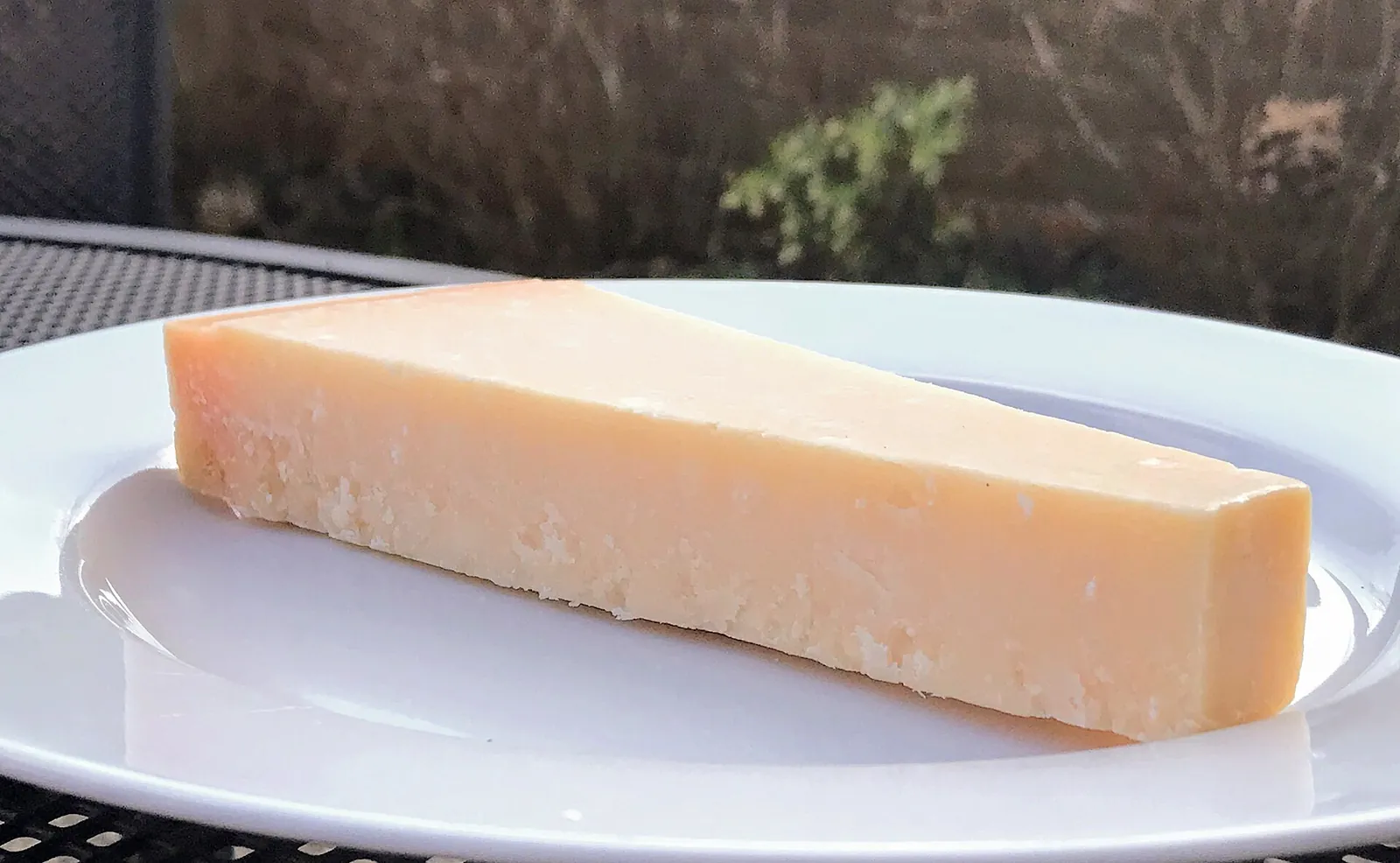
A rind from a grating cheese is too tough to chew but is made of the same cheese, so it gives up flavor to hot liquid.
The rind is the outer layer that formed as the cheese dried and aged, so a hard cheese's rind is the driest, firmest part of the wedge. Simmering softens it and moves salt, fat and savory flavor into the broth. That is the whole trick, and it works on almost anything wet that cooks for a while.
What to do with cheese rinds at a glance
This table on what to do with cheese rinds sorts the common types by what happens to them in the kitchen.
| Rind | Example cheeses | What to do |
|---|---|---|
| Hard natural | Parmigiano-Reggiano, Grana Padano, pecorino, aged Gouda | Simmer in soup, beans, sauce or stock, then remove |
| Bloomy | Brie, Camembert | Eat with the cheese |
| Washed | Taleggio, Époisses | Eat with the cheese if you like the flavor, or trim it |
| Wax | Edam, waxed cheddar, Babybel | Peel off and discard |
| Cloth | Clothbound cheddar | Remove before eating, discard |
| Bark | Wrapped soft cheeses | Not edible; it is a container |
The US Dairy Export Council's rind guide, which lists which rinds are edible, puts natural rinds such as Parmesan in the technically edible but tough and chewy group, and recommends cooking with them. It calls bark and cloth rinds not edible and says wax is not intended for eating. The rind types page explains how each kind forms, and can you eat cheese rind covers eating them.
Parmesan rind in soup
A Parmesan rind in soup is the classic use, and the method is short. Drop one rind, about the size of a matchbook or larger, into a pot of minestrone, white bean soup, lentils or vegetable soup when the liquid starts to simmer. Cook it for the length of the soup, or at least 20 to 30 minutes, until the rind turns soft and a little gelatinous. Fish it out before serving.
A rind adds body and a savory backbone without making the soup taste like cheese. Because the rind carries salt, hold back on salt until the end and taste first. A small piece is plenty for a quart or two of liquid; an enormous rind in a small pot can make the broth gluey.
The cooked rind is edible, and some cooks eat the soft, chewy piece as a cook's treat. If it still feels rubbery, it needs more time or is a very old, dry rind, and it can go in the trash.
Other ways to use hard cheese rinds
Other ways to use hard cheese rinds follow the same logic: anything that simmers can take one.
- Tomato sauce and ragù: add a rind with the tomatoes and pull it out when the sauce is done, as you would a bay leaf.
- Beans and braises: a rind in a pot of beans, braised greens or a stew adds depth for the cost of nothing.
- Risotto stock: warm the stock with a rind in it, then discard it before the stock goes into the rice. The Parmesan risotto page covers the rest of the method.
- Cream sauce: steep a rind in warm cream or milk for 15 to 20 minutes, remove it, and use the infused liquid for a sauce or a gratin.
- Rind broth: simmer rinds alone in water with an onion and herbs for a quick vegetarian umami broth, strained before use.
- Grated: a very dry rind can be scrubbed and grated into a sauce, but a box grater and a tough rind make for tiring work.
If you save a lot of rinds, the leftover cheese guide shows where they fit alongside other odds and ends.
How to save cheese rinds
How to save cheese rinds is simple: keep them as you finish each wedge. Cut the rind off the last bit of cheese, leaving a little cheese on it if you like, since that adds flavor. Scrub off any dirt or label residue, let it dry, and put it in a container.
For short storage, a bag in the fridge works. For the long term, freeze rinds in a freezer bag or small container, labeled with the cheese and the date, and drop them straight into the pot from the freezer. Wrapped rinds are best kept apart from soft cheeses so the flavors do not travel.
The USDA FoodKeeper figures put an unopened block of hard cheese such as Parmesan at 6 months in the fridge and a frozen one at 6 months, and opened hard cheese at 3 to 4 weeks in the fridge. Those figures are for the cheese, not for a rind kept in a bag, so treat them as a guide and use frozen rinds within a few months. The freezing cheese page explains what freezing does to texture, which does not matter for a rind that will be simmered.
Cheese rinds to throw away
Cheese rinds to throw away are the ones that are not cheese. Remove and discard:
- Wax: the red coat on Edam or the wax on a small snack round is not meant to be eaten. Do not simmer it.
- Cloth: the cloth bandage on a clothbound cheddar is a container.
- Bark: a strip of spruce or similar bark around a soft cheese is packaging.
- Plastic coatings and stickers: these are not food and should be cut off before the rind goes in a pot.
- Rind with mold that is not part of the cheese: for hard cheese, USDA says to cut off at least 1 inch around and below a mold spot, which means a moldy rind is better discarded than saved.
For the cheese itself, the USDA mold guidance says to keep the knife out of the mold, and that the molds used to make cheeses, such as the white bloom on Brie and the veins in blue, are safe. Moldy soft cheese such as cottage cheese, cream cheese or chevre should be thrown away. See the white mold guide for how to tell a bloomy rind from spoilage.
Cheese rind mistakes that waste flavor
Cheese rind mistakes mostly come down to the wrong rind or the wrong timing.
Simmering a waxed rind is the clearest one: wax melts into the broth and does nothing useful. The second is leaving the rind in too long after the soup is done, which can leave it rubbery in a pot sitting on the stove. The third is salting the pot before the rind has had a chance to season it.
A softer mistake is treating every rind as equal. A bloomy rind on Brie or Camembert is part of the cheese and is eaten with it, and it turns slimy in a hot soup. Washed rinds smell strong, and they are usually eaten with the cheese or trimmed rather than simmered.
Questions about what to do with cheese rinds
These questions about what to do with cheese rinds come up most often.
What can you do with Parmesan rinds?
Parmesan rinds can be simmered in soup, beans, tomato sauce, stock or risotto liquid, then removed before serving, which adds savory depth.
Can you freeze cheese rinds?
You can freeze cheese rinds, and hard ones go straight from the freezer into a simmering pot without thawing.
Which cheese rinds are good for cooking?
Good cheese rinds for cooking are hard, natural ones such as Parmigiano-Reggiano, Grana Padano, pecorino and aged Gouda; skip wax, cloth, bark and plastic.
Can you eat a Parmesan rind?
You can eat a Parmesan rind once it has simmered and softened, but straight from the wedge it is tough and chewy.
Can you eat the rind on Brie?
You can eat the rind on Brie, since it is a bloomy rind made of safe mold, and it is eaten with the cheese; the Brie page covers it.
Use your cheese rinds
Cheese rinds are worth saving: start a bag in the freezer, add every hard natural one you finish, and drop one into the next pot of soup, beans or sauce. Throw away wax, cloth, bark and plastic, and eat bloomy rinds with the cheese. For the cheese you bought the rind from, the Parmigiano-Reggiano page and the storing cheese guide cover buying and keeping it.
Sources
- Can You Eat the Rind on Brie and Other Cheeses?, U.S. Dairy Export Council
- FoodKeeper App, FoodSafety.gov (USDA)
- Molds on Food: Are They Dangerous?, USDA Food Safety and Inspection Service