
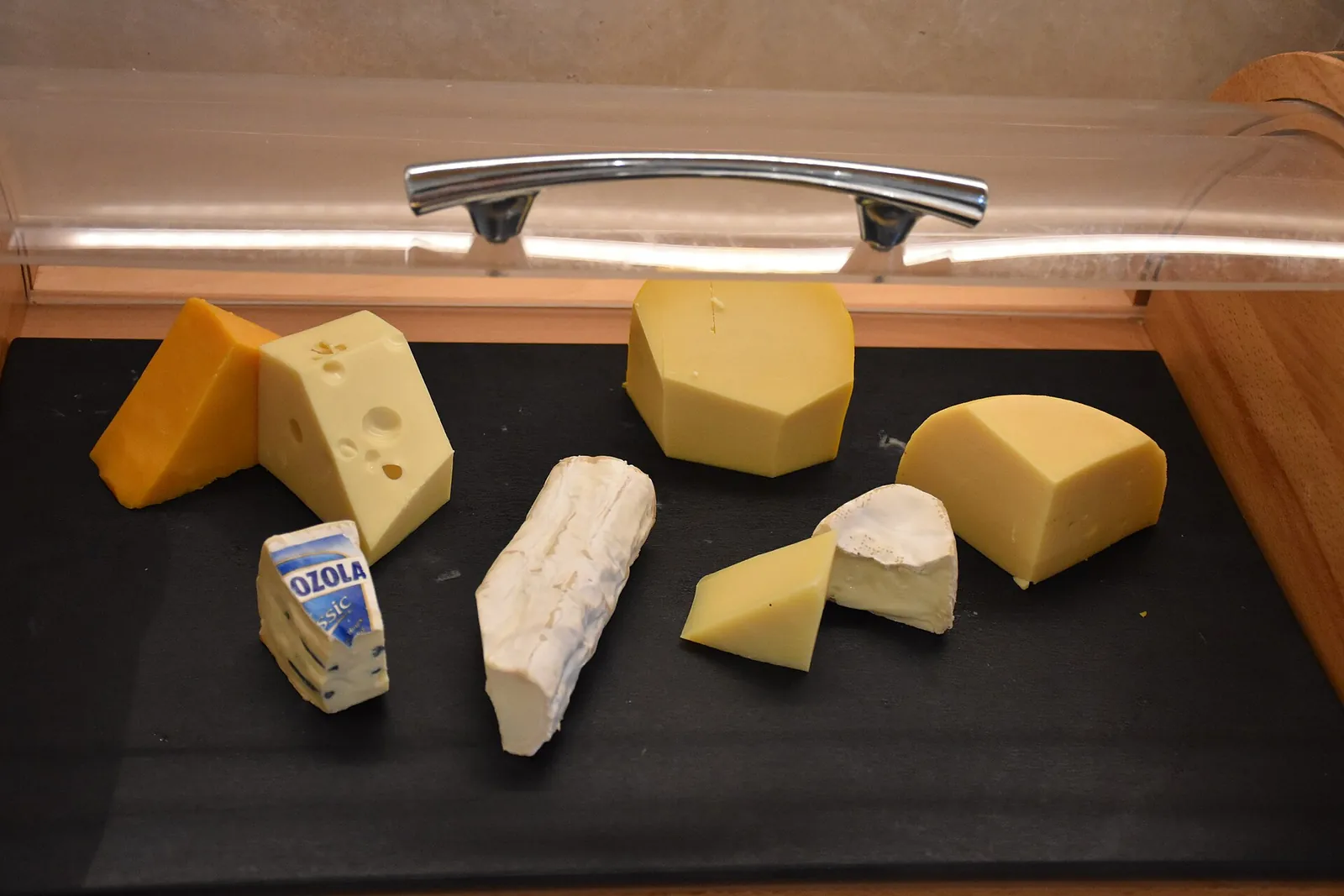
Most odds and ends melt well together, so a mixed pile of cheddar, Gruyère and an old chunk of Gouda is a good start for a sauce, a bake or a soup.
This page is about what to do with scraps and when to let go. For planning the amount in the first place, see the cheese board guide; for the general rules of keeping a cheese well, see how to store cheese properly.
Leftover cheese at a glance
This leftover cheese table matches common odds and ends to what they do best and how soon to use them.
| Leftover | Best use | Use or freeze by |
|---|---|---|
| Hard ends (cheddar, Gruyère, Gouda) | Sauce, gratin, frittata, grilled cheese | Weeks if wrapped well |
| Hard rinds (Parmesan style) | Simmered in soup, then removed | Months in the freezer |
| Blue cheese crumbles | Salad, dressing, mashed potatoes | Within about a week |
| Soft ripened (brie, Camembert) | Baked, in omelets, on toast | A few days |
| Fresh (goat, ricotta, feta) | Pasta, eggs, toast | A few days |
| Shredded or grated | Casseroles, quesadillas, freezer bag | Freeze right away |
The right-hand column is guidance, not a rule; the safety limits are in the sections below.
Cooking with leftover cheese: melt it into a sauce
Cooking with leftover cheese works best when you melt it, since a blend of ends often tastes better than one cheese alone. Grate the pieces, toss them with a teaspoon of cornstarch, and stir them into warm milk or a simple béchamel off the heat until smooth. That sauce becomes macaroni, nachos, a vegetable gratin or a pot of cheese fondue with wine.
Balance the mix: two parts of a good melter (cheddar, Gruyère, young Gouda) to one part of something sharp or aged. Very hard, dry ends melt poorly alone, and their salt and crumbly texture suit grating over the finished dish instead.
Baking with leftover cheese: eggs, tarts and gratins
Baking with leftover cheese suits eggs best, because custard forgives almost any mix. A cheese frittata takes any combination of grated ends and a handful of vegetables, a quiche turns a mixed pile into a dinner, and soft cheeses like brie can be baked on their own as in the baked brie page. Fold grated hard ends into savory scones or muffin batter, or scatter them over roasted potatoes and cauliflower in the last 10 minutes of baking.
Leftover cheese for quick snacks and toppings
Leftover cheese turns into quick snacks with almost no work. Spoon small piles of finely grated hard cheese on parchment and bake at 400°F for 5 to 7 minutes until lacy and golden for cheese crisps. Crumble blue cheese or feta onto a salad, grate dry ends over soup or toast, and melt scraps onto a baguette under the broiler. A mixed tasting plate of small pieces with crackers is good for a quiet evening, but the 2-hour limit below still applies.
Saving cheese rinds from leftovers
Saving cheese rinds from leftovers gives you free flavor, but only the right ones. Rinds from Parmigiano-Reggiano and similar hard cheeses can simmer in soup, beans or tomato sauce for 20 to 30 minutes, then be fished out. The what to do with rinds page has more. Do not simmer waxed rinds or plastic-coated ones, and scrub the rind before using it.
Freezing leftover cheese
Freezing leftover cheese is a good fix for shredded, grated and hard cheeses you cannot finish. Freeze grated cheese flat in a bag with the air pressed out so you can break off a handful, and expect it to turn crumbly, so use it cooked rather than on a board. The freezing cheese guide covers which cheeses work. Fresh cheeses and soft ripened ones do not freeze well.
How long leftover cheese keeps in the fridge
How long leftover cheese keeps in the fridge depends on moisture. According to USDA FoodKeeper data, hard cheese such as cheddar, Swiss or block Parmesan keeps 3 to 4 weeks once opened (6 months unopened), and cottage or ricotta cheese about 1 week once opened, with the fridge at 40°F or below. The USDA's leftovers guidance says to refrigerate cooked leftovers within 2 hours and to use most of them within 3 to 4 days, so a dish made from leftover cheese follows that clock. Reheat leftovers to 165°F.
Wrap the cheese in wax or cheese paper, then loosely in a bag, so it can breathe, and give the cut face a fresh wrap each time.
When to throw out leftover cheese
When to throw out leftover cheese is set by what kind of cheese it is and what is growing on it. The USDA's mold guidance says to cut off at least 1 inch around and below a mold spot on hard cheese, keeping the knife out of the mold, and then re-cover it in fresh wrap. It says to discard soft cheeses such as brie and Camembert when they carry mold that is not part of how they are made, because wet foods can be contaminated below the surface. Mold that is part of the cheese, as in blue cheese, is fine, and a surface spot on a hard blue cheese is handled like any hard cheese. Shredded and crumbled cheese with mold should go in the trash.
Also throw out cheese that has been out for more than 2 hours (1 hour above 90°F), cheese that smells sour or ammonia-sharp in an unusual way, and anything slimy. The white mold guide separates a bloomy rind from spoilage, and the mold prevention page shows how to avoid the problem.
Leftover cheese mistakes to avoid
Leftover cheese mistakes are mostly about timing. Keeping the odds and ends for months in the cheese drawer until they are dry and mixed in smell is the common one. Another is keeping a board's cheese after a long party: it should be thrown out after two hours at room temperature. A third is melting only hard, dry scraps and getting a gritty sauce, which is why the mix needs a good melter.
Questions about leftover cheese
These questions about leftover cheese cover what people most often ask about scraps.
What is the best use for leftover cheese?
Leftover cheese can go into a sauce, a frittata, a gratin, soup or cheese crisps, or be grated and frozen for later.
Is leftover cheese safe after cutting off the mold?
Leftover cheese is safe after cutting off mold only if it is hard: the USDA says to cut at least 1 inch around and below the spot. Discard soft cheese with unplanned mold.
How long is leftover cheese good for?
Leftover cheese is good for 3 to 4 weeks for opened hard cheese and about a week for opened cottage or ricotta, per USDA's chart, and about 3 to 4 days for cooked dishes.
Can you use the rind of leftover cheese?
The rind of leftover cheese can be used if it is a natural hard-cheese rind, like Parmesan; simmer it in soup and remove it before serving.
Use up your leftover cheese this week
To use up leftover cheese this week, sort it by softness, cook the fresh and soft pieces first, melt the hard ends into a sauce or frittata, freeze grated extras, and save the Parmesan rind for soup. When in doubt about a soft cheese with mold, discard it.
Sources
- FoodKeeper App, FoodSafety.gov (USDA)
- Leftovers and Food Safety, USDA Food Safety and Inspection Service
- Molds on Food: Are They Dangerous?, USDA Food Safety and Inspection Service
- Charcuterie Boards and Food Safety, University of Nebraska-Lincoln Extension