
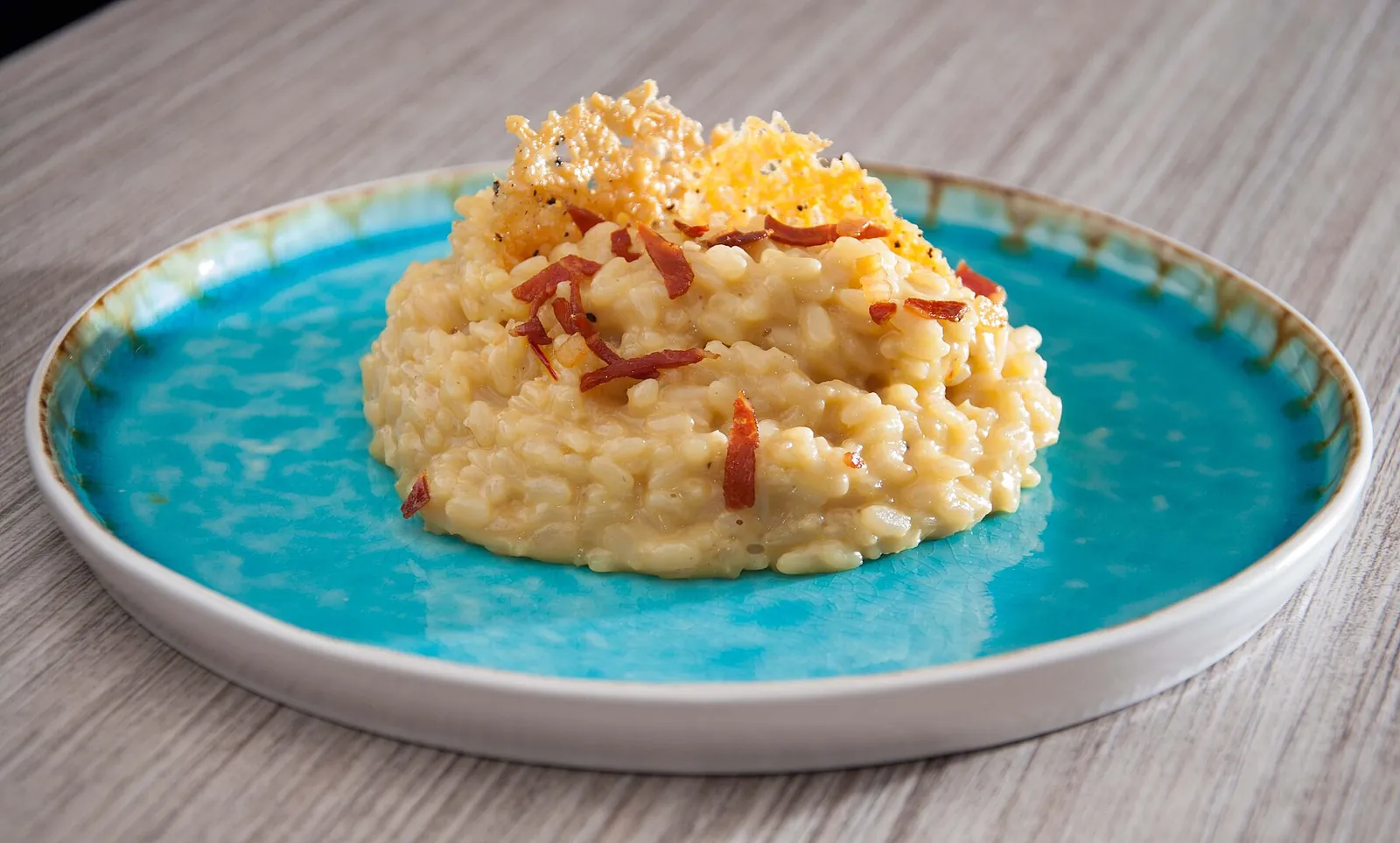
There is no cream in it.
The rice does the work. Rubbing grains against each other in the pot releases starch into the stock, and the cheese and butter beaten in off the heat bind it into a glossy sauce. Real Parmigiano matters here because it dissolves into the rice and seasons it at the same time.
Parmesan risotto at a glance
This Parmesan risotto table gives the planning numbers.
| Yield | 4 servings |
| Active and total time | 40 minutes, mostly at the stove |
| Pan | Heavy, wide pot over medium heat |
| Best cheese | Parmigiano-Reggiano aged 20 to 26 months, finely grated |
| Make-ahead | Serve fresh; partial cooking is possible, see below |
How to make Parmesan risotto
This Parmesan risotto recipe adds hot stock in stages and finishes with cheese and cold butter off the heat.
Ingredients for Parmesan risotto
These are the ingredients for Parmesan risotto, enough for four.
- 5 cups (1.2 L) chicken or vegetable stock, kept hot, unsalted or low-sodium
- 2 tablespoons butter, for cooking
- 1/2 medium onion, finely chopped (about 1/2 cup)
- 1 1/2 cups (300 g) Carnaroli or Arborio rice, not rinsed
- 1/2 cup (120 ml) dry white wine
- 3 oz (85 g) Parmigiano-Reggiano, finely grated (about 1 cup), plus extra for serving
- 2 tablespoons cold butter, cubed, for finishing
- 1 piece Parmigiano-Reggiano rind, about 2 inches (5 cm), optional
- Salt and black pepper, to taste
Steps for making Parmesan risotto
These steps for making Parmesan risotto take about 30 minutes at the stove.
- Heat the stock in a pot to a gentle simmer, adding the cheese rind if you have one, and keep it hot beside the stove.
- Melt the cooking butter in a heavy wide pot over medium heat, add the onion and cook for 4 to 5 minutes until soft and translucent, not browned.
- Add the rice and stir for 2 minutes, until the edges of the grains turn translucent and the pot smells nutty.
- Pour in the wine and stir until it has been absorbed and the smell of alcohol is gone, about 1 minute.
- Add one ladle of hot stock, about 3/4 cup (180 ml), and stir often until the rice has absorbed it and a spoon drawn through leaves a brief trail.
- Repeat with more ladles of stock for 16 to 18 minutes, keeping the heat at a lively simmer, until the rice is tender with a small firm center.
- Remove the rind, take the pot off the heat, add the cold butter and the grated Parmigiano, and beat hard for 30 seconds until glossy and creamy.
- Add a splash of hot stock if it looks stiff, cover for 1 minute, season, and serve in warm shallow bowls, where it should spread slowly and not hold a mound.
The best cheese for Parmesan risotto
The best cheese for Parmesan risotto is Parmigiano-Reggiano, a hard cow's milk cheese from Parma, Reggio Emilia, Modena and parts of Bologna and Mantua, aged at least 12 months. Its savory, nutty depth is the point of the dish, and the cheese melts into the hot rice and thickens the starchy liquid.
The age matters. The Parmigiano-Reggiano consortium describes the 20 to 26 month class as a balance between mild and rich, which makes it the safe cooking pick, as the buying guide explains. Older wheels taste stronger and can make the dish heavy, while very young wheels are milder and wetter. To avoid imitations, check the dotted rind lettering, a point covered in real vs fake Parmesan.
Grate the cheese finely just before you use it, since it dissolves faster. Because Parmigiano is salty, hold back the salt until the cheese is in. If you need a swap, Grana Padano is the closest in style, while Pecorino Romano is sharper and saltier, as Parmesan vs Pecorino Romano explains.
Parmesan risotto mistakes and fixes
Parmesan risotto mistakes tend to come from the rice, the stock or the heat. Rinsing the rice washes off the starch that creates the sauce, and cold stock stops the cooking each time you add it.
- Gluey or stiff. Too much stirring, too little stock, or too long off the heat. Beat in hot stock a splash at a time.
- Hard center. Stock ran out too early. Add another ladle and keep cooking until the grain is just tender.
- Cheese clumps or turns oily. The pot was too hot when the cheese went in. Take it off the burner first.
- Too salty. Salted stock plus a salty cheese. Use low-sodium stock and season last.
Parmesan risotto variations
Parmesan risotto variations add one flavor at a time. Saffron steeped in the stock makes a golden version, and sauteed mushrooms or blanched peas can go in at the end. Vegetable stock keeps it vegetarian, as long as the cheese is acceptable to you, since traditional Parmigiano-Reggiano is made with calf rennet.
Parmesan risotto leftovers and make-ahead
Parmesan risotto leftovers can be refrigerated, though the texture firms up. USDA FSIS says to refrigerate leftovers within 2 hours and use them within 3 to 4 days. Reheat in a pan with a splash of stock, stirring until it loosens and steams hot. Leftover risotto also makes good rice cakes pan-fried until crisp. For a dinner party, cook the rice until about two thirds done, spread it on a tray to cool, and finish with hot stock and the cheese later.
Save the cheese rind rather than throwing it out. The ideas in what to do with rinds include simmering it in stock for the pot.
Questions about Parmesan risotto
These questions about Parmesan risotto cover the rice, the cheese and the finish.
What rice is best for Parmesan risotto?
The best rice for Parmesan risotto is a starchy short-grain Italian type such as Carnaroli or Arborio. Both release starch as they cook, and Carnaroli holds its shape slightly better.
What is mantecatura in Parmesan risotto?
Mantecatura in Parmesan risotto is the final step of beating cold butter and grated Parmigiano into the rice off the heat. It makes the dish glossy and creamy.
Is cream needed in Parmesan risotto?
Cream is not needed in Parmesan risotto, because the rice starch and the cheese and butter finish make the creaminess. Cream can dull the flavor of the cheese.
Why add stock gradually to Parmesan risotto?
Adding stock gradually to Parmesan risotto, with frequent stirring, rubs starch off the grains a little at a time. It gives creaminess and keeps the rice from boiling soft.
Is pre-grated Parmesan fine in risotto?
Pre-grated Parmesan in risotto often has anti-caking starch and a flatter flavor. Grating a wedge yourself gives a smoother melt and more taste.
Make Parmesan risotto tonight
Parmesan risotto needs patient stirring, hot stock and a wedge of real Parmigiano grated at the last minute. Browse the Italian cheese guide for more regional cheeses to cook with.
Sources
- Parmigiano-Reggiano PDO single document, European Commission
- Parmigiano-Reggiano product guide: seals and marks, Consorzio del Formaggio Parmigiano-Reggiano
- Leftovers and Food Safety, USDA Food Safety and Inspection Service