
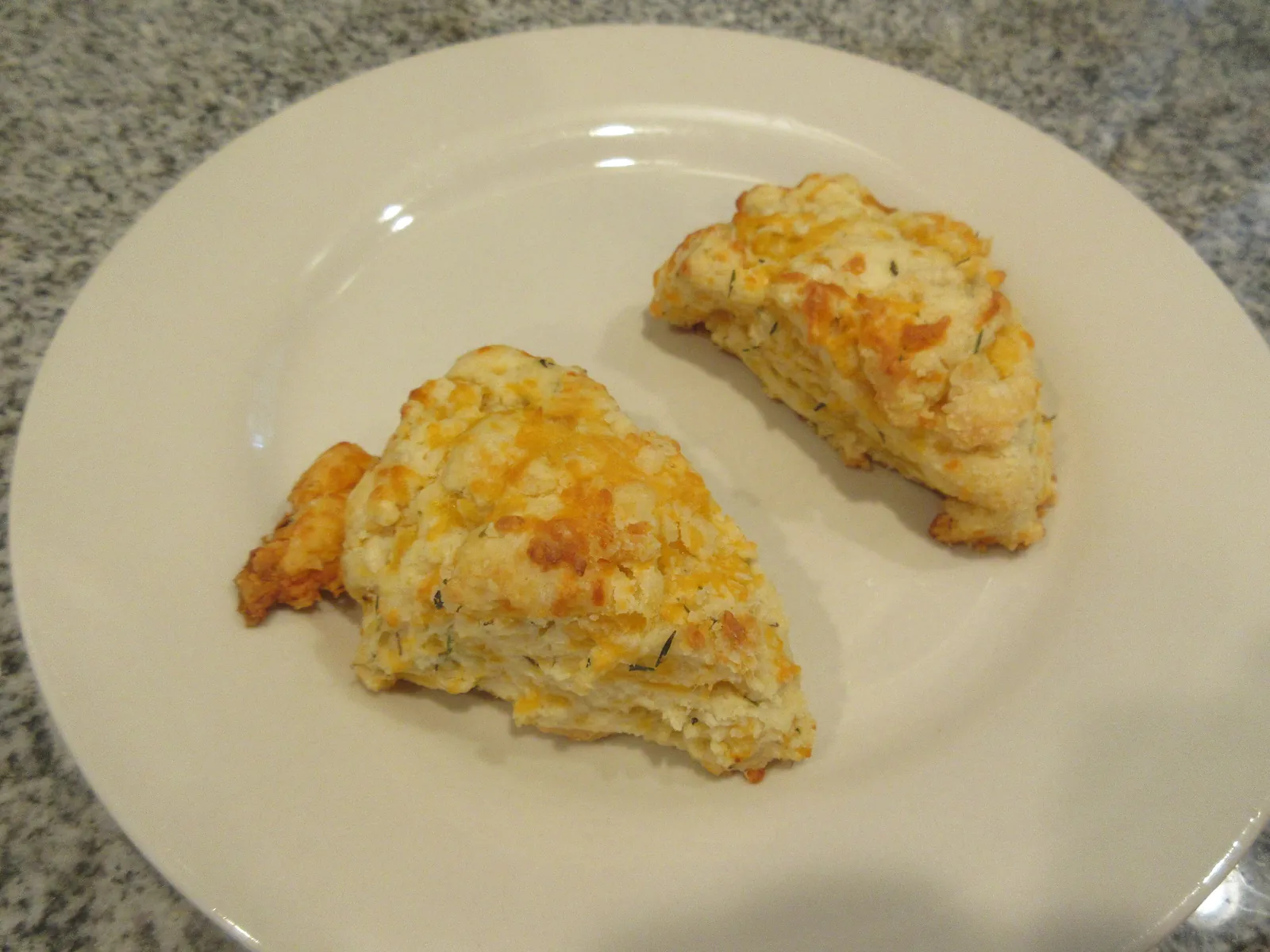
They need no yeast and no rising time, so you can go from bowl to oven in 20 minutes.
The method is the same one used for American cheese biscuits: cold fat is cut into flour, and in the oven the butter melts and sends up steam that lifts and layers the dough. Cheese goes in as one more ingredient, and it takes over a fair part of the job of the fat.
Cheese scones at a glance
This cheese scones table gives the yield, timing and temperature for the recipe below.
| Yield | 8 scones |
| Active time | 20 minutes |
| Total time | About 40 minutes |
| Oven | 425°F (220°C) |
| Best cheese | Sharp cheddar, aged 6 to 12 months |
| Make ahead | Shape and freeze unbaked; bake from frozen |
How to make cheese scones
Making cheese scones depends on keeping the butter cold and handling the dough as little as possible.
Ingredients for cheese scones
These ingredients for cheese scones make 8 wedges; weigh the flour and cheese for steady results.
- 2 cups (250 g) all-purpose flour, plus more for the counter
- 1 tablespoon baking powder
- 1/2 teaspoon fine salt
- 1/2 teaspoon dry mustard powder
- Pinch of cayenne pepper
- 5 tablespoons (70 g) cold unsalted butter, cut in 1/2 inch cubes
- 6 oz (170 g) sharp cheddar, coarsely grated, about 1 1/2 cups, plus 1 oz (30 g) for the tops
- 3/4 cup (180 ml) cold buttermilk, plus 1 tablespoon for brushing
Steps for making cheese scones
Follow these steps for making cheese scones, and chill the shaped dough if the butter feels soft.
- Heat the oven to 425°F (220°C) with a rack in the upper third, and line a baking sheet with parchment.
- Whisk the flour, baking powder, salt, mustard and cayenne in a large bowl.
- Add the cold butter and rub it into the flour with your fingertips, flattening the cubes, until the biggest pieces are the size of peas.
- Stir in the 6 oz of cheese so every shred is coated in flour.
- Pour in the cold buttermilk and stir with a fork just until a shaggy dough forms, with a few dry patches still showing.
- Turn the dough onto a floured counter and press it together, folding it over twice, then pat it into a round about 1 inch thick and 8 inches across.
- Cut the round into 8 wedges with a sharp knife, or stamp rounds with a floured cutter, pressing straight down and not twisting.
- Set the scones 2 inches apart on the sheet, brush the tops with the extra tablespoon of buttermilk and sprinkle with the last ounce of cheese.
- Bake 15 to 18 minutes, until risen, deep golden on top and cheese is crisp at the edges.
- Cool on the sheet for 5 minutes, then serve warm.
The best cheese for cheese scones
The best cheese for cheese scones is a sharp cheddar, because the flavor must survive a lot of flour. A cheddar aged 6 to 12 months is a good target: it is sharp enough to taste through the dough, but still moist enough to melt into pockets. The U.S. standard for cheddar caps moisture at 39 percent and sets milkfat at 50 percent of the solids, so cheddar already has the dry, fatty structure that bakes well. The aged vs young cheddar page shows how age changes both taste and texture, and the cheddar origin and uses page covers the style.
Mild cheddar tastes lost in scones. For a nuttier version, replace a third of the cheddar with Gruyère, which is also a good melter, and for a sharper, saltier edge add a spoonful of finely grated Parmesan. Grate from a block: pre-shredded cheese is coated with powder that dries the dough, and a block grates cleanly if you chill it first, as the grating guide explains. Per ounce, USDA lists generic cheddar at 114 calories, 6.5 grams of protein and 9.4 grams of fat.
Cheese scones vs biscuits
Cheese scones vs biscuits is mostly a matter of fat, sweetness and shape. British scones are typically a little denser and often have an egg; American biscuits use more butter or shortening and fold the dough into layers for flakiness. Both are leavened with baking powder, both depend on cold fat, and the savory cheese versions are close enough that this recipe works for either. To lean toward biscuits, add 2 tablespoons more butter and fold the dough three times before patting it out.
Cheese scones mistakes and how to fix them
Cheese scones mistakes come down to warm butter, too much mixing and sloppy cutting.
Tough scones. Gluten developed because the dough was mixed too long. Stop when the dough is shaggy, and fold it only twice on the counter.
Flat scones. The butter was warm, the baking powder was old, or the cutter was twisted and sealed the edges. Keep everything cold, use fresh baking powder (it loses strength over time) and press straight down.
Greasy bottoms. The cheese was too rich or too old, or the butter melted into the dough before baking. Chill the shaped scones for 15 minutes first.
Dry scones. Too much flour on the counter or an overbaked tray. Measure by weight and pull them as soon as the tops are deep golden.
Cheese scones variations
Cheese scones variations are easy since the base takes about any savory add-in. Fold in 2 tablespoons of chives or 1 finely chopped jalapeño, swap the buttermilk for whole milk plus 1 teaspoon of lemon juice if you have none, or add 3 slices of crisp, crumbled bacon. For another savory cheese bake, try cheese straws or gougères.
Storing and reheating cheese scones
Storing cheese scones is best done by freezing. Freeze the shaped, unbaked wedges on a tray, bag them and bake from frozen at 425°F, adding 3 to 5 minutes. Baked scones are best the day they are made; wrap leftovers and keep them at room temperature for a day, or refrigerate them.
Per the USDA, leftovers should go in the refrigerator within 2 hours, be eaten within 3 to 4 days and be reheated to 165°F. Reheat on a tray at 350°F for 8 to 10 minutes, which also re-crisps the cheese on top.
Questions about cheese scones
These questions about cheese scones cover the cheese, the toughness problem and the biscuit comparison.
What cheese is best for cheese scones?
The best cheese for cheese scones is sharp or extra-sharp cheddar; a little mustard powder or cayenne boosts the flavor.
Why do cheese scones turn tough?
Cheese scones turn tough from overmixing or warm butter. Mix only until shaggy and keep the butter cold.
Are cheese scones the same as cheese biscuits?
Cheese scones and cheese biscuits are close cousins: both use cold fat and baking powder, but biscuits are flakier and scones a bit denser.
Do cheese scones freeze well?
Cheese scones freeze well, best as shaped, unbaked wedges baked from frozen, or as baked scones reheated in a 350°F oven.
What do you serve with cheese scones?
Cheese scones go with butter, soup, chutney or a savory brunch; the cheese and jam and chutney guide has ideas.
Cheese scones, in short
For cheese scones, use cold butter, cold buttermilk and sharp cheddar, mix less than feels right, and bake hot. Make a batch this weekend, freeze half of the wedges unbaked, and you have fresh cheese scones for a weeknight soup.
Sources
- 21 CFR 133.113, Cheddar cheese, Cornell Legal Information Institute
- Leftovers and Food Safety, USDA Food Safety and Inspection Service
- Cheese, cheddar (173414), USDA FoodData Central (SR Legacy)