
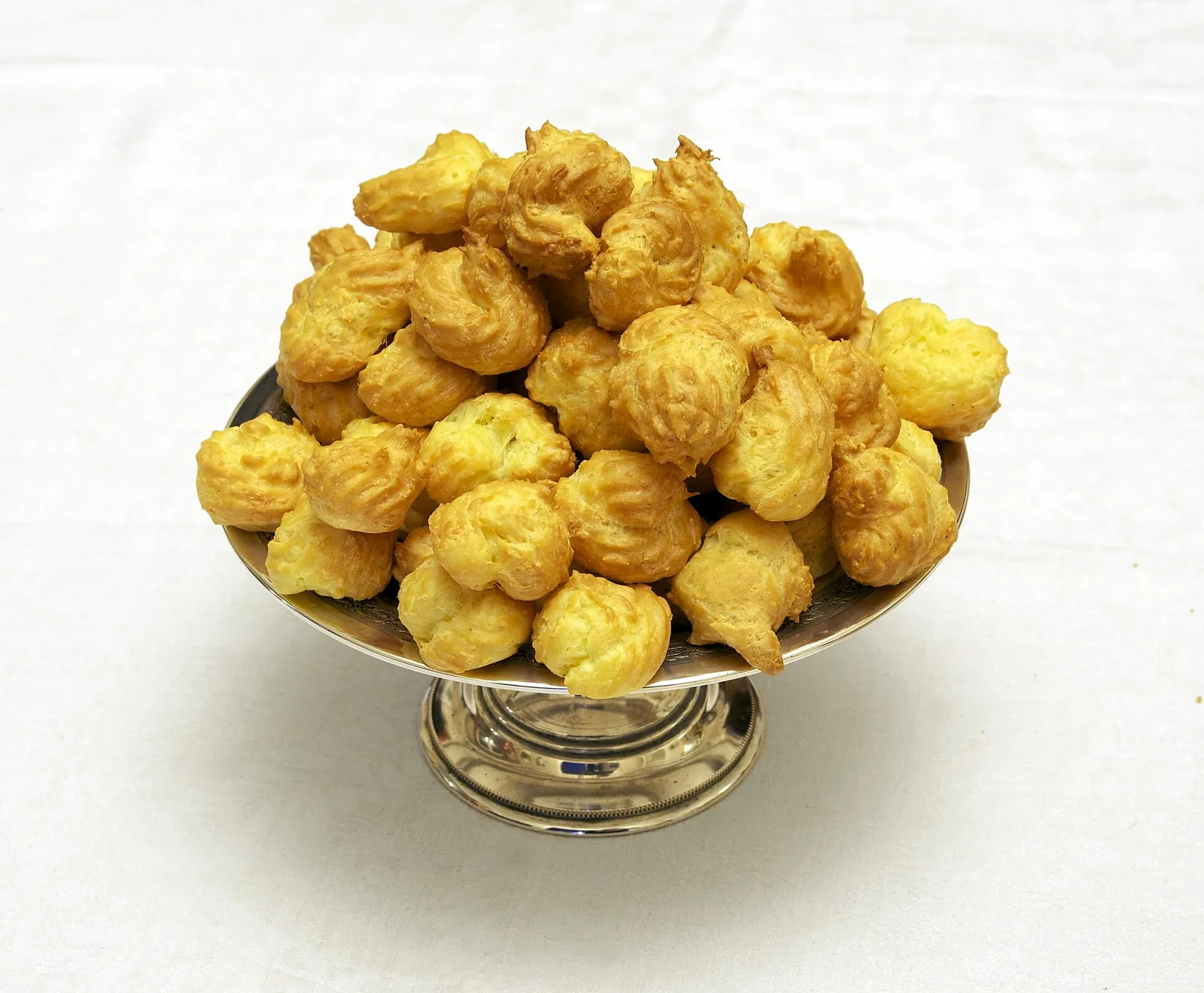
They are easier than their reputation, because the dough comes together in one pot in about ten minutes.
What makes them work is steam. The wet paste turns to steam in a hot oven and inflates the puff, while the eggs and flour set around it, so the shell stays hollow. Cheese adds flavor, but it also adds weight and fat, which is why the amount and the kind both matter.
Gougères at a glance
This gougères table gives the yield, timing, temperatures and the cheese that suits the recipe below.
| Yield | About 30 puffs, 1.5 inches wide |
| Active time | 25 minutes |
| Total time | About 55 minutes |
| Oven | 425°F (220°C) for 10 minutes, then 375°F (190°C) |
| Best cheese | Classic Gruyère, 6 to 9 months old; young Comté is the closest swap |
| Make ahead | Pipe and freeze unbaked; bake from frozen |
How to make gougères
Making gougères takes one saucepan, a wooden spoon and a baking sheet, and the order of steps matters more than the equipment.
Ingredients for gougères
These ingredients for gougères make about 30 puffs; weigh the flour and cheese if you can, since choux is sensitive to flour.
- 1 cup (240 ml) water
- 4 tablespoons (57 g) unsalted butter, cut in pieces
- 1/2 teaspoon fine salt
- 1 cup (125 g) all-purpose flour
- 4 large eggs, at room temperature, plus 1 beaten egg for brushing
- 3 oz (85 g) Gruyère, finely grated, for the dough
- 1 oz (30 g) Gruyère, finely grated, for the tops
- 1/2 teaspoon dry mustard powder
- Black pepper and a pinch of nutmeg
Steps for making gougères
Follow these steps for making gougères in order, and keep the oven door shut until the puffs are set.
- Heat the oven to 425°F (220°C) and line two baking sheets with parchment.
- Bring the water, butter and salt to a full boil in a medium saucepan, so the butter is melted before the water starts to evaporate.
- Add all the flour at once, take the pan off the heat and stir hard until no dry flour is left.
- Return the pan to medium heat and stir for 2 minutes, until the paste pulls into a ball and a thin film forms on the bottom of the pan.
- Scrape the paste into a bowl and stir for a minute to let the steam escape, so it will not cook the eggs.
- Beat in 3 of the eggs one at a time, fully mixing each in before adding the next, until the paste is smooth and glossy.
- Beat the fourth egg in a little at a time: stop when the dough falls from the spoon in a thick, slow ribbon and holds a V shape when lifted.
- Stir in the 3 oz of cheese, the mustard, pepper and nutmeg.
- Pipe or spoon rounded tablespoons onto the sheets, 2 inches apart, and smooth each peak with a wet finger.
- Brush the tops lightly with beaten egg, avoiding the sides, and scatter the last ounce of cheese over them.
- Bake 10 minutes at 425°F, then lower to 375°F (190°C) without opening the door, and bake 15 to 20 minutes more, until deep golden and light for their size.
- Turn the oven off, poke each puff once with a skewer, and leave them in the cooling oven for 5 minutes with the door ajar so the insides dry.
The best cheese for gougères
The best cheese for gougères is a firm, nutty Alpine cheese, and Gruyère is the classic choice. According to Wikipedia's entry on the pastry, the cheese is usually Gruyère, Comté or Emmental, and the dish comes from Burgundy.
Age matters. Classic Gruyère at 6 to 9 months is soft and refined, melts evenly and tastes nutty without turning oily. Réserve, past 10 months, is fuller and a little crumbly, and it can leak fat into the dough, so save it for the board. Comté behaves the same way: young wheels under a year melt smoothly, very old ones release fat. Emmental is milder, so add a spoonful of finely grated Parmigiano-Reggiano if you use it.
Grate the cheese fine, on the small holes of a box grater, so it disappears into the dough and does not tear the walls of the puffs. For the general idea of which cheeses melt smoothly, see the guide to melting cheeses.
Americans buying "gruyere" will often find a domestic cheese. The federal standard for it asks for at least 90 days of age, so it works fine in the dough, but it will taste milder than Le Gruyère AOP.
Gougères mistakes and how to fix them
Gougères mistakes come from three places: wet paste, an unsteady oven and cheese that is too heavy.
Flat or collapsed puffs. Underbaked puffs have walls that are still wet, so they sink as they cool. Bake until the color is deep, not just pale gold, and give them the 5-minute rest with the oven off. Opening the door in the first 15 minutes lets the steam out before the structure sets.
Dense, eggy centers. The paste was either too wet or not dried on the stove. Cook it the full 2 minutes, and add the last egg gradually instead of all at once. The ribbon test beats counting eggs, because flour absorbs water differently from brand to brand.
Greasy puffs. Too much cheese, or very old cheese, pushes fat out of the dough. Stay near 4 oz per cup of flour, and use the younger wedge.
Puffs that lean or spread. Paste added to the eggs while it was still hot starts to scramble them and weakens the rise. Let it steam in the bowl first.
Gougères variations
Gougères variations change the cheese or the seasoning, not the method.
- Swap in sharp white cheddar and a pinch of cayenne for a tangier puff, with a little less cheese.
- Stir in chives or thyme with the cheese.
- Pipe a ring of mounds touching each other on a tray for a single large sharing wreath, baking about 10 minutes longer.
- Split cooled puffs and fill with a spoonful of ham and mustard.
For a different cheesy snack from the same flour, try cheese straws.
Storing, freezing and reheating gougères
Storing gougères well comes down to freezing them unbaked. Pipe the mounds on a tray, freeze until solid, then bag them. Bake straight from frozen at the same temperatures, adding 5 to 8 minutes. Baked gougères are best the day they are made and soften as they sit.
Reheat baked ones on a tray at 350°F for 5 to 6 minutes to re-crisp. Because the dough holds eggs, cool leftovers promptly: the USDA advises refrigerating leftovers within 2 hours, using them within 3 to 4 days and reheating to 165°F. For general cheese freezing advice, see freezing cheese.
Questions about gougères
These questions about gougères cover the cheese, the timing and the fixes people ask about most.
What cheese is used in gougères?
The cheese used in gougères is usually Gruyère, with Comté or Emmental as alternatives, grated finely.
Why do gougères collapse?
Gougères collapse when the walls are underbaked or the oven door is opened too early. Bake until deep golden and rest them in the turned-off oven.
Can gougères be made ahead?
Gougères can be made ahead by piping the dough and freezing it unbaked, then baking from frozen with a few extra minutes.
Are gougères served warm or cold?
Gougères are best warm from the oven, though in Burgundy they are also served cold at wine tastings, according to Wikipedia.
Is it possible to make gougères without Gruyère?
You can make gougères without Gruyère: they work with Comté, Emmental or a good sharp cheddar, as long as the cheese is firm, well aged and finely grated.
What wine goes with gougères?
Gougères go well with Champagne or crisp white Burgundy; the wine and cheese pairing guide explains why bubbles suit rich, salty bites.
Gougères, in short
For gougères, start with Classic Gruyère, dry the paste, bake hot and leave the door shut. Make a double batch and freeze half of the piped mounds, so a warm tray of gougères is 30 minutes away the next time guests arrive.
Sources
- Gougère, Wikipedia
- Leftovers and Food Safety, USDA Food Safety and Inspection Service
- 21 CFR 133.113, Cheddar cheese, Cornell Legal Information Institute