
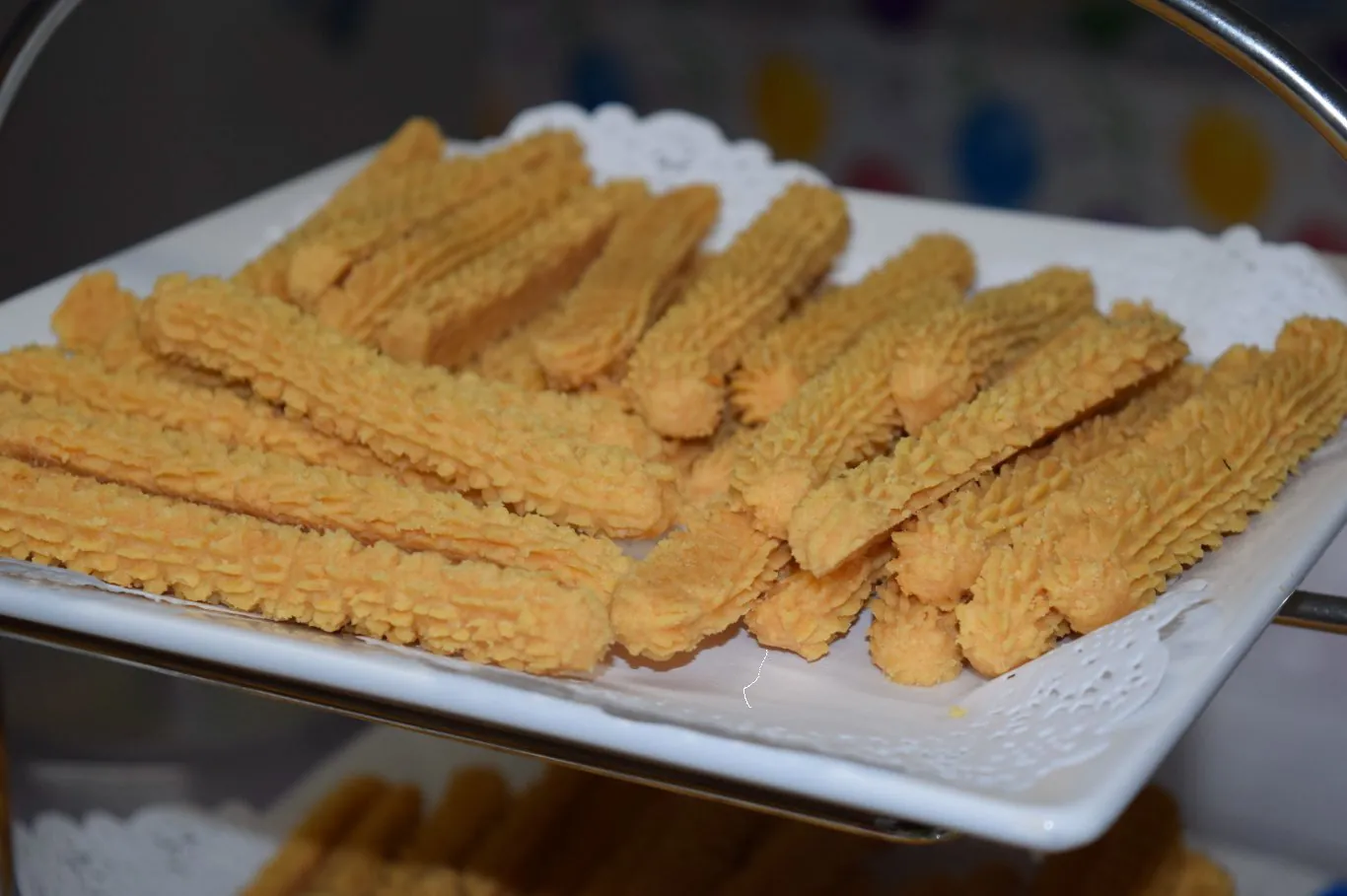
A second style twists strips of puff pastry covered in cheese, and it takes about half the effort.
What makes either style work is the ratio of cheese to everything else. The cheese is the flavor and the fat, so a good straw is more than half cheese by weight, and a pale, flat-tasting one almost always used too little or too mild a cheese.
Cheese straws at a glance
This cheese straws table gives the yield, time and temperature for the cheddar dough recipe below.
| Yield | About 40 straws |
| Active time | 20 minutes |
| Total time | About 1 hour, with 30 minutes of chilling |
| Oven | 350°F (175°C) |
| Best cheese | Extra-sharp cheddar, with a little Parmesan |
| Make ahead | Dough keeps 3 days chilled or 2 months frozen; baked straws keep a week in a tin |
How to make cheese straws
Making cheese straws with the cheddar dough takes a food processor or a bowl and a spoon, and the dough needs a short chill before it is rolled or piped.
Ingredients for cheese straws
These ingredients for cheese straws make about 40 sticks; weigh the cheese and flour, since too much flour makes them dry.
- 8 oz (225 g) extra-sharp cheddar, finely grated from a block
- 1 cup (125 g) all-purpose flour, plus more for rolling
- 4 tablespoons (57 g) unsalted butter, softened
- 1/2 teaspoon fine salt
- 1/4 teaspoon cayenne pepper
- 1/2 teaspoon smoked or sweet paprika
- 1 to 2 tablespoons cold milk or water, as needed
- 1 oz (30 g) Parmesan, finely grated, for the tops
Steps for making cheese straws
Follow these steps for making cheese straws, and watch the color rather than the clock at the end.
- Heat the oven to 350°F (175°C) and line two baking sheets with parchment.
- Mix the flour, salt, cayenne and paprika in a bowl or a food processor.
- Add the cheddar and the softened butter and work them in by hand or pulse 15 to 20 times until the mixture looks like damp, coarse crumbs.
- Sprinkle in 1 tablespoon of milk and press the dough together, adding a second tablespoon only if it will not hold a ball.
- Flatten the dough into a rectangle, wrap it and chill for 30 minutes.
- Roll it between two sheets of parchment to a rectangle about 1/4 inch thick, dusting with flour only if it sticks.
- Cut into strips 1/2 inch wide and 4 inches long and lay them 1/2 inch apart on the sheets.
- Scatter the Parmesan over the strips and press it in lightly with your palm.
- Bake 15 to 20 minutes, until the edges are deep golden and the straws feel firm; they crisp further as they cool.
- Cool on the sheets for 5 minutes, then move to a wire rack to cool completely.
The best cheese for cheese straws
The best cheese for cheese straws is a dry, sharp cheddar, because the dough has so little other flavor. The U.S. standard for cheddar allows no more than 39 percent moisture and requires at least 50 percent milkfat in the solids, so cheddar is already a firm, relatively dry cheese that suits a crisp pastry. Sharp aged wedges go further: with less water and more concentrated flavor, they taste cheesier with less weight in the dough. The aged vs young cheddar page explains what the extra months do, and the page on cheddar origin and uses covers the style itself.
Parmesan helps in two ways: its salt and savory depth fill in the flavor, and its dryness keeps the surface crisp. Parmigiano-Reggiano is the one to use if you have it. Gruyère also works, for a nuttier straw.
Grate the cheese yourself from a block. Bagged shreds are dusted with an anti-clumping powder that dries the dough, and this guide to grating without clumping shows an easy way to do it at home. Per ounce, USDA lists generic cheddar at 114 calories, 6.5 grams of protein and 9.4 grams of fat, so a few straws are a real bite of cheese.
Cheese straws mistakes and how to fix them
Cheese straws mistakes are almost always about too much flour, too little cheese or a warm dough.
Tough, dry straws. Extra flour or too much working. Weigh the flour, mix only until the dough holds, and add liquid by the teaspoon.
Greasy straws that spread. The dough was warm, so the butter melted before the structure set. Chill it for the full 30 minutes, and chill the cut strips for 10 minutes if your kitchen is hot.
Pale, bland straws. The cheese was too mild or too little. Use extra-sharp and keep the 8 oz to 1 cup flour ratio, with the cayenne in.
Soft straws after baking. They were not cooled on a rack, or they were stored while warm. Let them cool all the way, then tin them.
Cheese straws variations
Cheese straws variations include the quick puff pastry twist and different cheeses.
For puff pastry straws, thaw one sheet of store-bought puff pastry, brush it with beaten egg, and cover half with 1 cup (about 3 oz, 85 g) finely grated cheddar and Parmesan. Fold the plain half over, roll lightly to seal, cut into 1/2 inch strips, twist each one and bake at 400°F (200°C) for 12 to 15 minutes until puffed and deep golden.
Other swaps: replace the cayenne with black pepper and mustard powder, add chopped rosemary, or pipe the cheddar dough through a star tip for ridged sticks. If you like a hollow, airy cheese bite instead, try gougères.
Storing and reheating cheese straws
Storing cheese straws airtight is the whole trick, since humidity makes them soft. Keep them in a tin at room temperature for up to a week, and re-crisp in a 300°F oven for 5 minutes if they soften. The unbaked dough can be wrapped and frozen for 2 months.
Because the straws are low in moisture and baked through, they are a shelf-stable snack for a few days, but the USDA advises refrigerating perishable leftovers within 2 hours; that applies to dips or spreads served with them. See freezing cheese for how cheese itself holds up in the freezer.
Questions about cheese straws
These questions about cheese straws cover the cheese, the shortcut and keeping them crisp.
What cheese is best for cheese straws?
The best cheese for cheese straws is extra-sharp cheddar, grated fresh, with a little Parmesan for salt and crispness.
What is the easiest way to make cheese straws?
The easiest way to make cheese straws is with store-bought puff pastry: brush with egg, cover with grated cheese, cut, twist and bake until golden.
What keeps cheese straws crisp?
Cheese straws stay crisp when cooled on a rack and stored airtight; a few minutes in a low oven revives soft ones.
Does cheese straws dough freeze well?
Cheese straws dough freezes well for about 2 months; thaw it in the fridge before rolling.
Why do cheese straws turn crumbly?
Cheese straws turn crumbly from too much flour or too little binder. Add milk by the teaspoon until the dough just holds together.
Cheese straws, in short
For cheese straws, buy a block of extra-sharp cheddar, grate it, and make the dough on a weeknight; it holds in the fridge for 3 days. Bake a first tray, taste one cooled straw, and add more cayenne next time if you want it bolder.
Sources
- 21 CFR 133.113, Cheddar cheese, Cornell Legal Information Institute
- Leftovers and Food Safety, USDA Food Safety and Inspection Service
- Cheese, cheddar (173414), USDA FoodData Central (SR Legacy)