
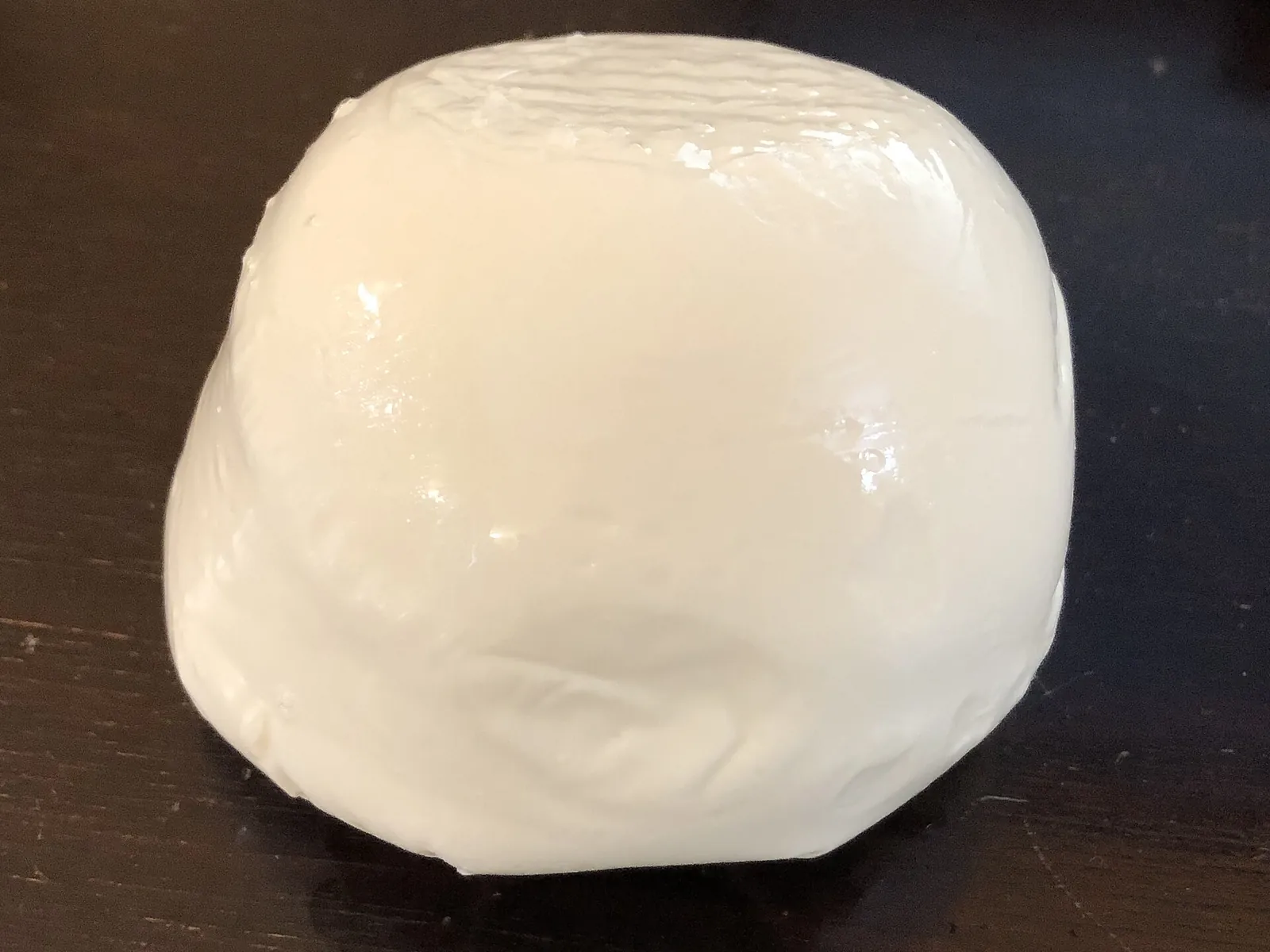
Ricotta, fresh mozzarella, cream cheese and queso blanco are eaten within days or weeks of being made, before aging can build any sharpness. Next come young, moist cheeses such as brie, Havarti, Muenster, Monterey Jack and Colby, and then young firm ones such as Gouda, Edam, provolone dolce, Swiss and mild cheddar. All of them are mild cheeses in the everyday sense: milky, buttery and easy to like.
Age and moisture explain that order. Flavor builds as enzymes slowly break down milk protein, and that work takes time; a cheese that is young and still full of water simply has not had it. USDA figures show the pattern: whole-milk ricotta is about 74 percent water, Monterey Jack 41 percent, cheddar 37 percent and Parmesan 30 percent.
The mildest cheeses, ranked
The mildest cheeses below are ranked by how young, moist and low in acid each one usually is, which tracks closely with how gentle it tastes; neighbors on the list are close calls.
| Rank | Cheese | Texture | Water (USDA) | Why it's mild | Best use |
|---|---|---|---|---|---|
| 1 | Ricotta | Soft, fresh | About 74% | Unaged whey cheese | Lasagna, toast, desserts |
| 2 | Fresh mozzarella | Soft, fresh | 52 to 60% (FDA range) | Never aged | Caprese, pizza |
| 3 | Cream cheese | Soft, spreadable | About 53% | Uncured | Bagels, dips |
| 4 | Queso blanco and panela | Soft, crumbly | About 49% (queso blanco) | Eaten fresh | Tacos, grilling |
| 5 | Brie | Soft-ripened | About 48% | Turns less acid as it ripens | Crackers, baking |
| 6 | Bel Paese | Soft | Not listed | Fast-ripened | Panini, snacking |
| 7 | Port Salut | Semi-soft | About 45% | Ripens evenly throughout | Fruit and bread |
| 8 | Havarti | Semi-soft | Not listed | Washed curd | Sandwiches, melting |
| 9 | Muenster | Semi-soft | About 42% | Pasteurized, no washed rind | Grilled cheese |
| 10 | Monterey Jack | Semi-hard | About 41% | Aged 2 weeks to a month | Quesadillas, nachos |
| 11 | Colby | Semi-hard | About 38% | Curd rinsed with cool water | Snacking, burgers |
| 12 | Young Gouda | Semi-hard | About 41% | Washed curd | Snacking, melting |
| 13 | Edam | Semi-hard | About 41% | Washed curd, lower fat | Slicing, snacking |
| 14 | Provolone dolce | Semi-hard | About 41% | Aged only 2 to 3 months | Subs, pizza |
| 15 | Swiss | Hard, elastic | About 38% | Low salt, sweetish flavor | Sandwiches, fondue |
| 16 | Mild cheddar | Firm | About 37% | Aged only 3 to 6 months | Mac and cheese, snacks |
What makes a cheese mild
What makes a cheese mild comes down to its age, its moisture, its acid and its rind.
Age. Enzymes, many of them from the rennet, break milk proteins into smaller, more flavorful pieces as cheese ages. The University of Wisconsin's Center for Dairy Research notes that makers of moist cheeses like Colby and Monterey Jack use less rennet because they do not want much of that breakdown.
Moisture. Water dilutes flavor and marks a young cheese. The same CDR page explains that makers choose cultures that hold water for Monterey Jack and cultures that drive it out for cheddar. Federal rules even sort cheese by it: semisoft cheeses hold more than 39 and up to 50 percent moisture, and hard cheeses 39 percent or less.
Acid. Starter bacteria turn milk sugar into lactic acid. Many mild cheeses are washed-curd cheeses: the maker drains some whey and adds water, rinsing out lactose so less acid can form. US standards spell this out for Colby, whose curd is cooled by adding water, and Monterey Jack; cottage cheese curd is washed to reduce acid flavor too.
Rind. Mild cheeses have no rind, a wax or plastic coat, or a thin bloomy rind like brie's. Strong washed rinds sit at the opposite end of the scale.
Mild soft cheeses
Mild soft cheeses are the freshest group on the list.
1. Ricotta
Ricotta is the mildest cheese most stores sell because it is made from the proteins left in whey after other cheesemaking, according to USDA's classic Cheese Varieties and Descriptions handbook, and the tubs sold fresh are not aged. Whole-milk ricotta is creamier than part-skim; drain it in a sieve before baking. Weak spot: it will not melt, since acid-set cheeses like ricotta cannot. Cottage cheese, at about 80 percent water, is a close runner-up.
2. Fresh mozzarella
Fresh mozzarella is a young, never-aged cheese best eaten soon after it is made, its curd heated in water and stretched into smooth balls. US rules require it to hold more than 52 and up to 60 percent water. Buy balls packed in water or whey for salads, and save low-moisture blocks for shredding. Weak spot: that water, so slice and blot it before it goes on pizza.
3. Cream cheese
Cream cheese is a soft, mild, rich, uncured cheese made from cream or cream and milk, and federal rules require at least 33 percent milkfat and no more than 55 percent moisture. Lactic cultures give it a gentle tang. A smear under a stronger cheese softens it for skeptics. Weak spot: it is mostly fat, about 34 grams per 100 grams in USDA data.
4. Queso blanco and panela
Queso blanco and panela are the fresh white cheeses of Mexican and Latin American cooking. USDA researchers describe Hispanic-style fresh cheeses as moist, white and tasting like fresh milk, softening when heated without running; queso blanco won't melt, and panela is mild, sweet and crumbly. Sear thick slices or crumble them over tacos, and see the panela guide for more. Weak spot: a safety caveat for some eaters, covered below.
5. Brie
Brie is the mild soft cheese most people meet first. Its white rind ripens it from the outside, and as it ripens the curd turns less acid, yellower and creamier, so a wheel that is still slightly firm will taste mildest. Eat it before its date; the brie guide explains how to judge ripeness. Weak spot: the white rind; it is edible, but trim it for anyone wary of it.
Mild semi-soft and semi-hard cheeses
Mild semi-soft and semi-hard cheeses are the slicing and melting workhorses.
6. Bel Paese
Bel Paese is an Italian table cheese that the USDA handbook describes as soft, sweet, mild and fast-ripened. It slices and melts easily, so use it in panini or anywhere you would use mozzarella but want more butteriness; the Bel Paese guide has more. Weak spot: if you cannot find it, German Butterkäse belongs to the same family of butter cheeses.
7. Port Salut
Port Salut is a semi-soft cheese in the Trappist monastery style, and the USDA handbook credits that style with a mild flavor: it is washed during curing, yet it ripens evenly throughout instead of from the rind in. Serve it with fruit and bread or melt it on a sandwich, and read the Port Salut guide for more. Weak spot: it can disappear next to bold partners, so keep the plate simple.
8. Havarti
Havarti, the Danish semi-soft cheese named after a farm north of Copenhagen, is mild by design: its curds are washed to remove more lactose, giving it a milder flavor, according to Wisconsin Cheese. Young Havarti is very mild and buttery; older wheels turn saltier and slightly acidic. Weak spot: it softens fast at room temperature, so slice it cold.
9. Muenster
Muenster, the American kind, is a pasteurized semi-soft cheese with a mild, buttery flavor, and Wisconsin's cheesemakers call it mild enough for youngsters. Unlike French Munster it is not a washed-rind cheese, so read the Muenster vs. Munster comparison before you buy. Weak spot: it grows stronger and tangier with age, so check the date.
10. Monterey Jack
Monterey Jack is the California-born white cheese with a mild, buttery flavor, aged only two weeks to a month. US rules allow it up to 44 percent moisture and let makers add water or brine to the curd. Buy it for quesadillas, nachos and mac and cheese. Weak spot: dry Jack, aged 6 to 9 months, is a sharp cheese, so read the label.
11. Colby
Colby is cheddar's softer, moister cousin: its curd is cooled with water and never matted the cheddar way, and the USDA handbook notes its more open texture and higher moisture. Cube it for snacks or melt it on burgers. Weak spot: for those same reasons it does not keep as well as cheddar, so buy smaller pieces.
12. Young Gouda
Young Gouda is semi-hard, mild and creamy, and like Havarti it is a washed-curd cheese whose rinsed curd gives a sweeter flavor. Gouda is coated in wax or plastic and aged anywhere from four weeks to 12 months or more, so look for "young" on the label. Weak spot: the name alone tells you nothing, since aged Gouda is hard, tangy and crystalline.
13. Edam
Edam is Gouda's leaner Dutch sibling, made from skimmed or part-skimmed milk, and the USDA handbook calls its flavor pleasingly mild, clean and sometimes salty. It is aged anywhere from 21 days to a year inside its red wax. Weak spot: salt, at about 276 mg of sodium per ounce in USDA data, the most of any cheese on this list.
14. Provolone dolce
Provolone dolce is the mild provolone: a stretched-curd cheese aged 2 to 3 months for a sweet, mild flavor, while provolone piccante ages four months or longer for a sharper taste. Weak spot: even the mild style has a slightly smoky edge.
15. Swiss
Swiss is mild, nutty and sweetish, as the USDA handbook puts it, even though US rules require it to be at least 60 days old, with propionic acid bacteria among its cultures. It is also the low-salt pick here, at about 53 mg of sodium per ounce. Weak spot: the holes make thin slices tear, so ask for a slightly thicker cut.
16. Mild cheddar
Mild cheddar is the youngest cheddar, typically aged only 3 to 6 months, and US rules cap cheddar at 39 percent moisture, which makes it the firmest cheese here. Buy it for snacks and smooth sauces. Weak spot: it can taste flat in a sauce, so blend in a little medium cheddar.
Mild white cheeses
Mild white cheeses are simply the ones made without added color. Fresh mozzarella, ricotta, cream cheese, queso blanco, panela, Monterey Jack, Havarti and Swiss are all naturally pale. Color is not a flavor clue, though: orange cheddar is usually just cheddar tinted with annatto, a seed-based coloring.
The mildest blue cheeses
The mildest blue cheeses are young, creamy ones. Gorgonzola dolce, the younger of Gorgonzola's two official styles, is soft and creamy with a slightly spicy edge, while piccante is firmer, crumblier and stronger; take dolce out of the fridge about half an hour before eating it. Cambozola, a German soft-ripened blue with a mold-ripened rind, is another gentle start. Even mild blues are salty, at about 325 mg of sodium per ounce for blue cheese in USDA data, so pair them with honey, pears or walnuts. The Gorgonzola guide explains dolce versus piccante.
Mild cheeses for kids and picky eaters
Mild cheeses for kids and picky eaters work best in familiar forms. String cheese, mild cheddar, Colby, Monterey Jack and Muenster are the easy starts, and melting is a good way in: try a quesadilla or grilled cheese before serving cheese plain. If a cheese tastes too strong, serve it cold, since flavor and aroma open up as cheese warms. For toddlers, shred it or slice it thin rather than cutting chunks. The best cheeses for kids guide covers formats and safety tips.
What most mild cheese lists get wrong
Most mild cheese lists stop at the names, and that leaves out the details that change what ends up in your cart.
Mild does not mean low in salt
Mild does not mean low in salt. Per ounce, USDA data put Edam at about 276 mg of sodium, Gouda at 232 and queso blanco at 200, all saltier than cheddar at 185. If sodium matters, the mild cheeses to pick are ricotta, at about 31 mg per ounce, and Swiss, at 53.
The label word matters more than the name
The label word matters more than the cheese name, because most mild cheeses have stronger older siblings. Gouda can be four weeks or a year old, provolone comes dolce or piccante, Monterey Jack has its sharp dry Jack, and Havarti and Muenster both turn tangier with age. Read for "young," "mild" or "dolce," and check the date on anything soft.
Fresh cheese has a safety caveat
Fresh cheese has a safety caveat that mild lists skip. In the US, cheese aged less than 60 days must be made from pasteurized milk, yet the CDC still advises people who are pregnant, 65 or older, or have a weakened immune system to avoid unheated queso fresco-type cheeses such as queso blanco, pasteurized or not, unless they are heated to 165°F or until steaming hot.
Medium cheeses: the next step up from mild
Medium cheeses are the next step: the same styles given more time, or a slightly bolder cousin. Move from mild to medium cheddar, from young to aged Gouda, or from dolce to piccante provolone. Brick cheese is a good bridge, described by the USDA handbook as mild but rather pungent, midway between cheddar and Limburger. Change one thing at a time and you will find your limit; the aged vs. young cheddar comparison shows what time does to one cheese.
Questions about mild cheeses
These are the questions about mild cheeses people ask most.
What is the mildest cheese?
The mildest cheese most stores sell is ricotta, a fresh, unaged whey cheese that is about 74 percent water.
What are mild cheeses?
Mild cheeses are young, moist, low-acid cheeses without a strong rind, such as mozzarella, Monterey Jack, Colby, Havarti, Muenster, young Gouda and mild cheddar.
Is brie a mild cheese?
Brie is a mild cheese, especially when young and still slightly firm. As it ripens from the rind inward it turns creamier and less acidic.
Is American cheese a mild cheese?
American cheese is a mild process cheese: Serious Eats explains that it starts with young cheddar-style cheese blended with extra milk, milk proteins and emulsifying salts, which buys perfect melting at the cost of flavor.
Is Edam a mild cheese?
Edam is a mild cheese when young, with a clean, slightly salty flavor that sharpens as it ages.
What is the blandest cheese?
The blandest cheeses are fresh ones like cottage cheese, ricotta and fresh mozzarella, which taste mostly of milk.
Where to start with mild cheeses
Start your mild cheeses with what you will actually use: fresh mozzarella and ricotta for cooking, Monterey Jack, Havarti or Colby for sandwiches and melting, and mild cheddar for snacks. When those feel safe, buy the same cheese a little older and see whether you like the change.
Sources
- USDA FoodData Central (SR Legacy): ricotta, whole milk, cottage cheese, creamed, cream cheese, queso blanco, brie, port de salut, muenster, gouda, monterey, edam, provolone, colby, swiss, cheddar, parmesan, hard and blue, U.S. Department of Agriculture
- 21 CFR Part 133: Cheeses and Related Cheese Products, Electronic Code of Federal Regulations
- Measuring and Controlling Acidity and Moisture During the Cheesemaking Process, Center for Dairy Research, University of Wisconsin-Madison
- Cheese Varieties and Descriptions (Agriculture Handbook No. 54), U.S. Department of Agriculture
- Cheese, Please: Recreating Unique Properties of Hispanic Cheeses, USDA Agricultural Research Service
- Wisconsin Cheese style guides: Mild cheddar, Monterey Jack, Havarti, Gouda, Edam, Provolone, Muenster and Mozzarella, Dairy Farmers of Wisconsin
- Preventing Listeria Infection, Centers for Disease Control and Prevention
- The Science of Melting Cheese, Serious Eats