
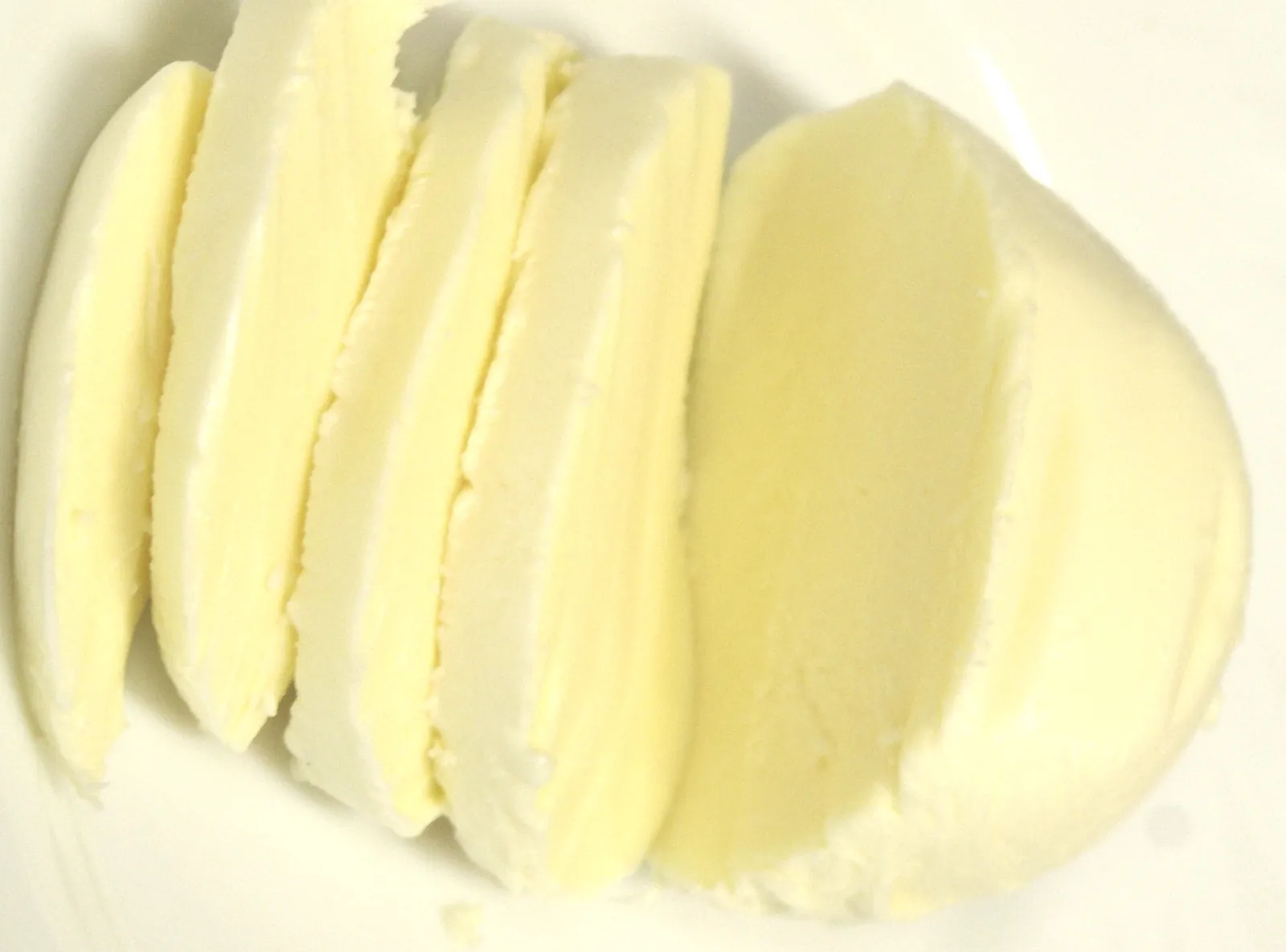
Fresh mozzarella is wet and springy, so pat it dry, chill it briefly and use a thin sharp knife or a wire. Low-moisture mozzarella is a firm block, and any sharp knife slices it.
The cause is water. Fresh mozzarella and low-moisture mozzarella are the same stretched-curd cheese, but fresh holds over 52 to 60 percent moisture under the FDA's standards and low-moisture holds 45 to 52 percent. More water means a slippery surface and a delicate texture, which is why a dull knife squashes it.
How to slice fresh mozzarella
To slice fresh mozzarella, take the ball out of its liquid, pat it dry with a towel, and let it chill in the fridge for 15 to 20 minutes. The towel removes the film of liquid that makes the knife slide, and the chill firms the cheese so it holds its shape. Slice with a thin, sharp blade in one smooth downward cut rather than a sawing motion.
Cut slices about 1/4 inch thick for caprese, wiping the blade between slices so it does not drag the cheese. A serrated knife can work with a very light saw, but a plain thin blade is cleaner. Ciliegine and bocconcini need only halving, and perline are served whole.
How to slice mozzarella with a wire or egg slicer
To slice mozzarella with a wire, hold the ball steady and pull a taut cheese wire straight through it. A wire has no flat blade to stick to, so the cut is clean and the slices come out even. A wire slicer is a good choice for the large ball sold for slicing.
An egg slicer, the kind with a row of wires, makes even rounds in one press, and it works best on a firm, chilled ball, not a very soft or large one. Unflavored dental floss is a plain substitute for a wire. See cheese knives for the other tools.
How to slice low-moisture mozzarella
To slice low-moisture mozzarella, use a sharp chef's knife or a block slicer, since the firm cheese needs no drying or chilling beyond what the fridge already does. This is the block or log sold for pizza, and it slices into neat planks for sandwiches, baked ziti and mozzarella sticks.
Cold cheese slices cleanest, so cut it straight from the fridge. A cheese plane gives thin sheets for panini. For pizza and baked dishes, the cheese is usually grated from the block instead, since pre-shredded cheese melts poorly.
How to slice mozzarella for caprese and cooking
To slice mozzarella for caprese, cut fresh mozzarella and tomato to the same thickness, about 1/4 inch, and serve it near room temperature, since cold mutes the milky flavor. Slice it, then let the pieces sit for a few minutes before building the plate. The full range of uses is on the types page.
For baking, slice fresh mozzarella, salt it lightly, drain it on paper towels for about 30 minutes, and add it late, since fresh mozzarella can release water in a long bake. For a long bake, use low-moisture, and compare the two in burrata vs mozzarella.
Mozzarella slicing mistakes that cause a mess
Mozzarella slicing mistakes mostly come from skipping the dry-off. Slicing straight from the liquid leaves a wet film, so the blade slips and the plate floods. Others: a dull knife, which presses and squashes rather than cuts; slicing warm cheese; and slicing far in advance, because cut fresh mozzarella dries at the edges and weeps.
Slice just before serving. The USDA says perishable food should not sit out more than 2 hours, or 1 hour above 90°F, so keep sliced cheese chilled until the plate goes out.
How to slice mozzarella ahead of time
How to slice mozzarella ahead of time depends on the type: it is possible for low-moisture cheese, which holds its shape in the fridge, but fresh mozzarella is best cut at the last minute. If you must slice fresh mozzarella early, lay the slices in a single layer on a paper towel, cover them, and refrigerate them for no more than a few hours. They will weep a little, so blot them before plating.
Sliced cheese also has less protection than a block. The USDA advises discarding sliced cheese that develops mold, because the mold can reach deep into slices and cannot be trimmed away the way it can on a hard block. So slice only what you will use, and keep the rest of the block whole and wrapped.
Questions about how to slice mozzarella
These questions about how to slice mozzarella cover the most common problems.
What is the best knife to slice fresh mozzarella?
The best knife to slice fresh mozzarella is a thin, sharp one, used with one smooth cut and wiped between slices. A cheese wire is just as good.
How do you slice mozzarella without it falling apart?
To slice mozzarella without it falling apart, pat it dry, chill it for 15 to 20 minutes and cut with a sharp thin blade or wire.
Can you slice mozzarella with a wire or egg slicer?
You can slice mozzarella with a wire or egg slicer, and both give even rounds with little sticking when the ball is firm and chilled.
How thick should mozzarella slices be for caprese?
Mozzarella slices for caprese should be about 1/4 inch thick, matching the tomato.
How do you slice low-moisture mozzarella?
To slice low-moisture mozzarella, cut the cold block with a sharp chef's knife or a slicer into planks, or grate it for pizza.
Slicing mozzarella well
Slicing mozzarella well means drying and chilling the fresh kind, using a thin blade or wire, and cutting the low-moisture block cold. Keep unused pieces covered in the fridge, and see how to store cheese for the rest.
Sources
- FDA mozzarella standard, 21 CFR 133.155, eCFR (moisture ranges as summarized on the cheese.help mozzarella page)
- Leftovers and Food Safety, USDA Food Safety and Inspection Service
- Molds on Food: Are They Dangerous?, USDA Food Safety and Inspection Service