
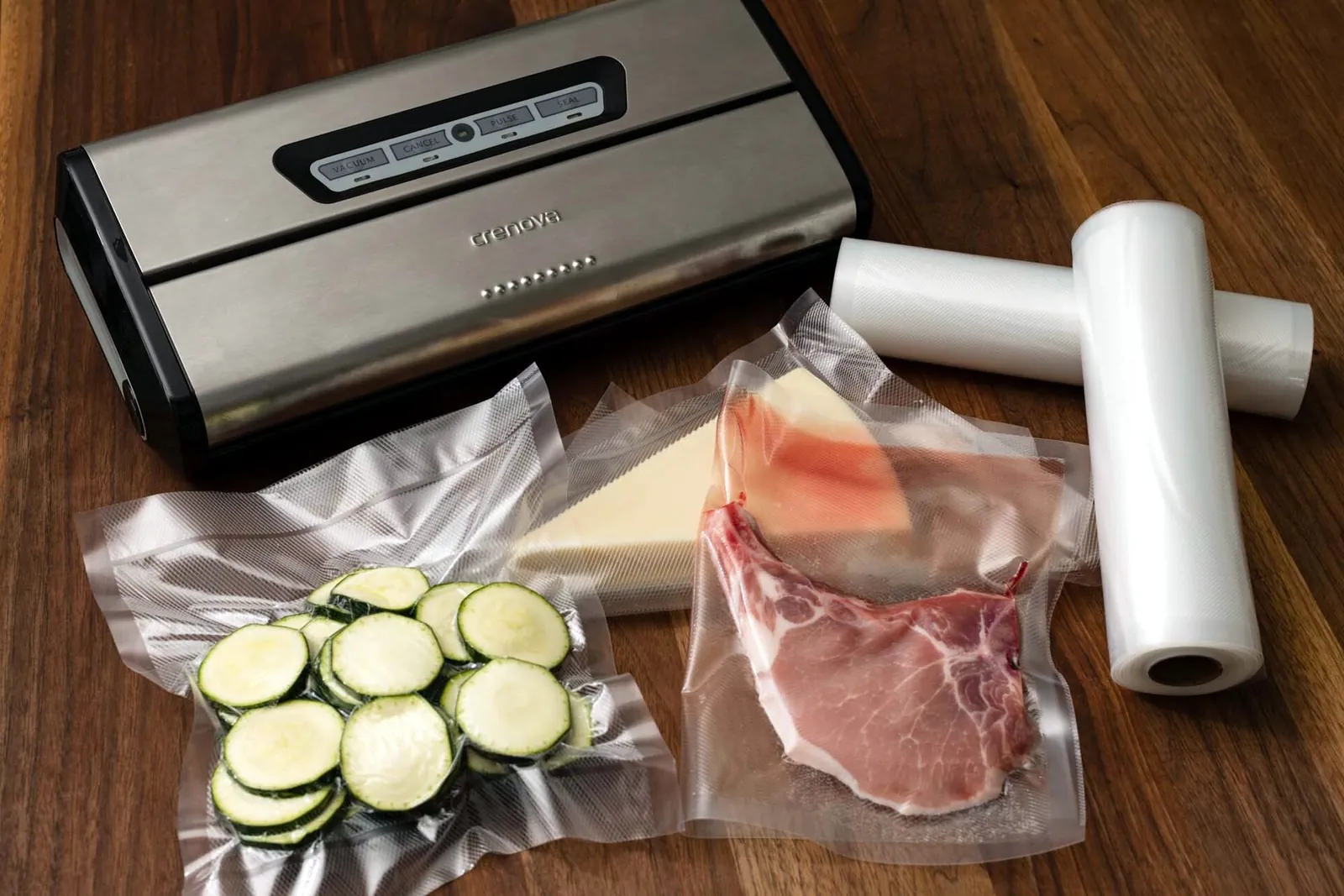
The seal removes air, which slows drying and mold, but it does not make the cheese safe to leave out of the fridge.
Most of the argument over vacuum sealing comes down to one distinction. A hard, low-moisture cheese is finished and stable, so sealing it simply holds it where it is. A soft or bloomy cheese is still changing, and a tight plastic bag changes how it changes.
Vacuum sealing cheese at a glance
This vacuum sealing cheese table shows which types suit a sealer. It is guidance, and the fridge and freezer times come from USDA FoodKeeper.
| Cheese type | Seal it? | Why | Time to know |
|---|---|---|---|
| Cheddar, Swiss, block Parmesan | Yes | Firm and stable, resists squashing | 3 to 4 weeks opened in the fridge, 6 months frozen |
| Shredded hard cheese | Yes, in portions | Less air means less drying | Freeze flat in portions |
| Blue cheese | Cautiously | Strong smell stays contained, but it is still alive | Loosen the seal to rewrap |
| Brie, Camembert | Not for ripening | Needs some air exchange, easily crushed | No FoodKeeper fridge time given |
| Ricotta, cottage, fresh curds | No | Wet, delicate, already sold sealed | 1 week opened (ricotta, cottage), 2 weeks (curds) |
Pros of vacuum sealing cheese
The pros of vacuum sealing cheese are mostly about air and moisture. With the air gone, the cut surface cannot dry into a hard, cracked rind, and there is less oxygen for surface mold to use. A sealed block also cannot take on the smell of an onion or leftover curry, and the cheese smell stays in the bag.
The biggest gain is in the freezer. Sealed hard cheese is protected from freezer burn, and USDA FoodKeeper gives hard cheese 6 months frozen. The freezing cheese guide covers which cheeses to freeze and how to thaw them. Sealing also helps with bulk buying: split a 2 pound block into four half-pound bags, and you only open what you will eat.
Cons of vacuum sealing cheese
The cons of vacuum sealing cheese are about cheeses that are still alive and about false confidence. Soft-ripened and washed-rind cheeses continue to develop under their rinds, and a tight bag leaves them no room to give off moisture, which can leave a wet, slick surface and a sharper smell when opened. The pressure can also crush a soft round or flatten a rind.
False confidence is the other problem. The Utah State University Extension notes that vacuum packaging can increase the shelf life of some foods, but it is not a preservation method by itself. If the food needed refrigeration or freezing before sealing, it must still be refrigerated or frozen after. The same page warns that removing oxygen increases the ability of botulism bacteria to grow, which is another reason sealed cheese must stay cold. Keep the fridge at 40°F or below, per the USDA.
There is a small flavor cost too. A cheese that has sat sealed for weeks can smell faintly sulfurous when you open it. Let it stand unwrapped for 15 to 30 minutes and the smell usually fades; this is guidance from the way sealed cheese behaves, not a measured result.
Does vacuum sealing make cheese last longer?
Vacuum sealing cheese does make it last longer in some cases, but only when the cheese is the right kind and the fridge is cold. USDA FoodKeeper lists hard cheese such as cheddar, Swiss and block Parmesan at 6 months unopened and 3 to 4 weeks after opening in the fridge. A fresh seal after each slice is a sensible way to stay near the longer end of that range, because every opening exposes the cut face to air.
For cheese you will finish within a week or two, a sealer is not needed. Parchment or cheese paper lets the cheese breathe and costs less. The complete storage guide compares the options, and containers for storing cheese covers boxes.
How to rewrap cheese after opening
How to rewrap cheese after opening depends on whether you have a sealer. Here is the routine for hard cheese.
- Trim the dried edge. If the cut face has hardened, slice off a thin layer first.
- Dry the surface. Pat off any condensation with a clean paper towel, since trapped moisture encourages mold.
- Seal it flat. Put the wedge in the bag with the cut face flat. Use the sealer's gentle setting if it has one, so the cheese is not squeezed.
- Label it with the date. Write the opening date on the bag with a marker.
- Refrigerate. Return it to the fridge right away, and do not leave it out for more than 2 hours (1 hour above 90°F).
Without a sealer, wrap a wedge in parchment or wax paper, then loosely in plastic or foil, which keeps moisture in and still allows some air. Soft cheeses are best rewrapped in their original paper or fresh cheese paper, never sealed tight.
Vacuum sealing cheese mistakes to avoid
Vacuum sealing cheese goes wrong in four common ways.
- Sealing a ripening cheese. A young Brie or Camembert in a bag will not ripen well. If you need to hold it, see the guide to choosing a ripe Brie.
- Sealing over mold. A seal does not stop mold from continuing. For hard cheese, USDA says to cut off at least 1 inch around and below the spot, keeping the knife out of the mold. Discard shredded or sliced cheese with mold. The mold prevention guide goes further.
- Skipping the fridge. A sealed bag at room temperature is not safe.
- Crushing crumbly blue. Chill the cheese first and use the pulse setting so the bag does not flatten it.
Questions about vacuum sealing cheese
These questions about vacuum sealing cheese come up most.
Can you vacuum seal cheese?
You can vacuum seal cheese, and hard cheeses such as cheddar, Swiss and Parmesan suit it best. Soft and bloomy-rind cheeses do not.
How long does vacuum sealed cheese last?
Vacuum sealed cheese lasts about as long as the cheese type allows when kept cold; FoodKeeper gives hard cheese 3 to 4 weeks opened in the fridge and 6 months frozen. Unopened commercial packs follow the date printed on the package.
Is vacuum sealing cheese safe?
Vacuum sealing cheese is safe when the sealed cheese stays refrigerated or frozen. USU Extension says sealing is not a preservation method by itself.
Should you vacuum seal soft cheese?
You should not vacuum seal soft cheese like Brie, since it needs air exchange and the bag can crush it.
Can you reuse vacuum sealed bags for cheese?
Reusing vacuum sealed bags for cheese is a matter of hygiene: wash the bag and dry it fully, and do not reuse it after raw meat. A bag with a cheese smell is not a reason to throw it away.
Seal hard cheese, wrap the rest
For vacuum sealing cheese, seal hard cheese in portions, freeze what you will not finish and keep it cold. Wrap soft cheese in paper instead. Next, split your next block into half-pound bags and label them.
Sources
- Packaging Foods, Utah State University Extension
- FoodKeeper App, FoodSafety.gov (USDA)
- Leftovers and Food Safety, USDA Food Safety and Inspection Service
- Molds on Food: Are They Dangerous?, USDA Food Safety and Inspection Service