
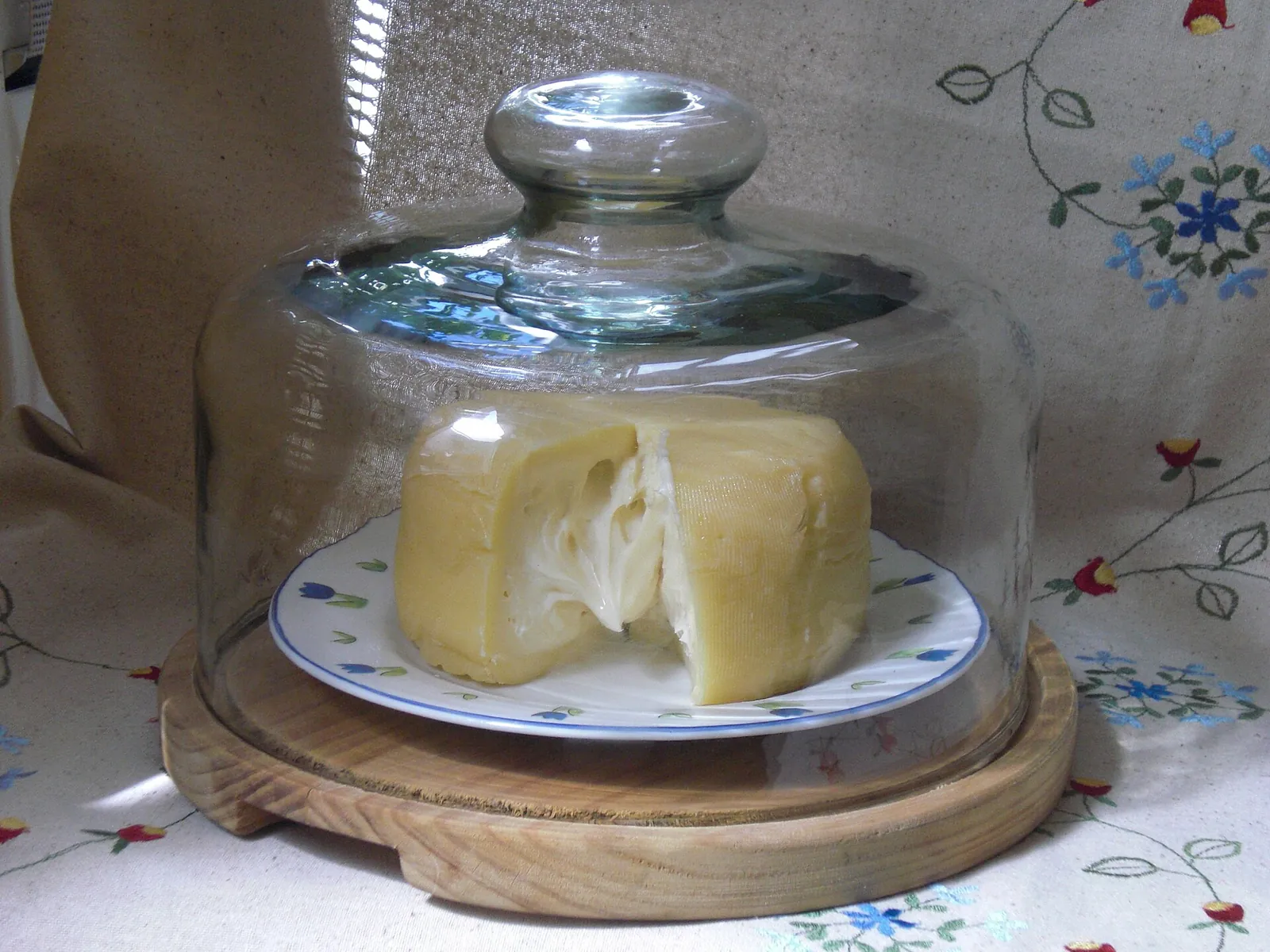
The difference is water. Less moisture and more salt and acid leave bacteria less to work with.
Cheese began as a way to keep milk without refrigeration, but a modern wedge from the store has been handled, cut and often sliced, so the old rules of cellar and cave only partly apply. What follows covers which cheeses tolerate it, how long, and how to handle a trip or a power cut.
How to store cheese without a fridge: the rules
How to store cheese without a fridge starts with two numbers from the USDA. Perishable food should not sit out more than 2 hours, or 1 hour when the air is above 90°F, and the fridge should be at 40°F or below. University of Nebraska-Lincoln Extension applies the same limit to cheese: cut cheeses should not be at room temperature more than 2 hours total.
The U.S. Dairy Export Council says hard cheeses such as Cheddar or Parmesan have lower moisture and can sit out longer than soft ones, and that soft cheeses such as Brie or Camembert are more perishable. It also says a hard cheese might remain safe left out overnight while a soft one should be discarded. Treat that as the outer edge, not a plan: a cool room and a whole piece help, a hot kitchen and a cut piece do not.
Which cheeses keep without a fridge
Which cheeses keep without a fridge sorts into three groups, and this table is guidance, not a guarantee.
| Group | Examples | Without a fridge |
|---|---|---|
| Hard, aged | Cheddar, Parmesan, Gouda, Swiss, pecorino | Hold up for a day or more in a cool place; sweat oil if warm |
| Waxed or sealed | Waxed cheddar, Edam, Babybel | Wax protects the surface; same limits once cut |
| Soft, fresh, high moisture | Brie, ricotta, cottage cheese, cream cheese, fresh mozzarella, chevre | 2 hours at most; 1 hour above 90°F |
Hard cheeses also fail more gently. A warm piece of cheddar goes greasy and then dry, which hurts quality long before safety. A warm piece of ricotta or cream cheese just becomes a risk. The aged vs. young cheddar page shows why the older, drier cheddar is the sturdier one, and the Edam page covers the red wax.
For long-term storage the USDA FoodKeeper figures are fridge figures: hard cheese such as cheddar, Swiss or block Parmesan keeps 6 months unopened and 3 to 4 weeks after opening in the fridge. There is no sourced time for how long it keeps at room temperature beyond the hours and overnight guidance above, so do not extend it by guesswork. The how long cheese lasts page has the fridge times.
Keeping cheese cool without a fridge
Keeping cheese cool without a fridge is mostly about shade and air. Put the cheese in the coolest spot available: a basement, a cellar, a shaded pantry shelf, an interior cabinet away from the stove. Avoid a sunny windowsill, the top of the fridge and a closed car.
Wrap it loosely in cheese paper or waxed paper rather than tight plastic so it can breathe, which the cheese paper vs. plastic page explains. A cloth dampened with water and loosely draped over the wrapped cheese is a traditional trick that cools through evaporation, but it only helps in dry air, and it should never touch the cheese directly in a warm room. Buy a piece you will finish rather than a large wedge, and keep a whole piece whole: a cut face dries and sweats first.
If you have ice, a cooler beats any pantry. A cooler with ice packs keeps cheese at fridge-like temperatures for a day, and the storing cheese guide has the fridge routine for when you get home.
Cheese without a fridge when camping or traveling
Cheese without a fridge on a camping trip or a drive should be hard and whole. Pack a block of aged cheddar, a wedge of Parmesan or a waxed round, keep it in the shade or the middle of a bag, and cut only what you will eat at a sitting. Cut slices the day you want them, not before.
Soft cheeses belong in the cooler. If a cooler is not possible, skip brie, fresh mozzarella and spreads, or eat them within the 2-hour limit (1 hour above 90°F). For air travel, the TSA allows solid cheese in carry-on and checked bags, and creamy cheese in carry-on only up to 3.4 oz (100 ml); the travel with cheese guide covers borders. Mail-order cheese is a separate case: USDA says it should arrive below 40°F, and if it shows up warm, contact the company and do not taste it.
Cheese during a power outage
Cheese during a power outage follows the fridge rules in reverse: keep the door shut. The University of Connecticut's food safety page says an unopened refrigerator keeps food safely cold for about 4 hours.
After that, or once the fridge has been above 40°F for more than 2 hours, UConn's chart lists hard cheeses such as cheddar, Colby, Swiss, Parmesan, provolone and Romano as safe, and processed cheese and grated Parmesan or Romano in a can or jar as safe. It lists soft cheeses to discard: blue and Roquefort, Brie, Camembert, cottage, cream, Edam, Monterey Jack, ricotta, mozzarella, Muenster, Neufchatel, queso blanco and queso fresco. Move what you want to save to a cooler with ice as soon as the outage looks longer than a few hours.
Mistakes with cheese kept without a fridge
Mistakes with cheese kept without a fridge are usually small and repeated.
- Counting only the time on the table: the 2 hours is total, including the time out of the fridge earlier in the day. Taking cheese out at noon for an evening picnic uses it up.
- Trusting the nose: harmful bacteria do not always smell. A cheese that was warm too long should go, even if it smells normal.
- Keeping a cut soft cheese "because it is wrapped": wrapping slows drying, not bacteria.
- Re-chilling after hours out: cooling it again does not make it safe. Warm cheese that has passed the limit should be thrown away.
- Ignoring the heat: on a hot day, 1 hour is the limit, and a car interior is worse.
Questions about storing cheese without a fridge
These questions about storing cheese without a fridge come from camping trips, dorms and outages.
Can cheese be stored without a fridge?
Cheese can be stored without a fridge for a short time if it is a hard, aged or waxed cheese kept cool; soft cheese should not sit out more than 2 hours.
Which cheeses don't need refrigeration?
The cheeses that tolerate no refrigeration best are hard ones such as cheddar, Parmesan, Gouda and Swiss, plus waxed cheeses, though all keep longer in a fridge.
How long can hard cheese stay out unrefrigerated?
Hard cheese can stay out unrefrigerated for the standard 2 hours, and the U.S. Dairy Export Council says it might survive overnight, but it is quality and safety, not a certainty.
Is cheese safe after a power outage?
Cheese is safe after a power outage if it is hard, such as cheddar or Parmesan, and soft cheeses held above 40°F for more than 2 hours should be discarded.
How did people store cheese before refrigerators?
People stored cheese before refrigerators in cool cellars, larders and caves, and by waxing or salting it; the cheese caves page covers the old way.
Plan for storing cheese without a fridge
For storing cheese without a fridge, pick a hard, whole piece, wrap it loosely, keep it in the shade, and cut only what you will eat. Soft cheese stays in a cooler or does not go. For outages, shut the door, move cheese to ice after a few hours, and discard soft cheeses held warm too long.
Sources
- Leftovers and Food Safety, USDA Food Safety and Inspection Service
- Charcuterie Boards and Food Safety, University of Nebraska-Lincoln Extension
- How Long Can Cheese Sit Out?, U.S. Dairy Export Council
- Making Food Safety Decisions After a Power Outage, University of Connecticut
- FoodKeeper App, FoodSafety.gov (USDA)