
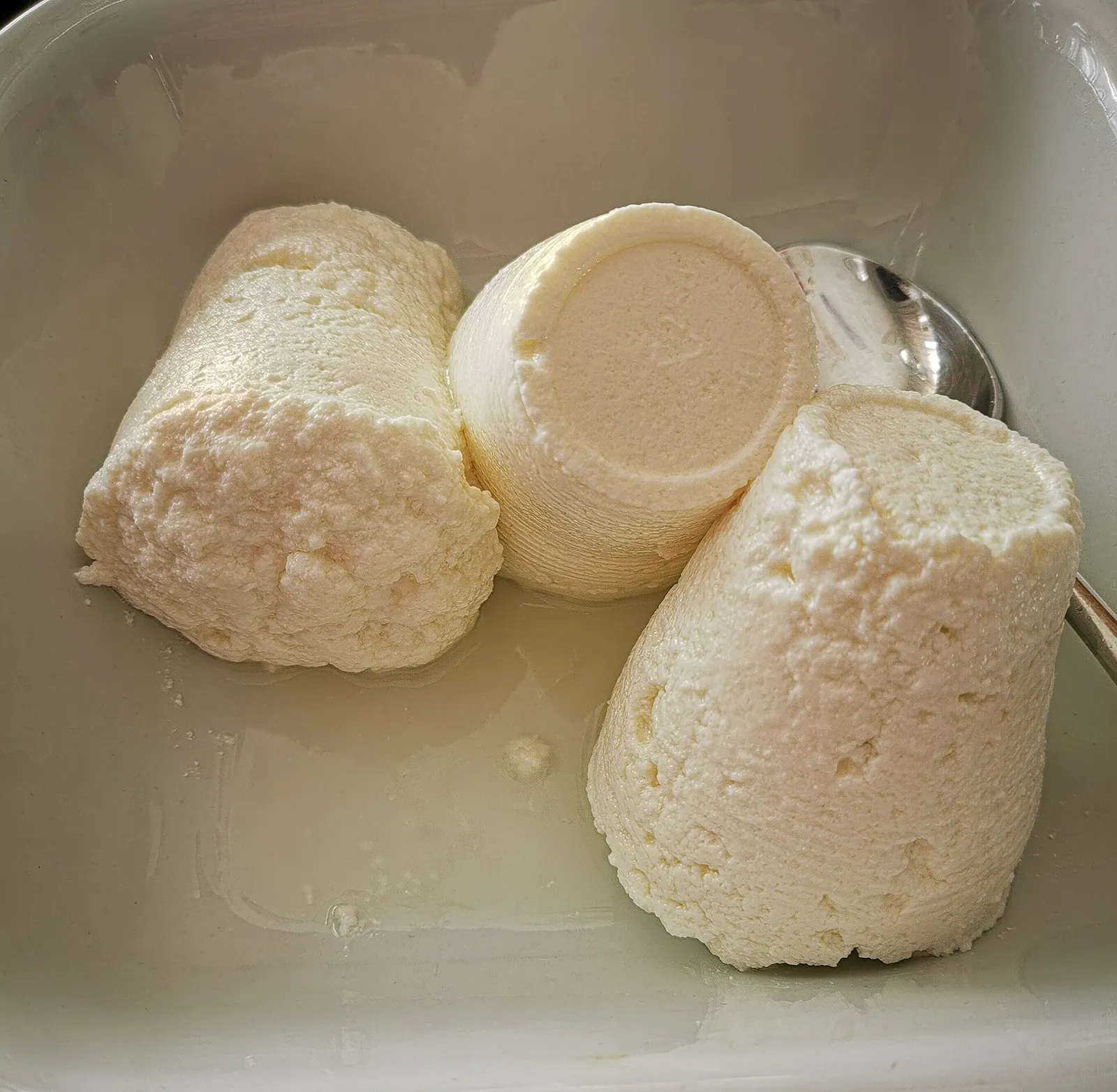
Both are white, mild and fresh, so they get swapped in lasagna and pancakes all the time. The swap works better in one direction than the other, and the numbers on the label are less alike than the tubs look.
Ricotta vs cottage cheese at a glance
This ricotta vs cottage cheese table compares the two where they differ, with nutrition figures per 100 g (about 3.5 ounces) from USDA.
| Ricotta | Cottage cheese | |
|---|---|---|
| How it is set | Heat, usually with a little acid | Culture or direct acid, then cut and cooked |
| Traditional base | Whey left from other cheese | Skim milk |
| Texture | Fine, soft, slightly grainy | Separate wet curds in a creamy dressing |
| Flavor | Mild, milky, slightly sweet | Mild, salty, a little tangy |
| Protein (USDA) | 7.5 g whole milk, 11.4 g part skim | 11.1 g creamed, 12.4 g at 1% |
| Fat (USDA) | 10.2 g whole milk, 7.9 g part skim | 4.3 g creamed, 1.0 g at 1% |
| Calories (USDA) | 150 whole milk, 138 part skim | 98 creamed, 72 at 1% |
| Sodium (USDA) | 110 mg whole milk, 99 mg part skim | 315 mg creamed, 406 mg at 1% |
| Calcium (USDA) | 206 mg whole milk, 272 mg part skim | 83 mg creamed, 61 mg at 1% |
| Water (USDA) | About 74% | About 80% creamed |
How ricotta and cottage cheese are made
Ricotta and cottage cheese are made in different ways: ricotta is a heat-set cheese, and cottage cheese is a cut, cooked and washed curd. The University of Guelph's cheesemaking e-book describes the ricotta route: whey proteins begin to coagulate at about 158°F (70°C) and form a layer of curd as the whey nears 194°F (90°C), and that layer is skimmed off and drained. Whey-only ricotta has become uncommon, so much of the American tub starts with milk and finishes with vinegar or citric acid. The name means "recooked," and the full story is on the ricotta page.
Cottage cheese starts as skim milk set with culture, direct acid or both. Federal rules call it a soft uncured cheese made by mixing dry curd with a creaming mixture, and the cottage cheese standard requires at least 4 percent milkfat and no more than 80 percent moisture. The creaming mixture must be pasteurized, which is the dressing you see around the curds. The cottage cheese guide covers curd sizes and fat levels.
Texture and flavor
Texture and flavor set ricotta and cottage cheese apart, starting with the curd. Ricotta is soft and fine with a slight grain, and it spreads or folds into batter without leaving lumps. Cottage cheese keeps its curds, small or large, in a loose dressing, which is why people tend to love it or leave it.
Flavor splits the same way. Wikipedia describes ricotta as creamy white and slightly sweet, and it has little salt: USDA lists 110 mg of sodium per 100 g for whole-milk ricotta against 315 mg for creamed cottage cheese. Cottage cheese tastes saltier and a little tangy, and the 1 percent tub is saltiest of the group at 406 mg.
Ricotta vs cottage cheese nutrition
Ricotta vs cottage cheese nutrition favors cottage cheese for lean protein and ricotta for calcium and low sodium. Per 100 g, USDA lists 1 percent cottage cheese at 12.39 g of protein and 72 kcal, while whole-milk ricotta has 7.54 g of protein and 150 kcal. Part-skim ricotta narrows the gap at 11.39 g of protein and 138 kcal, and it has the most calcium of the four, 272 mg.
Cottage cheese is wetter, with about 80 percent water against 74 for ricotta, which is part of why it comes out lighter per spoonful. The sodium is the catch: a cup of lean cottage cheese carries several times the salt of ricotta. This is nutrition information, not medical advice, so people watching sodium should read the label. For the protein ranking, see high-protein cheeses and cottage cheese for fitness.
Can you substitute ricotta for cottage cheese?
You can substitute ricotta for cottage cheese and the reverse, but not at the same texture. Ricotta replaces cottage cheese easily in a bowl or on toast, though it is sweeter and richer, with a lot less salt. Cottage cheese replaces ricotta in baked dishes if you fix its two weak spots: the curds and the liquid.
- Blend it. A minute in a food processor turns cottage cheese into a smooth, ricotta-like cream.
- Drain it. Press it in a sieve for 15 to 30 minutes so the filling does not turn watery in lasagna or stuffed shells.
- Cut the salt. Season the rest of the dish lightly, since cottage cheese brings its own.
- Skip it for cannoli. The sweet filling needs ricotta's fine texture and mild flavor; blended cottage cheese tastes tangy and thin.
The substitute finder lists other swaps.
Which to use: ricotta or cottage cheese
Which to use, ricotta or cottage cheese, depends on whether you want smooth and sweet or lean and salty:
- Lasagna and stuffed shells: ricotta, as in three-cheese lasagna. Blended, drained cottage cheese is the lighter alternative.
- Cannoli and desserts: ricotta, drained overnight; see cannoli and ricotta fillings.
- Toast, fruit bowls and snacks: either; cottage cheese for more protein, ricotta with honey for sweetness.
- Pancakes, dips and high-protein sauces: blended cottage cheese.
- Pasta fillings, gnocchi and baking: ricotta, which holds a fine texture.
What most ricotta vs cottage cheese advice gets wrong
Most ricotta vs cottage cheese advice leaves out three things: that ricotta is not a curdled-milk cheese in the traditional sense, that ricotta is not always the lighter one, and that the tub tells you less than you expect.
Ricotta is a whey cheese by origin. The old method uses the whey left from other cheese, which is why it is light and sweet. Plenty of American ricotta is made from milk, so the "whey cheese" line describes the tradition, not every tub.
Ricotta is not the lean one. Whole-milk ricotta has 10.18 g of fat and 150 kcal per 100 g in USDA data, more than double the fat and about twice the calories of creamed cottage cheese. Part-skim ricotta helps, but 1 percent cottage cheese is still leaner.
The word "ricotta" has no federal standard. The cottage cheese standard sets fat and moisture limits, and ricotta has no such section in 21 CFR Part 133, so read the label for whole milk or part skim and for what sets the curd.
Questions about ricotta vs cottage cheese
These are quick answers to common questions about ricotta vs cottage cheese.
What is the difference between ricotta and cottage cheese?
The difference between ricotta and cottage cheese is how they are set and how they feel: ricotta is heat-set, fine and slightly sweet, while cottage cheese is cut curds in a salty cream dressing.
Is ricotta healthier than cottage cheese?
Ricotta is not clearly healthier than cottage cheese; it is lower in sodium and higher in calcium, while 1 percent cottage cheese has more protein and fewer calories per 100 g in USDA data.
Can you use cottage cheese instead of ricotta in lasagna?
Cottage cheese works in lasagna if you drain it and blend it first. It will taste saltier and tangier than ricotta, so go lighter on the salt elsewhere.
Which has more protein, ricotta or cottage cheese?
Cottage cheese has more protein per 100 g than whole-milk ricotta, 11.1 to 12.4 g against 7.5 g in USDA data, and part-skim ricotta comes close at 11.4 g.
Does ricotta taste like cottage cheese?
Ricotta tastes milder and sweeter than cottage cheese, which is saltier and a bit tangy. Blended, the two are closer, but the salt still shows.
Choosing between ricotta and cottage cheese
Choosing between ricotta and cottage cheese is simple: buy ricotta for fillings, desserts and anything that should taste sweet and creamy, and cottage cheese for snacks, bowls and blended sauces. If you cannot decide, drain and blend cottage cheese for a lasagna test run. Want something smoother and tangier than both? The quark vs Greek yogurt vs cottage cheese page covers it, and you can make ricotta at home with the 30-minute ricotta recipe.
Sources
- Heat-Acid Precipitated Cheese (Hill and Ferrer, 2021), Cheese Making Technology e-Book, University of Guelph
- 21 CFR 133.128, Cottage cheese, Electronic Code of Federal Regulations (via Cornell Legal Information Institute)
- USDA FoodData Central (SR Legacy): ricotta, whole milk (170851), ricotta, part skim milk (171248), cottage cheese, creamed (172179) and cottage cheese, lowfat, 1% (173417)
- Ricotta, Wikipedia