
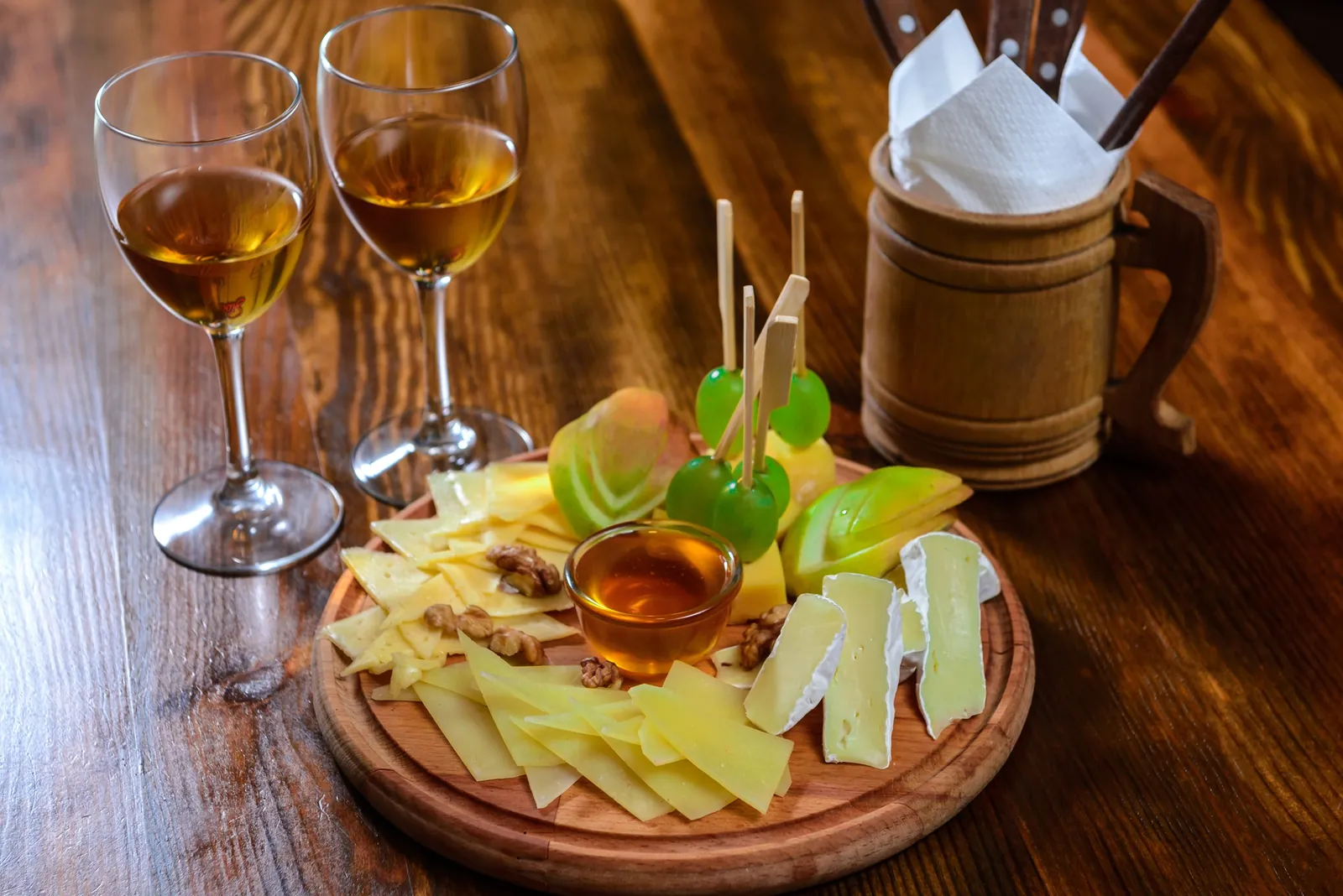
Texture is the quickest way to pair when you do not know the cheese by name, because you can see and feel it at the counter.
It works alongside strength rather than instead of it. This page covers four textures, creamy, crumbly, firm and crunchy, and what to put beside each. For the strength side of the question, see pairing cheese by intensity.
Pair cheese by texture at a glance
This pair cheese by texture table gives one starting point for each type, with examples you can find at most US stores.
| Texture | Examples | Drink | Food |
|---|---|---|---|
| Creamy, spreadable | Brie, Camembert, triple-creams, burrata | Dry sparkling wine, dry cider, light white | Crusty bread, pear, a little honey |
| Fresh and moist | Fresh goat cheese, ricotta, fresh mozzarella | Crisp, high-acid white | Tomatoes, herbs, olive oil |
| Crumbly | Roquefort, Gorgonzola, feta, young crumbly cheddar | Sweet or fortified wine, light red for feta | Honey, figs, dried fruit |
| Firm and aged | Aged cheddar, Gruyère, Manchego, Parmigiano-Reggiano | Medium to full red, amber ale | Nuts, apple, quince paste |
| Crunch (any cheese) | Any of the above | Follows the cheese | Crackers, nuts, raw apple, crisp pickles |
Creamy cheeses and what to pair them with
Creamy cheeses and what to pair them with starts with acid or bubbles. Soft, rich cheeses coat the mouth, and a crisp or fizzy partner clears it. The Institute of Culinary Education puts it simply: creamy cheeses paired with something crisp or fizzy make a more dynamic bite. A summary of sommelier guidance on Wikipedia gives the same advice for bloomy rinds such as Camembert and Brie, whose richness is cut by the acidity of sparkling wine.
In practice, a dry sparkling wine or a dry cider is the safest choice for a ripe brie. A triple-cream, which is richer than ordinary brie, can handle even more acid. Skip a tannic red here, since a heavy red tends to flatten a creamy cheese that tastes delicate.
Fresh and moist cheese pairings by texture
Fresh and moist cheese pairings by texture lean on acidity, because these cheeses are light and tangy. A tester panel of experts proposed goat cheese with Sauvignon Blanc in a study summarized by UC Davis, with the reasoning that a light cheese matches the freshness and acidity of the wine. Consumers in the same study preferred Gruyère with Sauvignon Blanc, and rated Sauvignon Blanc the least versatile wine with cheese, so treat the classic as a starting point and not a guarantee.
Fresh goat cheese is soft but dense and tangy. A young Crottin de Chavignol is described by Culture magazine as light and moist, drying and firming as it ages, which tells you where to move the partner: lighter for the young one, a little fuller for the older one.
Crumbly cheese pairings for blue and feta
Crumbly cheese pairings for blue and feta follow the salt, not just the texture. Blue cheese and sweet wines were well matched in the UC Davis summary of the Adelaide study, and the same study found that blue cheese dominated red wines. So crumbly blues such as Gorgonzola and Roquefort go with port, a sweet white, honey or figs. The port and blue cheese page explains the match.
Crumbly does not always mean blue. Feta is brined and salty, so a dry, fruity white or a light red handles it better than a sweet wine. The sweet-and-salty contrast belongs to the blues, and it is a matter of taste.
Firm and aged cheese pairings by texture
Firm and aged cheese pairings by texture sit in red-wine territory. The Adelaide study's experts paired Parmigiano-Reggiano with Sangiovese, reasoning that a high-acid wine echoes the cheese's acidity and saltiness. They paired Cabernet Sauvignon with a fatty, buttery cheese, reasoning that the creamy feel softens the wine's tannins. English cheddar with Syrah was the match of powerful with powerful. Cheddar also proved the easiest cheese to match across the study.
For a beer, amber and brown ales suit firm cheeses without covering them. The wine and cheese pairing guide covers more reds and whites by style.
Crunchy partners for every cheese texture
Crunchy partners for every cheese texture are the easiest win on the board, since almost every cheese is soft or smooth in the mouth and crunch is what it lacks. Raw apple, toasted nuts, a plain cracker or a crisp pickle gives a bite that contrasts with the cheese.
Keep the crunch plain with delicate cheeses, so a flavored cracker does not cover them. With strong, crumbly cheeses a candied nut adds the sweet note too. The cheese and crackers guide has specific matches.
Texture pairing mistakes that cost you flavor
Texture pairing mistakes come mostly from picking by texture and forgetting strength. A triple-cream feels rich but tastes delicate, and the ICE guidance warns that a bold red can overwhelm it. A very aged cheese can be hard and still taste mild enough for a lighter wine. Check the flavor first, then the texture.
A second mistake is serving cheese cold. Cheese straight from the fridge feels firmer and tastes quieter than it should, so take it out about 30 minutes ahead, as is usual for a board.
For guests who do not drink alcohol, texture still works: sparkling water or a tart juice does the job a sparkling wine does for creamy cheeses, and the non-alcoholic pairings guide lists more.
Questions about pairing cheese by texture
These questions about pairing cheese by texture cover the common worries.
What is the best way to pair cheese by texture?
The best way to pair cheese by texture is to contrast it: crisp or fizzy for creamy cheeses, sweet for crumbly blues, fuller drinks for firm cheeses.
What wine goes with creamy cheese?
Wine for creamy cheese is best dry and sparkling, since the acidity and bubbles cut the richness of cheeses like brie and Camembert.
What goes with crumbly cheese?
What goes with crumbly cheese depends on the cheese: sweet partners such as port, honey or figs for blue, and a dry fruity white for salty feta.
What pairs with hard aged cheese?
Hard aged cheese pairs with medium to full reds, amber ales and nuts, and in the Adelaide study cheddar was the easiest cheese to match.
Should you add something crunchy to a cheese plate?
A crunchy item on a cheese plate, such as nuts, apple or plain crackers, gives contrast to almost any cheese texture.
Pair by texture at your next tasting
To pair cheese by texture at your next tasting, press the cheese, note whether it is creamy, crumbly or firm, and pick the opposite: bubbles, sweetness or a fuller glass. Then add one crunchy item. Build a board with one cheese from each group and the board builder will work out the amounts.
Sources
- Understanding Cheese Pairings, Institute of Culinary Education
- Summary 223: Ideal wine and cheese combinations, UC Davis Viticulture and Enology (summarizing Bastian et al., 2009)
- Crottin de Chavignol, Culture: The Word on Cheese
- Wine and food pairing, Wikipedia