
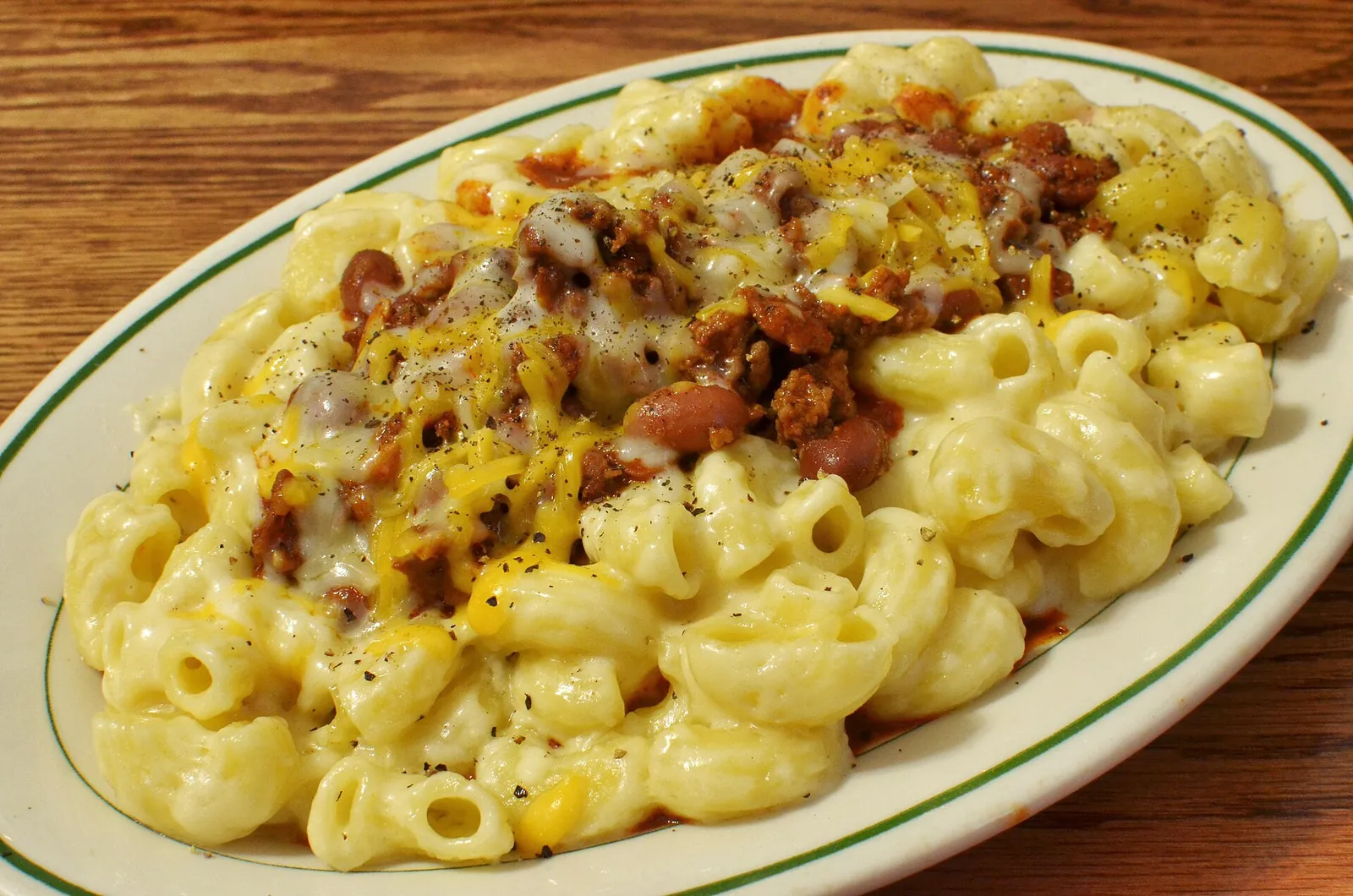
Short pasta in a cheese sauce takes on almost any of them, so cooks everywhere have made it their own.
This page tours the main styles and tells you which cheese suits each. The base recipe is in the mac and cheese guide, and every variation below is a change to that.
Mac and cheese variations at a glance
This table of mac and cheese variations shows what each style changes and the cheese that suits it.
| Variation | What changes | Cheese that suits it |
|---|---|---|
| Stovetop | Sauce stays loose, no oven | Sharp cheddar plus a young melter |
| Baked with crumbs | Firmer sauce, crisp top | Cheddar and Gruyère, Parmesan in the crumbs |
| Custard-style baked | Eggs and milk set the sauce | Sharp cheddar, mild Jack or Colby |
| British macaroni cheese | Cheddar béchamel, grilled top | Well-aged cheddar |
| Loaded | Meat, vegetables or heat added | Pepper Jack, cheddar, smoked Gouda |
| Lobster or truffle | Luxury add-in, richer cheese | Gruyère, fontina |
| Baked pasta, Italian style | Different pasta and cheeses | Fontina, mozzarella, Parmigiano |
The base behind mac and cheese variations
The base behind mac and cheese variations is a smooth sauce, and everything else rides on it. Three routes get there: a béchamel with cheese stirred in (a Mornay), a custard of eggs and milk, or melted cheese loosened with starchy pasta water or an emulsifier. Pick the route first, then the add-ins. The cheese sauce science page explains why each one holds together, and the best cheese for mac and cheese guide ranks the cheeses to start from.
Custard-style baked mac and cheese
Custard-style baked mac and cheese sets with eggs, which turns the sauce into a firm, sliceable casserole instead of a creamy one. It is common in American home cooking, especially for holiday tables and potlucks. A good starting point is 2 beaten eggs and 1 cup of evaporated or whole milk for each 12 oz of pasta and 10 to 12 oz of grated cheese, stirred together off the heat and baked at 350°F until the center is set and the top is golden.
Use sharp cheddar with a mild melter such as Colby or Monterey Jack. The eggs hold the structure together, so extra-aged cheese is less of a risk here than in a stovetop sauce. Because it contains egg, bake it until the center is firm and no longer jiggles.
British macaroni cheese
British macaroni cheese is a baked dish of macaroni in a cheddar béchamel, usually finished with a crisp top. Many cooks add mustard, and some lay sliced tomato over the top. A well-aged cheddar gives it a sharper edge than most American versions, so the sauce tastes more of cheese and less of cream. To copy it, make the sauce from the guide, use all cheddar, and brown the top under the broiler for 2 to 3 minutes.
Loaded and gourmet mac and cheese
Loaded mac and cheese adds a protein, vegetable or heat to a standard sauce, and the cheese should be chosen to match. A few combinations that work:
- Bacon and jalapeño: pepper Jack with sharp cheddar, topped with crisp bacon.
- Buffalo chicken: cheddar sauce, shredded cooked chicken, hot sauce and a ranch or blue cheese drizzle.
- Pulled pork: smoked Gouda or sharp cheddar, with the pork on top so it stays moist.
- Lobster: Gruyère and a little fontina, with cooked lobster folded in at the end so it does not turn tough.
- Truffle: fontina or Gruyère with truffle oil used sparingly, as a finish, not an ingredient.
Fold in cooked add-ins after the sauce is done, and keep them to about 1 to 2 cups per 12 oz of pasta so the sauce still coats everything. Fontina is the creamy base for the richer versions.
Baked pasta and cheese around the world
Baked pasta and cheese dishes exist in many countries, and most are cousins of mac and cheese rather than copies. Italy has pasta al forno, which bakes pasta with a sauce and cheeses such as mozzarella and Parmigiano, and the three-cheese lasagna is the layered relative. Cooks elsewhere add local spices, chilies, curry flavors or kimchi to the same idea, with local cheeses. Name a place and a pantry, and you can improvise one: pick a cheese that melts, a sauce that carries it and one flavor that belongs to the place.
Make your own mac and cheese variation
Make your own mac and cheese variation by changing only one thing at a time, so you can tell what worked. A worked example from the base recipe, for 12 oz of pasta:
- Make the sauce as in the guide, with 8 oz sharp cheddar and 4 oz of a melter.
- Swap the melter for 4 oz pepper Jack, and stir in 1/2 cup of crumbled cooked bacon.
- Top with panko and bake at 350°F for 20 minutes.
That one swap makes a different dish, and nothing else needs to change.
Mistakes with mac and cheese variations
Mistakes with mac and cheese variations usually come from the add-ins, not the sauce. Wet vegetables like raw tomatoes or fresh spinach release water and thin the sauce, so cook them first and squeeze them dry. Strong cheeses such as blue cheese or smoked Gouda overwhelm a sauce above about a third of the blend. And pre-shredded cheese still melts worse than a block you grate yourself, which is why bagged shreds are best avoided in any version. For old or aged cheddar, see aged versus young cheddar.
Storing mac and cheese variations
Store mac and cheese variations as you would the plain version: refrigerate within 2 hours of cooking and eat within 3 to 4 days, and reheat to 165°F, according to USDA guidance on leftovers. Seafood and meat add-ins make the clock matter more, so chill them promptly. Bacteria grow fastest between 40°F and 140°F, per USDA, which is why the 2-hour limit matters.
Questions about mac and cheese variations
These are common questions about mac and cheese variations.
What is the difference between baked and stovetop mac and cheese?
The difference between baked and stovetop mac and cheese is texture: stovetop is looser and creamier, while baked is firmer with a browned top. Custard-style bakes add eggs and set like a casserole.
What cheeses work for gourmet mac and cheese?
The cheeses that work for gourmet mac and cheese are Gruyère and fontina for richness, sharp cheddar for flavor and a little Parmesan for depth.
Is mac and cheese popular outside the US?
Mac and cheese is popular outside the US in forms such as British macaroni cheese and Italian baked pasta, which share the pasta-and-cheese idea.
Can you add vegetables to mac and cheese?
You can add vegetables to mac and cheese if you cook and drain them first. Roasted broccoli, caramelized onions and sauteed mushrooms work well.
How do you make mac and cheese spicy?
To make mac and cheese spicy, use pepper Jack, cayenne or hot sauce, and add the heat to the sauce before the pasta.
Choosing a mac and cheese variation
Choosing a mac and cheese variation is easiest if you start with the base from the guide and change one element. Try custard-style for a holiday casserole or pepper Jack and bacon for a weeknight, and keep the full recipe open for the method.
Sources
- Keep Food Safe! Food Safety Basics, USDA Food Safety and Inspection Service
- Leftovers and Food Safety, USDA Food Safety and Inspection Service
- How Temperatures Affect Food, USDA Food Safety and Inspection Service