
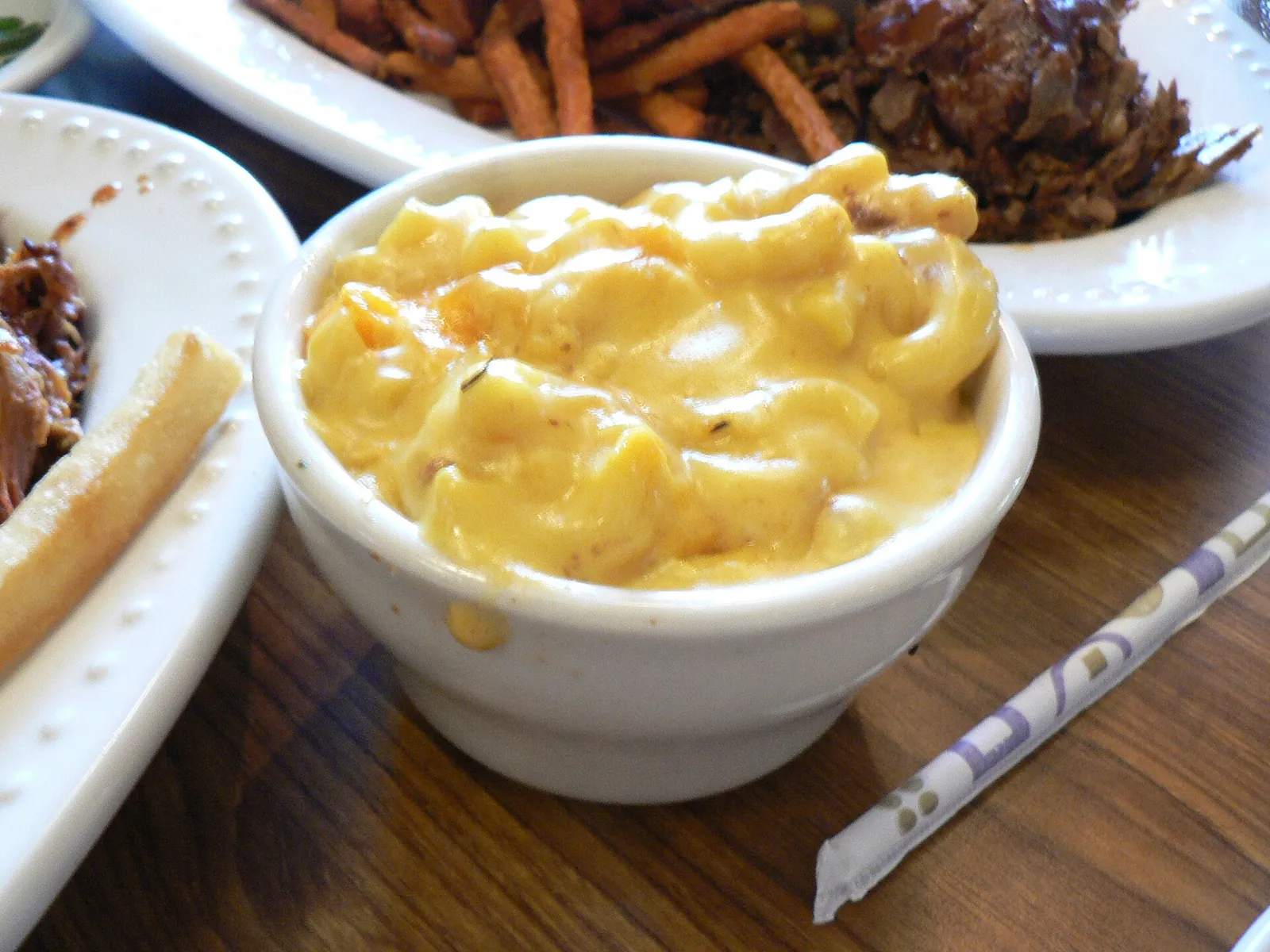
The sauce is a Mornay, which is simply a béchamel (a white sauce of butter, flour and milk) with cheese melted into it.
Most failures come from the cheese, not the pasta: sauce that turns grainy, greasy or gluey. The fixes are small and all in the steps below: warm milk, a lower flame, cheese grated from a block and added off the heat.
Mac and cheese at a glance
This mac and cheese recipe is for a standard family dinner, with the stovetop and baked versions side by side.
| Stovetop | Baked | |
|---|---|---|
| Yield | 6 servings | 6 servings |
| Active time | 30 minutes | 40 minutes |
| Total time | About 45 minutes | About 1 hour 10 minutes |
| Heat | Medium-low burner | 350°F (175°C) oven |
| Texture | Loose, glossy, creamy | Firmer, with a crisp top |
| Best cheese | 8 oz sharp cheddar, 4 oz Gruyère | Same, plus Parmesan in the crumbs |
| Make ahead | Sauce keeps 1 day; pasta is best fresh | Assemble a day ahead, bake straight from the fridge with 10 extra minutes |
How to make mac and cheese
Here is how to make mac and cheese from scratch with one pot for the sauce and one for the pasta.
Ingredients for mac and cheese
These ingredients for mac and cheese serve six, with the baked topping at the end of the list.
- 12 oz (340 g) elbow macaroni
- 4 tablespoons (55 g) unsalted butter
- 1/4 cup (30 g) all-purpose flour
- 3 cups (720 ml) whole milk, warmed
- 8 oz (225 g) sharp cheddar, aged 6 to 12 months, coarsely grated
- 4 oz (115 g) Gruyère, coarsely grated
- 1 teaspoon dry mustard powder
- 1/4 teaspoon cayenne pepper
- 1/8 teaspoon freshly grated nutmeg
- 1 teaspoon kosher salt for the sauce, plus more for the pasta water
- Baked option: 1 cup (50 g) panko breadcrumbs
- Baked option: 2 tablespoons (28 g) melted butter
- Baked option: 1 oz (30 g) Parmesan, finely grated
Steps for making mac and cheese
Follow these steps for making mac and cheese, and read the doneness signs, not just the clock.
- Heat the milk in a small pot or the microwave until steaming but not boiling, and grate both cheeses into one bowl.
- Boil the macaroni in a large pot of well-salted water for 2 minutes less than the package says (about 6 to 7 minutes), until bendy but still firm in the center, then drain without rinsing and set aside.
- Melt the butter in the empty pasta pot or a wide saucepan over medium heat until it foams, then whisk in the flour and cook for 1 minute, stirring, until it smells like biscuits and stays pale.
- Pour in the warm milk about a cup at a time, whisking after each addition until smooth, then simmer on medium-low for 4 to 5 minutes, stirring often, until the sauce coats the back of a spoon and a finger drawn across it leaves a clean line.
- Take the pot off the heat and whisk in the mustard powder, cayenne, nutmeg and salt.
- Stir in the cheese a handful at a time, waiting until each handful has melted before adding the next, until the sauce is smooth and glossy.
- Add the macaroni and stir until every piece is coated, about 1 minute over the lowest heat, loosening with a splash of milk or pasta water if the sauce looks tight.
- For stovetop mac and cheese, taste for salt and serve at once while the sauce is loose and shiny.
- For baked mac and cheese, heat the oven to 350°F (175°C), pour the sauced pasta into a buttered 2-quart (about 8 inch square) dish, and stir the panko, melted butter and Parmesan together to sprinkle over the top.
- Bake the dish for 20 to 25 minutes, until the sauce bubbles at the edges and the crumbs are deep golden, then rest it for 5 minutes before scooping.
The best cheese for mac and cheese
The best cheese for mac and cheese is a pair: a sharp cheddar for flavor and a softer melter for texture. Cheddar aged 6 to 12 months has enough tang without the tight, dry protein network of an older block, and Gruyère adds a nutty sweetness and a smooth, stretchy melt. The full guide to the best cheeses for mac and cheese compares the other options, from fontina and Monterey Jack to American cheese and sodium citrate, so this recipe sticks to one reliable blend.
Buy blocks and grate them yourself. Bagged shreds carry anti-caking coatings that keep them from clumping in the bag and also keep them from melting into a smooth sauce, a problem explained in why pre-shredded cheese melts badly. The Gruyère page and the cheddar profile cover what to look for at the store.
Why mac and cheese sauce turns grainy or greasy
Mac and cheese sauce turns grainy or greasy when the cheese proteins tighten and squeeze out fat, and heat is the usual cause. Four habits prevent it:
- Take the pot off the burner before the cheese goes in, so the sauce is hot but not simmering.
- Add cheese in handfuls, not all at once, so the temperature does not crash.
- Skip extra-aged cheese as the main player; a crumbly two-year cheddar will not melt smoothly. See aged versus young cheddar.
- Keep the sauce slightly looser than you want to eat it, because it thickens as it sits and again in the oven.
If the sauce does split, whisk in a tablespoon of warm milk off the heat, or melt in a slice of American cheese, whose emulsifying salts hold a sauce together. The cheese sauce science page explains the chemistry.
Mac and cheese baked or on the stovetop
Mac and cheese on the stovetop is faster and creamier, while the baked version is firmer and has the crisp top many people want. Baking dries out the sauce, which is why this recipe leaves the pasta slightly underdone and the sauce a little loose. If you want the baked texture without the crunch, skip the crumbs and cover the dish with foil for the first 15 minutes.
Mac and cheese variations
Mac and cheese variations all start from this base. A handful of ideas that work with it as written:
- Swap the Gruyère for fontina or young Gouda for a softer, sweeter sauce.
- Use pepper Jack in place of half the cheddar for a gentle heat.
- Stir in cooked bacon, caramelized onions or roasted broccoli at the pasta step.
- Add a spoonful of hot sauce instead of the cayenne.
For custard-style, regional and international versions, see the mac and cheese variations page.
Storing and reheating mac and cheese
Leftover mac and cheese goes into the fridge within 2 hours of cooking and keeps for 3 to 4 days, according to USDA guidance on leftovers. Reheat it to 165°F, and stir in a splash of milk first, since the pasta keeps absorbing sauce overnight. For the best result, warm it in a covered saucepan over low heat or in the microwave in short bursts with a stir in between. Store it the way you would any cheese-based dish, in a sealed container. Bacteria grow fastest between 40°F and 140°F, per USDA, which is why the 2-hour limit matters.
Questions about mac and cheese
These are the questions people ask most about making mac and cheese.
What is the best way to make mac and cheese creamy?
The best way to make mac and cheese creamy is to build a béchamel, add the cheese off the heat, and keep the sauce slightly loose. Warm milk and freshly grated cheese do the rest.
Do you bake mac and cheese covered or uncovered?
Bake mac and cheese uncovered when you want a crisp top, at 350°F for 20 to 25 minutes. Cover it with foil if you only want to reheat it without browning.
Why does mac and cheese turn dry after baking?
Mac and cheese dries out after baking because the pasta absorbs sauce and the oven evaporates some. Undercook the macaroni, keep the sauce loose, and use the full 3 cups of milk.
Can you make mac and cheese ahead of time?
You can make mac and cheese ahead by assembling the baked version a day early, covering it and chilling it, then baking it with about 10 extra minutes. Stovetop mac and cheese is best fresh.
What pasta is best for mac and cheese?
The best pasta for mac and cheese is any short shape with hollows or ridges that hold sauce: elbows, shells, cavatappi or small rigatoni all work. Use the same weight, 12 oz.
Can you freeze mac and cheese?
You can freeze mac and cheese for 3 to 4 months, per USDA guidance, but the texture softens. Thaw it in the fridge and reheat with a splash of milk to 165°F.
Make this mac and cheese your own
Make this mac and cheese recipe once as written, then change one thing at a time: the melter, the heat or the topping. Start with the stovetop version, since it shows you how the sauce should look, then bake the next batch.
Sources
- Keep Food Safe! Food Safety Basics, USDA Food Safety and Inspection Service
- Leftovers and Food Safety, USDA Food Safety and Inspection Service
- How Temperatures Affect Food, USDA Food Safety and Inspection Service