
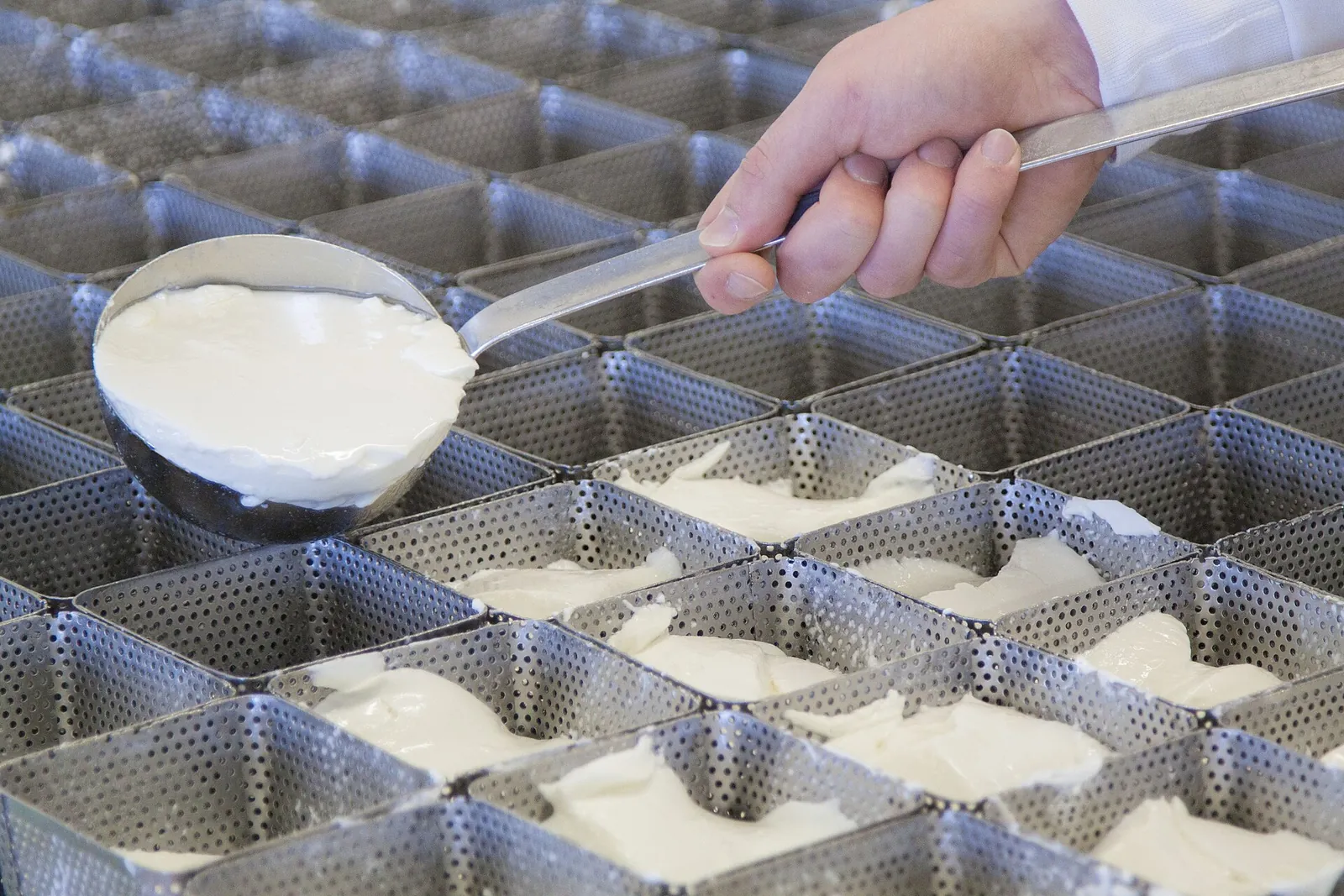
Two names do most of the work, Herve and Chimay.
This page explains what each is, how to taste and pair them, and where to look in the US.
Belgian cheese at a glance
Here is Belgian cheese at a glance: the two cheeses worth knowing, with milk, style and protection.
| Cheese | Milk | Style | Protected name |
|---|---|---|---|
| Herve | Raw cow's | Soft, washed rind, pungent | PDO |
| Chimay | Cow's | Semi-soft to hard, depending on the version | None |
The Belgian cheese tradition
The Belgian cheese tradition is rooted in two places: the farms of the Herve countryside in the province of Liège, and the Trappist monasteries. Herve production began in the 15th century, and the cheese is ripened in cellars, sometimes cut into chalky rock, near the borders with the Netherlands and Germany.
Chimay is younger. The abbey founded its brewery in 1862 and began cheese in 1876, and it recycles the filtered solids from the beer mash as feed for the cows that supply the milk, according to an overview of the Chimay brewery.
Herve, the washed-rind classic
Herve is a Belgian rind-washed soft cheese made from raw cow's milk, and it ages for about 3 weeks to 2 months. Young, it is salty and chalky inside; with age it turns creamy and spicy, and the rind takes on a glossy reddish-brown color from the bacteria that grow on it. The smell is far stronger than the taste.
The cheese comes in small pieces, in weights of about 50 to 400 grams, and some are flavored with herbs. It is related to Limburger, which began in the same Herve area, and the Herve page has the details.
Serving Herve
Serving Herve works best with dark bread, a smear of mustard, and the local sweet syrup Sirop de Liège. A pear or apple slice cuts the salt. Pair it with a dubbel, a bock or a brown ale, which match the cheese's spice without competing with the smell.
Chimay and the Trappist cheeses
Chimay cheese comes from the monastery behind the Trappist ale, and the range includes four cheeses as of 2010: Chimay with Beer, which has its rind soaked in Chimay beer, the semi-hard Grand Classic, Grand Cru, which is pasteurized and matured for six weeks, and Old Chimay, a hard cheese aged at least six months.
The supple versions are savory and nutty with a faint yeast note, so they pair with the matching beers: Chimay Rouge, a dubbel or a tripel. The Chimay page covers them in more detail.
How to serve a Belgian cheese board
A Belgian cheese board works on contrast between salt, spice and sweetness. Put a washed rind like Herve beside a milder Chimay, then add dark bread, mustard, sliced pear and a few walnuts. Let the cheese sit out of the fridge for about 30 minutes before serving so the paste softens and the flavor opens up.
Choose the beer first and the cheese second if you can. A dubbel (dark, malty, slightly fruity) suits both cheeses, a tripel (golden, peppery, drier) cuts the richness of the older Chimay, and a brown ale handles Herve's spice. Keep the portion small: about 1 to 2 ounces per person as an appetizer, as the cheese per person guide explains, and the board builder scales it for a crowd.
Cooking works too. Washed-rind cheeses melt well into a gratin or onto potatoes, and the rind carries most of the aroma, so trim it if the smell is too much for your guests.
How to find Belgian cheese in the US
To find Belgian cheese in the US, start at a store with a good washed-rind section and a cutter. Chimay is the easier find, since it ships with the beer and often sits near the Belgian ale. Herve is rarer, and the young pieces can be hard to import, so a specialty importer or a cheese counter that carries washed rinds is the likeliest source.
If you cannot find it, the same flavor comes from other washed-rind cheeses: Munster, Époisses or Tilsit all sit in the same pungent but savory range. Limburger from Wisconsin is the closest relative, since it comes from the same family.
What most Belgian cheese guides get wrong
Most Belgian cheese guides get the order wrong: they lead with the beer and treat the cheese as an afterthought. The cheese is the older tradition in the Herve countryside, and its washed rind is why beer works so well with it.
They also overstate the reach of the protected name. A PDO covers Herve itself, not every Belgian washed rind, and the PDO and PGI guide explains what the label does and does not promise.
Questions about Belgian cheese
These are the most common questions about Belgian cheese.
What is Belgium's most famous cheese?
Belgium's most famous cheese is Herve, a pungent washed-rind cheese from near Liège, with Chimay a close second.
Is Chimay cheese made by monks?
Chimay cheese comes from the Chimay abbey, which began making cheese in 1876, though the abbey's own site is the place to check who makes it today.
What beer goes with Belgian cheese?
The best beer with Belgian cheese is a Belgian dubbel, tripel or brown ale, which match the savory, spicy cheese.
Is Herve cheese the same as Limburger?
Herve cheese is related to Limburger, which began in the same Herve area, but Herve is the Belgian protected version made from raw milk.
Where to start with Belgian cheese
Start with Belgian cheese by buying one Chimay and a bottle of Chimay Rouge, then try Herve if you find it. Next, read the cheese board guide to build the spread, and use the cards below to open each cheese.
Sources
- Limburger cheese, covering the Belgian Herve cheese, Wikipedia (milk, aging, history, weights)
- Chimay Brewery, Wikipedia (cheese since 1876, the four cheeses as of 2010)
- Belgian cuisine, Wikipedia (Trappist cheese washed with beer)