
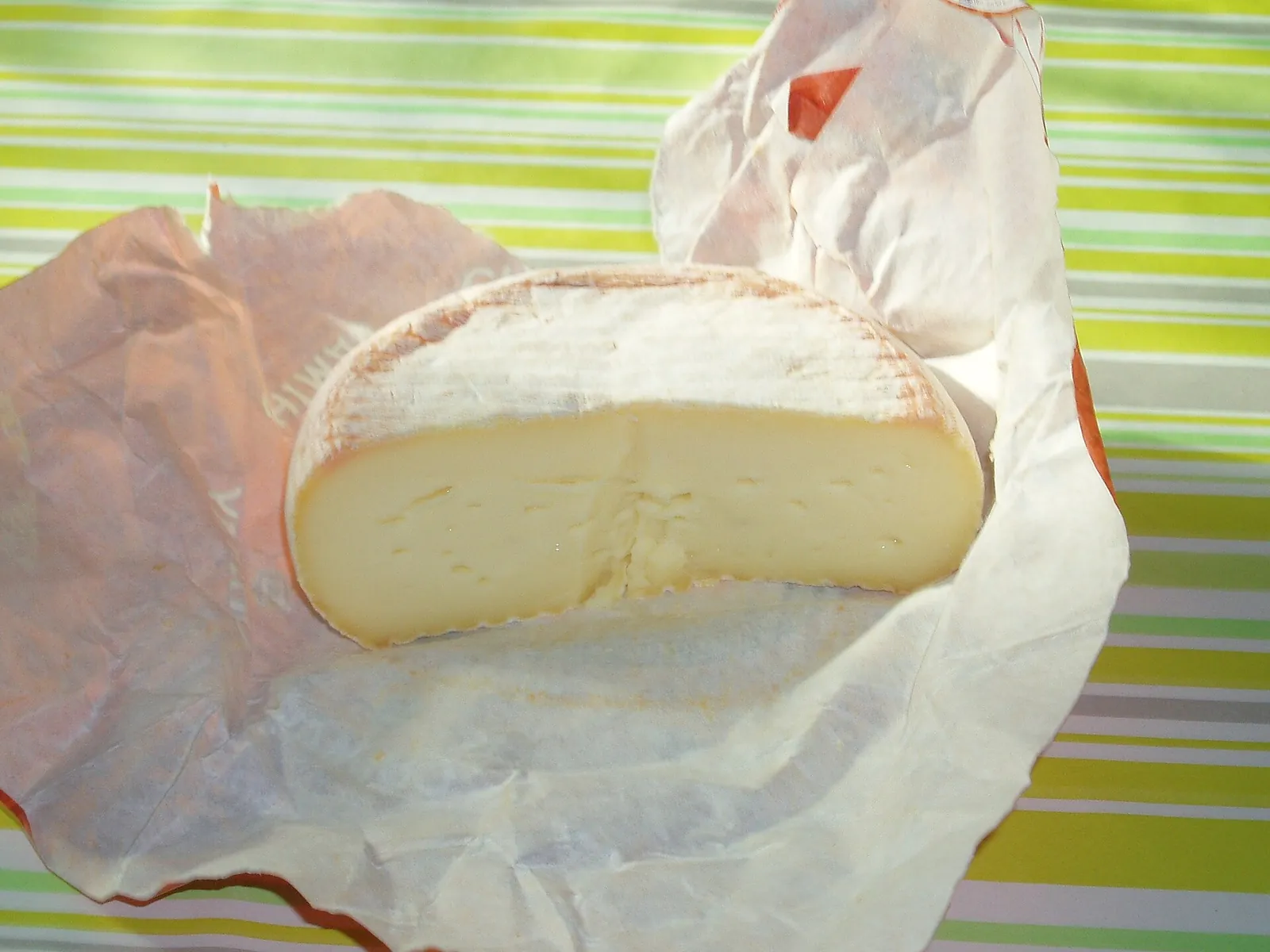
The classic wheel is mild and creamy, with a taste of bread crust and fresh milk, and it is the easy one to start with.
Chimay is a family of cheeses rather than one wheel, from a mild 21-day cheese to a six-month aged one. Some are made or washed with the abbey's beer, which gives them a yeasty, savory edge.
Chimay cheese: origin and history
Chimay cheese began at the Abbey of Notre-Dame de Scourmont, where a dairy was created in 1857. In 1876 a monk, Brother Benedict, went to France to learn how to make semi-soft cheeses, and the monks started cheesemaking, according to Cheese Connoisseur. The dairy moved in 1975 to run apart from the brewery.
The milk comes from a cooperative of around 250 farms within about 18 miles of the dairy, with Jersey, Blanc-Bleu Belge and Holstein cattle named. Chimay has no protected name, so it is a brand and a recipe, not a protected cheese. The Belgium page lists the country's other cheeses.
How Chimay cheese is made
Chimay cheese is made from pasteurized milk, skimmed and homogenized to 30 percent fat, as Cheese Connoisseur reports. Cheeses spend 2 to 48 hours in brine depending on type, and some are washed with Chimay beer. The official Chimay cheese page says the beer versions are washed in Chimay Trappist beer rather than the usual salted water, and the with-beer cheese on its product page also contains brewer's yeast isolated by Father Théodore in 1948, still used in the beers.
Chimay cheese varieties and age
Chimay cheese comes in several ages. Cheese Connoisseur lists the Classic at 21 days, à la Première at 4 weeks, Grand Chimay at over 60 days, Vieux at 6 months and Poteaupré at 120 days, launched in 2007. The Chimay site sells the main cheeses as 2 kg wheels or loaves, describes the plain one as mild and creamy with a natural, uncolored rind, and also lists a with-beer cheese, 1876, Poteaupré, Le Gourmand and Le Cendré de Scourmont.
Chimay cheese taste and texture
Chimay cheese tastes savory, nutty, yeasty and mild at its youngest, with a supple, smooth, slightly elastic texture. The plain cheese is made without beer, and the abbey describes it as tasting of bread crust and fresh creamy milk. The beer-washed ones are more savory and yeasty, and the older cheeses firm up and deepen.
How to buy Chimay cheese in the US
Buying Chimay cheese in the US is easiest at a specialty cheese counter or a shop that stocks Belgian beer, and the Chimay site has a US page for it. Read the label for which version you are getting: plain, with beer or an older wheel. Buy the plain one first, since it shows the base cheese, then try a beer one.
How to serve Chimay cheese
Serve Chimay cheese at room temperature, cut in wedges, with crusty bread, walnuts and mustard. Take it out of the fridge about an hour ahead so the paste turns supple. It melts well in a grilled cheese or a gratin, and the rind is edible.
What to serve with Chimay cheese
What to serve with Chimay cheese starts with the abbey's beers: Chimay Rouge, a dubbel or a tripel. Pinot Noir, Chardonnay and Belgian saison also suit it. Apple, grape and pear are the fruit to reach for, and crusty bread, walnuts and mustard are the extras. The pairing guide has more, and the beer and cheese guide goes deeper on beer.
Substitutes for Chimay cheese
Substitutes for Chimay cheese are mild, supple, semi-soft cheeses. Fontina is the nutty, melting match, Havarti is buttery and milder, and Taleggio has more washed-rind savor. The substitute finder lists more.
Storing Chimay cheese
Store Chimay cheese in wax paper or parchment in a lidded container in the fridge, and finish a cut piece within about two weeks. The storing cheese guide covers wraps in more detail.
What most Chimay advice gets wrong
Most Chimay cheese advice assumes it is one cheese, and that it always tastes of beer.
Not every Chimay is made with beer
Not every Chimay is made with beer: the plain Chimay is made without beer, according to the abbey, and only the beer cheeses carry the ale. Check the label.
Chimay is a brand, not a style
Chimay is a brand and a recipe, not a protected style, so cheese sold as Chimay comes from one abbey dairy. Other Trappist-style cheeses are different.
Questions about Chimay cheese
These are the questions about Chimay cheese that come up most.
Is Chimay cheese made by monks?
Chimay cheese was started by monks at Scourmont Abbey in 1876, and the dairy now runs separately from the brewery, moved in 1975.
Is Chimay cheese made with beer?
Chimay cheese is made with beer only in some versions: the plain one is made without it. The beer versions are washed with Chimay Trappist beer.
What does Chimay cheese taste like?
Chimay cheese tastes mild, savory and a little nutty, with a taste of bread crust. The beer versions are more yeasty.
Is Chimay cheese pasteurized?
Chimay cheese is made from pasteurized milk, according to Cheese Connoisseur, which also makes it a safer buy for those avoiding raw milk.
Your first Chimay cheese
For your first Chimay cheese, buy a small piece of the plain wheel, serve it at room temperature with crusty bread and walnuts, and drink a Chimay Rouge alongside.
Sources
- The Intricacies of Belgium's Chimay, Cheese Connoisseur
- Our cheeses, Chimay
- Chimay cheese, Chimay
- Chimay With Beer cheese, Chimay