
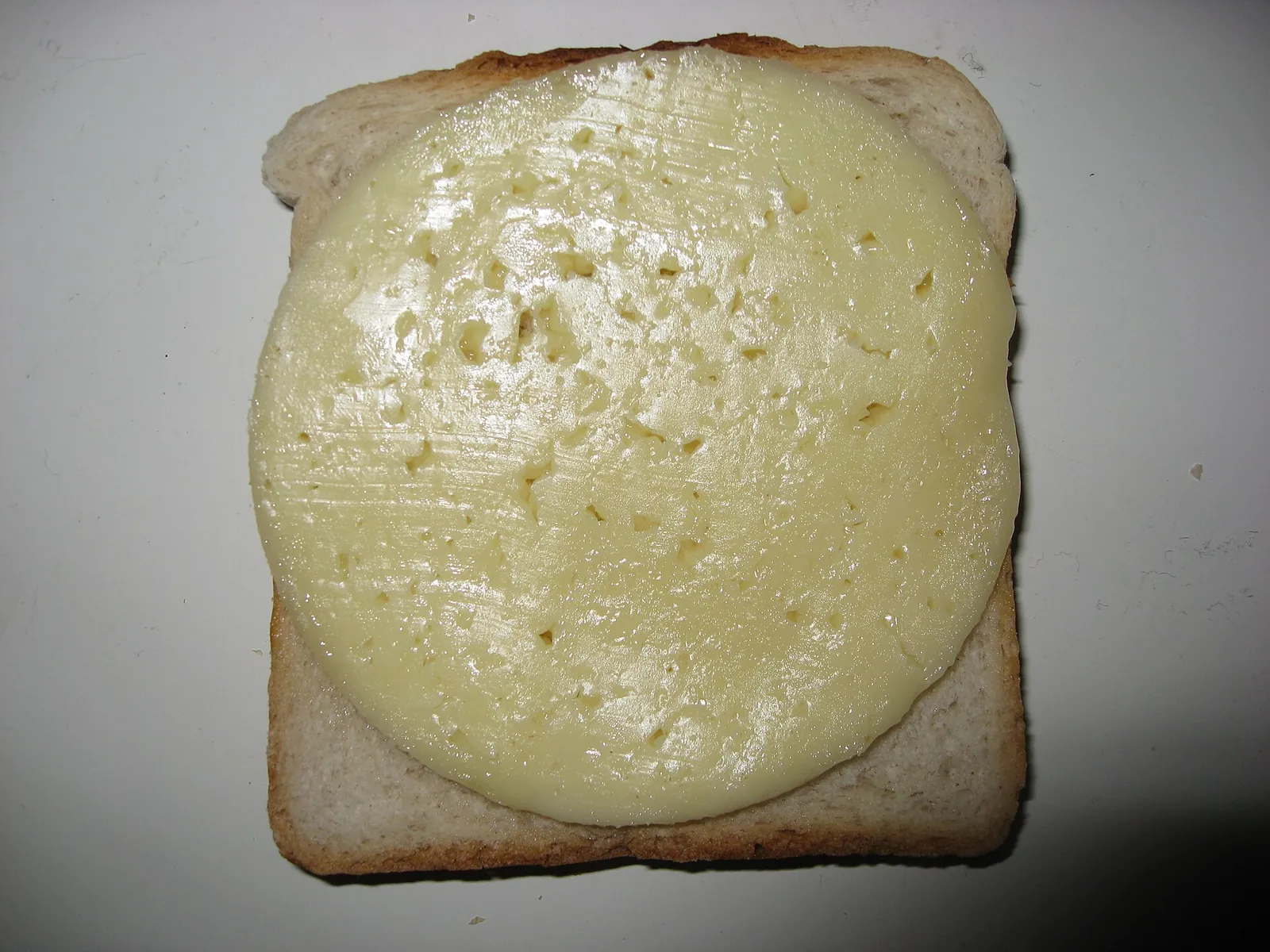
It is semi-soft, with a smooth, springy body and tiny holes, and its curds are washed, which takes out some of the lactose and keeps the flavor gentle.
That gentleness is why Havarti turns up in sandwiches, grilled cheese and on boards, and why the label words matter: plain, creamy, aged and flavored Havarti behave differently.
Havarti cheese at a glance
Here is Havarti cheese at a glance, based on the sources listed at the end of the page.
| Detail | Havarti |
|---|---|
| Milk | Cow |
| Origin | Denmark; also made in the US, especially Wisconsin |
| Style | Semi-soft to semi-hard, washed curd |
| Texture | Smooth, creamy and springy; slices cleanly |
| Holes | Tiny, from carbon dioxide released by bacteria |
| Flavor | Young: very mild, buttery, slightly sweet. Aged: saltier, slightly acidic, hints of hazelnut |
| Age | About 5 to 8 weeks at one Danish dairy; a few months to a year in Castello's range |
| Versions | Creamy, aged, and flavored with dill, chives, cranberry, garlic, jalapeño, herbs or spices |
Where Havarti cheese comes from
Havarti cheese comes from Denmark. According to Wisconsin Cheese, a cheesemaker named Hanne Nielsen invented it in the mid-1800s and named it after her farm. Culture magazine adds that she toured Europe to learn cheesemaking first, then made the cheese at the farm, Havarthigård, north of Copenhagen.
Denmark's national biographical dictionary, Dansk Biografisk Leksikon, tells it differently. It describes Nielsen (1829 to 1903) as a butter and cheese producer who created a cheese called Chr. IX, and it says the later Havarti has no basis in her cheese making. The farm gave the name; whether her recipe gave the cheese is where the sources part ways.
Wherever the recipe began, Havarti is now made well beyond Denmark: Wisconsin Cheese notes that the top five Havarti entries at the 2015 US Cheese Championships all came from Wisconsin. The Denmark page covers the country's other cheeses.
How Havarti cheese is made
Havarti cheese is made from pasteurized milk that is set with cultures, drained of whey, molded, brined and aged. The step that defines it comes after the whey is separated: the curds are washed to remove more of the lactose, which gives the cheese its milder flavor.
Makers differ on the rest. One traditional Danish dairy profiled by Culture lets the whey drain without pressing, flips loaf-shaped molds over 24 hours, brines the cheeses for 48 hours, smear-ripens them for 5 to 8 weeks and waxes them before sale. Castello's own account includes pressing the curd, so even that varies.
Creamy, aged and flavored Havarti cheese
Creamy, aged and flavored Havarti cheese are the three labels to look for, and each one changes the taste and the melt.
Creamy Havarti cheese
Creamy Havarti cheese is the richer style, and its make differs from standard Havarti. A 1989 US patent assigned to the Wisconsin Milk Marketing Board describes a creamy Havarti-style cheese with 37 to 38 percent fat, 36.5 to 37.5 percent water and 60 to 61 percent fat in the dry matter. Its recipe drains off only 15 to 25 percent of the milk's volume as whey, against 30 to 40 percent in earlier Havarti methods, and the body, firm at first, has softened by 8 weeks. One company's recipe is not an official definition, but it shows what creamy can mean.
Aged Havarti cheese
Aged Havarti cheese trades the young cheese's mildness for salt and nuts. Older Havarti is saltier, with a slightly acidic edge and hints of hazelnut, and it hardens around its gas bubbles as it ages, per Wisconsin Cheese. Castello says its Havarti may age anywhere from a few months to a year. Use it where the cheese should carry the flavor: on a board with apples, or in a sandwich with mild fillings.
Flavored Havarti cheese
Flavored Havarti cheese is plain Havarti with additions, and the mild base is why they work. Wisconsin Cheese lists dill, chives, cranberry, garlic and jalapeño as common flavors, and Castello's line adds herbs and spices. Dill suits turkey, cucumber and smoked salmon, and jalapeño suits burgers and quesadillas.
Havarti cheese texture and how it melts
Havarti cheese has a smooth, springy texture that slices cleanly when cold and softens fast as it warms. It melts quickly, and fat is a big reason: the University of Wisconsin's Center for Dairy Research says more fat weakens the casein network, so a cheese melts and stretches at a cooler temperature than a lower-fat one. The creamy style in the patent has 37 to 38 percent fat, against 33 percent for USDA's cheddar and 30 percent for its Monterey Jack and Muenster.
Age shifts the melt. Aging breaks down casein, and the same Dairy Pipeline article says that breakdown increases melt but decreases stretch, so an aged piece should flow readily but string less than a young one.
Havarti gives a creamy melt rather than a long stretch, so pair it with a firmer cheese when you want pull. The best cheeses for grilled cheese and the melting cheese ranking show which partners work.
How to buy Havarti cheese in the US
To buy Havarti cheese in the US, read the label words, because Creamy, Aged and the flavored versions are different products. Danish imports and American-made blocks are both common, and Castello, a Danish brand, lists Creamy and Aged Havarti on its US site. A label that says only Havarti usually means the mild everyday style.
Pick Creamy for a richer slice and Aged for a saltier, nuttier bite. Buy a block when you want thick, cold slices for sandwiches and boards, and pre-sliced packs for grilled cheese and burgers. At home, wrap it in parchment or wax paper inside a container; the storing cheese guide covers wraps.
How to use Havarti cheese
Use Havarti cheese wherever a mild, soft cheese should slice or melt: sandwiches, grilled cheese, burgers and boards. Slice it cold for turkey, chicken or vegetable sandwiches, where it adds the fat lean fillings lack, and see the best cheeses for sandwiches for how it compares.
Melt it on poultry burgers, where it keeps the patty from tasting dry, and in grilled cheese as half the cheese or more beside a sharper partner. Wisconsin Cheese also lists puff pastry appetizers, baked chicken and cheese dips.
On a board, cut cold slices or cubes and put it out last, because Havarti softens fast in a warm room. Mortadella, cooked ham, apples, pears and grapes sit well beside it. Wisconsin Cheese suggests buttery chardonnay, riesling, lighter pinot noir or a Weiss beer, and the Pairing Guide lists more.
Havarti cheese substitutes
The best Havarti cheese substitutes are mild, semi-soft cheeses that melt, such as young Gouda, Monterey Jack and Muenster.
| Need | Swap in | Why |
|---|---|---|
| Closest match | Young Gouda | Also washed curd, mild and creamy |
| Melting on burgers or quesadillas | Monterey Jack or Muenster | Soft, mild and quick to melt |
| More flavor in a melt | Fontina | Italian Fontina is stronger than US or Danish versions |
For dill Havarti, use plain Havarti or Monterey Jack and add fresh dill. The Substitute Finder lists more options.
What most Havarti advice gets wrong
Most Havarti advice repeats a few habits that cost you flavor or a clean melt.
The holes in Havarti come from bacteria, not from washing
The holes in Havarti come from bacteria, not from washing the curd: Wisconsin Cheese says the tiny openings are carbon dioxide released by the bacteria in the cheese. Washing lowers lactose and mellows the flavor; it does not make the eyes. Culture notes that the Danish wheel it profiles has small holes spread horizontally through the paste, so a scatter of small holes is normal.
Havarti is not always bland
Havarti is not always bland, because a smear-ripened Danish wheel can taste buttery and nutty with a pleasant underlying funk, as Culture describes it. If plain Havarti seems dull, move up in age rather than away from the cheese.
Too much heat spoils a Havarti melt
Too much heat spoils a Havarti melt, because the cheese softens at the edges as soon as it warms and oozes out of a sandwich when the pan runs hot. Cook grilled cheese on medium-low and let the bread hold the cheese in. On a burger, add the slice for the last minute and cover the pan to finish it.
Questions about Havarti cheese
These are the questions about Havarti cheese that come up most.
What does Havarti cheese taste like?
Havarti cheese tastes buttery and slightly sweet when young, with a very mild flavor. Aged Havarti is saltier and slightly acidic, with hints of hazelnut.
Is Havarti cheese good for melting?
Havarti cheese is very good for melting, because it softens fast and melts smoothly into a creamy pool.
Is Havarti cheese pasteurized?
Havarti cheese is made from pasteurized milk, according to both Castello and the Wisconsin patent, which specifies 163°F for 17.5 seconds. Check the label if you avoid raw milk, and follow FDA guidance on raw-milk and soft cheeses if you are pregnant.
How long does Havarti cheese last in the fridge?
Opened Havarti cheese lasts about two weeks in the fridge when it is wrapped well, and sealed packs keep to the date printed on them.
What can you substitute for Havarti cheese?
Substitute Havarti cheese with young Gouda for the closest match, or with Monterey Jack or Muenster when you mainly need a mild cheese that melts.
Your first Havarti cheese
For your first Havarti cheese, buy a small block of creamy Havarti, slice half of it cold for a turkey sandwich and melt the rest on a burger or in a grilled cheese. Then taste an aged piece beside it to see how far the cheese runs from mild to nutty.
Sources
- Havarti, Wisconsin Cheese (Wisconsin Milk Marketing Board)
- Hanne Nielsen, Dansk Biografisk Leksikon (Lex.dk)
- US Patent 4,882,179: Method of manufacture of creamy Havarti style cheese, US Patent and Trademark Office (via Google Patents)
- The Melt and Stretch of Cheese, Dairy Pipeline, Winter 2000, University of Wisconsin Center for Dairy Research
- Havarti (Danish) Cheese, Culture: The Word on Cheese
- Havarti, Castello (Arla Foods)
- Castello Creamy Havarti Cheese, US site, Castello (Arla Foods)
- USDA FoodData Central, SR Legacy rows: cheddar, Monterey, Muenster