
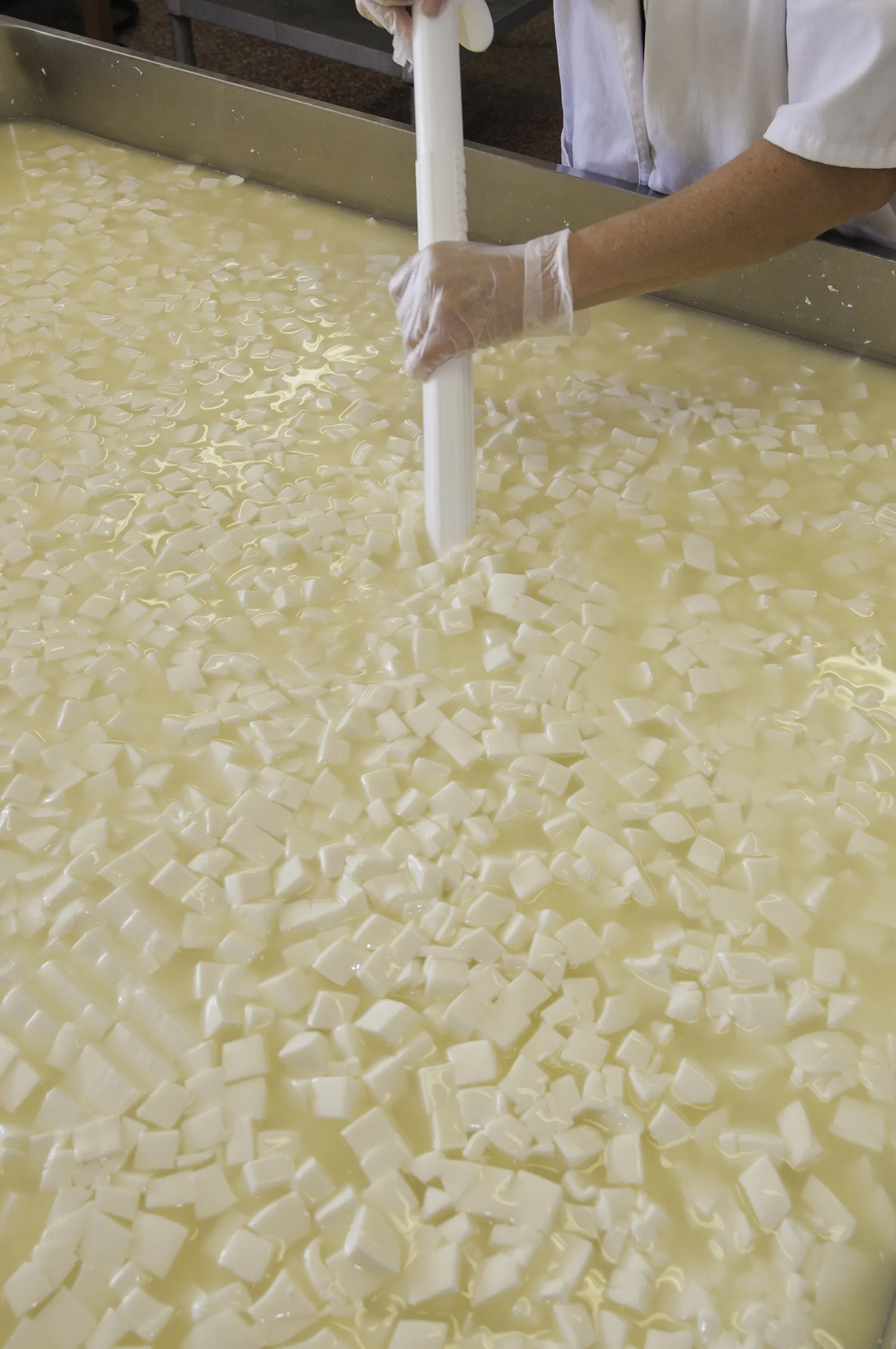
Find which one fits your symptom and change only that next time.
Cheesemaking is a chain, so a mistake early on shows up late. A curd made too acidic crumbles in the press, and a curd made too wet turns pasty on the shelf. This page runs through the five failures home cooks report most, with the cause and the fix for each.
Cheesemaking problems at a glance
This table of cheesemaking problems pairs each symptom with its most likely cause and the first fix to try.
| Symptom | Most likely cause | First fix |
|---|---|---|
| Milk will not set | Ultra-pasteurized milk, old rennet, wrong temperature | Switch to pasteurized milk that is not ultra-pasteurized; check rennet date and the temperature |
| Mozzarella will not stretch | Curd not acidic enough, or too acidic | Follow the recipe's acid amount exactly; test a curd in hot water |
| Crumbly cheese | Too little or too much acid, or too dry | Check acid, then drain less and press more lightly |
| Rubbery cheese | Overheated or overworked curd, too much rennet | Heat gently, stop working the curd once smooth |
| Bitter flavor | Too much acid, too much moisture, too much rennet | Measure rennet, drain well, salt on schedule |
| Surface mold | Wrong humidity, dirty tools, wet rind | Wipe, clean, and adjust humidity |
Why your curd will not set
Curd will not set most often because the milk is ultra-pasteurized. Ultra-pasteurized or UHT milk "often forms weak or unreliable curds," according to the Fromaggio mozzarella guide, which recommends pasteurized whole milk that is not ultra-pasteurized. Check the carton before anything else; the words are printed near the date. Pasteurization at home is covered in pasteurization at home.
The next suspects are the ingredients and the thermometer. Rennet loses strength with age and with warm storage, so a bottle that has sat in a cupboard for a year may not do the job; see rennet explained for how it works. Penn State Extension describes the basic order: add a starter culture and wait for it to grow, then add rennet, then cut the set mass so curds separate from whey (Introduction to Making Cheese). A culture that never grew, a milk that was too cool, or a rennet dose measured loosely all break that order. The same page asks for milk of excellent quality, with good fat and protein, so stale or watery milk is another reason for a weak set.
The test is simple: after the time your recipe gives, the curd should split cleanly around a knife or finger instead of flowing. If it does not, wait a little longer at the right temperature before giving up.
Why mozzarella will not stretch
Mozzarella will not stretch when the curd's acidity is outside the narrow window where it turns elastic. The Cheese Scientist puts that window at a pH of about 5.2 to 5.4, with the curd then heated in hot whey or water at about 158 to 185°F (70 to 85°C). Too little acid and the curd stays firm and tight. Too much and it tears, crumbles or dissolves in the water.
Home cooks rarely have a pH meter, so the practical test is the one that source describes: drop a slice of curd into hot water. If it melts into a smooth, stretchy mass, go ahead. If it stays firm, give the curd more time to acidify. If it falls apart, the batch has gone too far, and the curd is better used crumbled in a dish.
Heat and handling matter too. Fromaggio notes that overheating removes moisture and leaves the cheese rubbery, and that stretching and folding too long makes it tough and dry rather than smooth. Stop once the cheese is glossy. The full method is in how to make mozzarella at home, and the style differences are in the fresh, low-moisture and buffalo mozzarella guide.
Crumbly cheese and rubbery cheese
Crumbly cheese and rubbery cheese are opposite texture faults with overlapping causes. The University of Wisconsin Center for Dairy Research says inadequate acidity gives a "short, crumbly cheese body and a tough, curdy texture," with poor melt and stretch, while excessive acidity gives a short, brittle body in dry hard cheese, a pasty body in soft cheese and a grainy texture (Controlling Acidity and Moisture).
Moisture is the other lever. The same source says too much moisture gives a weak, pasty body, and too little gives a hard, firm, corky one. So crumbly cheese that is also dry usually lost too much whey or was pressed too hard, while crumbly cheese that is damp usually had an acid problem.
Rubbery cheese tends to come from heat and handling: curd cooked too hot or too long, or worked after it was already smooth. Too much rennet is another reason cooks give for a tough body, so measure it with a proper dropper or spoon. Fix one thing at a time and keep notes, because the Center for Dairy Research quotes an expert saying that changing one parameter such as moisture changes the others, such as acidity.
Bitter cheese flavor
Bitter cheese flavor comes mainly from too much acid, too much moisture or too much rennet. The Center for Dairy Research lists an acid (bitter) taste as the result of excessive acidity, and says excess moisture increases proteolysis, the breakdown of protein into bitter-tasting fragments.
The fixes follow from that. Stop the culture from running on: watch the clock and the temperature, since fresh cheese left warm for too long over-acidifies. Drain the whey properly. Salt on the schedule your recipe gives, because salt slows the culture and firms the cheese; see the role of salt in cheesemaking. Measure rennet exactly. Young cheeses that taste harsh may also just need more time, which is a different problem from true bitterness.
Mold on aging cheese
Mold on aging cheese is common, and whether it matters depends on what kind and where. A thin, dry spot of surface mold on a hard cheese in a cave or fridge is usually handled by wiping it with a cloth dampened in salt water or vinegar and checking humidity, which is general practice rather than a tested rule. Fuzzy growth, slime or pink and black patches on a soft or fresh cheese is a reason to discard it.
Causes are usually environmental. The Center for Dairy Research notes that over-acid cheese loses whey and is prone to calcium lactate crystals and surface mold, so a wet, sour rind invites trouble. Too much humidity, a stagnant box with no air, dirty shelves and reused cloths do the rest. Wipe shelves, flip the cheese often, and give the box some air. The aging basics are in how to age cheese at home and your first aged cheese. For which molds are normal and which are not, read how to prevent cheese mold.
Food safety comes first: when you are unsure about a mold, throw the cheese out. Pregnant people and others at higher risk should follow FDA and CDC guidance on soft and homemade cheese.
What most cheesemaking troubleshooting gets wrong
Most cheesemaking troubleshooting treats each failure as a separate mystery, when they usually share a root cause. Acid, moisture and temperature move together, so changing three things at once tells you nothing. If a batch failed, change only the most likely variable and repeat it.
The second mistake is blaming the recipe when the milk is the problem. Ultra-pasteurized milk ruins more first batches than any technique error, and it is the cheapest thing to check. The third is skipping notes: write down the milk brand, the temperatures, the rennet dose and the clock times, and the pattern shows up by the third batch. Good tools help too; see beginner cheesemaking equipment for a thermometer and a measuring set worth buying.
Questions about cheesemaking problems
These questions about cheesemaking problems come up most often from first-time makers.
Why won't milk set for cheese?
Milk will not set for cheese most often because it is ultra-pasteurized, which forms weak or unreliable curds. Also check rennet freshness, the dose and the temperature.
Why won't mozzarella stretch?
Mozzarella will not stretch when the curd is too low or too high in acid, with a target pH of about 5.2 to 5.4. Test a slice of curd in hot water before stretching the batch.
Why is homemade cheese crumbly?
Homemade cheese is crumbly when it has too little acid, too much acid or too little moisture. Check the acid step first, then how much whey you drained.
Why does homemade cheese taste bitter?
Homemade cheese tastes bitter when it is over-acidic, too wet or made with too much rennet. Measure rennet carefully and drain and salt properly.
Is mold on aging cheese dangerous?
Mold on aging cheese is not always dangerous, but soft or fresh cheese with mold should be thrown out. Follow your recipe's guidance and discard anything slimy or pink or black.
Fix your next batch of cheese
To fix your next batch, pick the one symptom that matches, change the one variable named for it and write down what you did. A simple repeat, such as homemade ricotta or paneer, is a good place to confirm the milk and thermometer are behaving before you try a harder cheese.
Sources
- Introduction to Making Cheese, Penn State Extension
- Controlling Acidity and Moisture, University of Wisconsin Center for Dairy Research
- Why Won't My Mozzarella Stretch?, Fromaggio
- Pasta Filata 101, The Cheese Scientist