
The curd sets slowly overnight at room temperature, and the slow acid build is what gives fresh chèvre its clean, tangy flavor.
It is among the easiest cheeses to start with: no cooking of the curd, no press, no aging. Fresh chèvre is eaten unripened. The chèvre page covers the French logs and the ripened AOP goat cheeses, and this page covers making the fresh kind yourself.
Goat cheese at a glance
This table shows the numbers for making fresh goat cheese at home.
| Homemade fresh goat cheese | |
|---|---|
| Yield | About 1 pound (450 g) from 1 gallon |
| Active time | About 50 minutes |
| Setting temperature | 72°F (22°C) |
| Setting time | 12 to 20 hours, covered |
| Draining | About 12 hours, hanging in butter muslin |
| Best milk | Pasteurized goat's milk, not ultra-pasteurized |
| Keeps | A few days at 40°F (4°C) or below |
How to make goat cheese
Making goat cheese at home means ripening and setting the milk together, then draining it. The recipe below is the cultured method that gives the best flavor.
Ingredients for making goat cheese
These are the ingredients for making goat cheese, using one gallon of milk and a few pantry items.
- 1 gallon (3.8 liters) pasteurized goat's milk, not ultra-pasteurized
- 1/8 teaspoon mesophilic chèvre starter culture (or the packet amount for one gallon)
- 2 drops liquid single-strength rennet, diluted in 1/4 cup (60 ml) cool non-chlorinated water
- 1 to 2 teaspoons (6 to 12 g) non-iodized fine salt, to taste
- Optional: 2 tablespoons chopped fresh herbs, cracked pepper or lemon zest for rolling
Steps for making goat cheese
Follow these steps for making goat cheese, starting in the evening so it sets overnight.
- Pour the milk into a clean stainless steel pot and warm it to 72°F (22°C) over low heat, stirring gently, then take it off the heat.
- Sprinkle the culture over the surface, wait 2 minutes for it to soak, then stir it in with an up-and-down motion for about 30 seconds.
- Stir the diluted rennet into the milk for 30 seconds, then cover the pot and stop moving it.
- Leave the pot in a draft-free spot at about 72°F for 12 to 20 hours, until the milk has set into a solid mass with a thin layer of clear whey on top.
- Line a colander with butter muslin or fine cheesecloth and set it over a bowl. Ladle the curd in with a slotted spoon in large, thin slices rather than breaking it up.
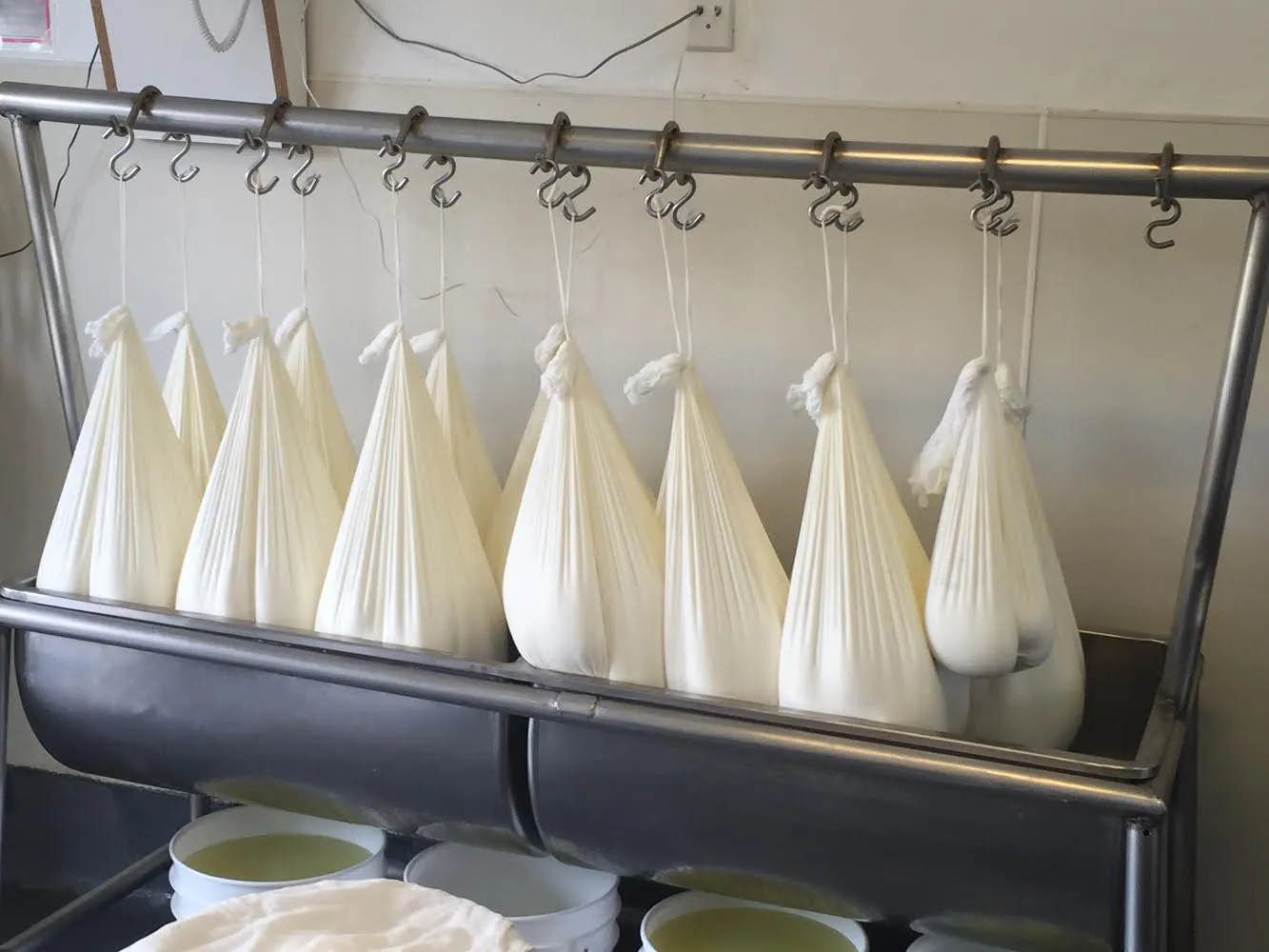
- Tie the corners of the cloth and hang the bag for about 12 hours, until it stops dripping. Drain it less for a creamy cheese and more for a firm, crumbly one.
- Scrape the cheese into a bowl, stir in the salt a pinch at a time, and taste.
- Pack it into a container or roll it into a log in plastic wrap, coat it with herbs or pepper if you like, and chill it for at least 2 hours before serving.
The best milk for goat cheese
The best milk for goat cheese is fresh, pasteurized goat's milk that is not ultra-pasteurized. Oregon State Extension tells home cheesemakers to start with pasteurized milk, and America's Test Kitchen says ultra-pasteurized and UHT milk affect the protein structure and make it difficult for curds to form. If the carton says ultra-pasteurized, look for another brand. See pasteurization at home if you have raw goat's milk.
Goat curd sets soft and fragile, which is why you ladle it gently instead of cutting and stirring it. If you cannot find goat's milk, cow's milk follows the same steps and gives a milder, creamier cheese, though it is no longer chèvre in the French sense: the word means goat. The goat, sheep and cow's milk guide compares them.
Making goat cheese mistakes and fixes
Making goat cheese mistakes are usually about milk, time and temperature. These are the common ones.
Milk that does not set is nearly always ultra-pasteurized milk, a room that is too cold, or too little culture. Move the pot somewhere warmer and wait up to 24 hours before giving up. For more, see troubleshooting common cheesemaking problems.
Cheese that is too sour has set too long or in a hot kitchen. Next time, stay near 72°F and keep it nearer 12 hours than 20.
Cheese that is dry and crumbly drained too long. Drain a shorter time, or stir a spoonful of milk or olive oil back in.
Cheese with a strong goaty edge is partly nature: Cheese Science Toolkit says the flavor comes mainly from goat milk's fatty acids, freed by lipase enzymes, and is easier to notice in fresh cheeses like chèvre. Pair it with honey or herbs.
Variations on homemade goat cheese
Variations on homemade goat cheese start with the finishing. Fold in herbs, garlic or lemon zest, or roll a log in cracked pepper, dill or ash. A faster acid version uses lemon juice or vinegar and heat, as in making paneer: it is quicker but milder and more crumbly than the cultured cheese. If you want something firmer, drain longer or press lightly.
Not sure what to serve with it? The goat cheese pairing guide covers honey, fruit and wine, and feta vs goat cheese explains where they overlap.
Storing homemade goat cheese
Storing homemade goat cheese means keeping it refrigerated at 40°F (4°C) or below in a sealed container. Fresh homemade cheese has no rind or preservative, so plan to eat it within a few days. Use clean spoons and throw it out if it smells off or shows any mold. Pregnant people and others at higher risk should read pasteurized vs raw-milk cheese before eating soft cheeses.
Questions about making goat cheese
These questions cover what readers ask when they make goat cheese for the first time.
Can you make goat cheese without rennet?
You can make goat cheese without rennet by using acid and heat, but the cheese is crumblier and less tangy. The cultured method here uses only 2 drops.
What goat's milk is best for making goat cheese?
The best goat's milk for making goat cheese is fresh and pasteurized, never ultra-pasteurized. Both Oregon State Extension and America's Test Kitchen steer cheesemakers away from ultra-pasteurized milk.
How long does it take to make goat cheese?
Making goat cheese takes about 24 to 32 hours from start to finish, with about 50 minutes of work. The setting takes 12 to 20 hours and the draining about 12 more.
Why is homemade goat cheese so sour?
Homemade goat cheese turns sour when it sets too long or too warm. Shorten the setting time or cool the room.
What is the difference between chèvre and goat cheese?
Chèvre is the French word for goat, so goat cheese and chèvre mean the same cheese. In US stores, chèvre usually means the fresh log, as described on the chèvre page.
Make goat cheese this weekend
To make goat cheese this weekend, buy a gallon of pasteurized goat's milk, chèvre culture, rennet and butter muslin, and start the pot the evening before. Taste the cheese plain first, then season it. The cheesemaking equipment guide covers what to buy.
Sources
- The Basics of Cheesemaking, Oregon State University Extension
- How to Make Cheese from Scratch, America's Test Kitchen
- Goaty Flavor in Goat Cheese, Cheese Science Toolkit