
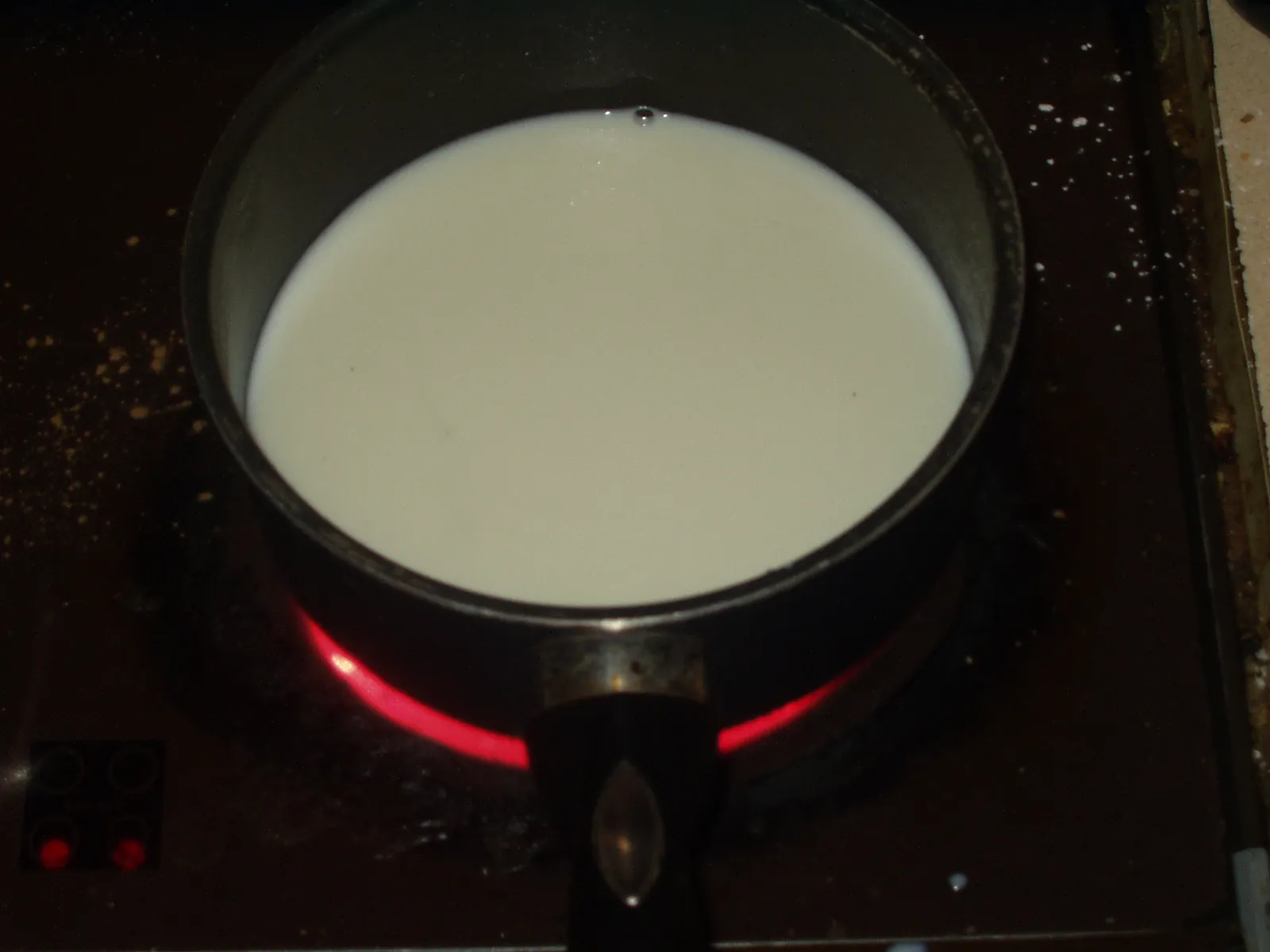
Those two time and temperature pairs come from Oregon State Extension's guide to home pasteurization of raw milk.
Most home cheesemakers never need to do it, because store milk is already pasteurized. It matters when your milk comes from a farm, a share or your own animals, and you want to start from milk that has been heat treated. This page covers the method, the mistakes that spoil it, and what happens to the milk afterward.
Why do pasteurization at home for cheese?
Pasteurization at home for cheese is done to kill the bacteria that raw milk can carry. Oregon State Extension names Salmonella, Listeria and E. coli O157:H7 as the concern, and says pasteurizing matters most for pregnant women, young children, older adults and people with weakened immune systems.
Cheese does not remove that risk by itself. Fresh cheese keeps most of the milk's moisture, and a soft cheese holds over 45 percent water according to New Mexico State University's cheesemaking guide, which also calls it highly perishable. Aging changes the picture: Penn State Extension states that raw-milk cheeses must be aged a minimum of 60 days at not less than 35°F for safety reasons. For what that rule does and does not mean, see raw milk cheese and pasteurized vs raw milk cheese.
Oregon State's cheesemaking basics page keeps it short: start with pasteurized milk. This page does not tell you raw milk is safe to use for a fresh cheese, and the CDC advice summarized on the pages above is to avoid raw-milk cheese if you are pregnant, older or immunocompromised.
Time and temperature for pasteurization at home
The time and temperature for pasteurization at home depend on which method you choose, and both are from the same extension guide.
| Method | Heat to | Hold for | Notes |
|---|---|---|---|
| Low temperature, long time (double boiler) | 145°F (63°C) | 30 minutes | Stir frequently; keep the milk at or above 145°F |
| High temperature, short time (stovetop) | 161°F (72°C) | 15 seconds | Heat over boiling water, stirring constantly |
Both methods are in Oregon State's guide, and the same page lists a microwave version at 161°F for 15 seconds in a glass container. The rule that matters most is the floor: the guide says temperatures under 145°F will not kill harmful bacteria, and if the milk drops below 145°F at any point, raise it again and restart the 30-minute timer.
New Mexico State's cheesemaking guide gives a slightly wider range, 140 to 145°F for 30 minutes, and cautions that going above 145°F may damage texture and flavor. Where the two sources differ, aim for 145°F and hold it, since that is the figure Oregon State warns about. A thermometer that is off by a few degrees can quietly turn a safe batch into an unsafe one, so check yours in ice water (32°F) before you start.
How to pasteurize milk at home, step by step
How to pasteurize milk at home with the low-temperature method takes about an hour including cooling and needs only a double boiler or a small pot inside a larger one, a cooking thermometer, and a bath for cooling.
- Set the milk in a clean pot inside a larger pot of hot water, or in a double boiler.
- Clip the thermometer to the side so the tip sits in the milk, not touching the pot's bottom.
- Heat slowly, stirring frequently, until the milk reaches 145°F.
- Hold it at 145°F or above for 30 full minutes. Restart the timer if the temperature dips below 145°F.
- Set the pot in a larger container of cold water, adding ice to keep the water cold, and keep stirring until the milk is cold.
The high-temperature method is the same, except the milk goes straight over the boiling water, reaches 161°F, and stays there 15 seconds. It is faster, but the window is short, which is why many home cheesemakers prefer the gentler 30-minute hold. That preference is guidance, not a ruling from either source.
What pasteurization does to cheesemaking milk
Pasteurization changes cheesemaking milk by making it heat treated, and the more heat, the weaker the curd. A peer-reviewed study of goat milk heated at 65°C (149°F) for 30 minutes, 80°C for 5 minutes and 90°C for 5 minutes found that aggregation rate and curd firmness decreased as the heating temperature rose, and the highest heat gave a curd about a third as firm as the gentlest one (7.3 Pa against 19.9 Pa). It is a goat milk study, so it is evidence of a direction rather than a rule for every milk.
That is the reason to stop at the pasteurization temperature and not past it. Heat the milk to 145°F, hold it, and no further.
Store milk is a different matter. New Mexico State notes that grocery pasteurized milk has been heat processed and homogenized, which affects protein and fat texture, so cheese from it differs from traditional versions. None of the sources opened for this page address ultra-pasteurized milk directly, so check the recipe you are following before you buy it for cheese, and see troubleshooting if a curd stays soft.
Cooling and using pasteurized milk for cheese
Cooling and using pasteurized milk for cheese starts with the ice bath, since milk left warm keeps growing whatever bacteria survive or get in. Oregon State says to stir until the milk is cold and then refrigerate it.
For cheese you often go on right away instead: cool the milk to the temperature your recipe starts at, then add culture and rennet. If you need to store it, chill it fully first. Because heat also takes out part of the milk's own microbes, the flavor and acid come from the starter you add, so see cheese cultures and rennet explained for what goes in next. Some recipes also call for calcium chloride after pasteurizing; that is common recipe guidance, so follow your recipe.
New Mexico State puts the refrigerated life of soft cheese at only five to seven days. For anything you make, keep it at 40°F or below and eat fresh cheese within a few days. A basic cheesemaking equipment guide covers the thermometer and pots you will use.
Mistakes in pasteurization at home
Mistakes in pasteurization at home mostly come from the thermometer and the clock. The common ones:
- Counting the 30 minutes from when the burner goes on, not from when the milk hits 145°F.
- Letting the milk slip below 145°F and not restarting the timer, which the Oregon State guide specifically warns against.
- Heating over direct high heat without stirring, which scorches the bottom and overshoots the target.
- Cooling slowly on the counter instead of in an ice bath.
- Pasteurizing milk that was already pasteurized, which only adds heat damage.
The last one is worth repeating: milk labeled pasteurized needs no further heating to be safe, and extra heat only costs curd firmness, per the goat milk study above.
Questions about pasteurization at home
These questions about pasteurization at home cover the numbers people ask for most.
What temperature is pasteurization at home?
Pasteurization at home is 145°F (63°C) held for 30 minutes, or 161°F (72°C) held for 15 seconds, according to Oregon State Extension.
How long do you pasteurize milk at home?
You pasteurize milk at home for 30 minutes at 145°F, or 15 seconds at 161°F, and the 30 minutes restart if the milk drops below 145°F.
Can you pasteurize milk in a microwave for cheese?
Pasteurizing milk in a microwave is listed by Oregon State Extension at 161°F for 15 seconds in a glass container, but a stovetop gives you steadier control and a more even temperature.
Do you need pasteurization at home if the milk is store bought?
Pasteurization at home is not needed for store milk, because it is already pasteurized. Extra heating adds nothing for safety.
Does pasteurization at home make raw milk safe for everyone?
Pasteurization at home reduces the risk from raw milk but is no medical guarantee, so anyone who is pregnant or immunocompromised should follow CDC and FDA advice on soft cheeses and ask a doctor.
Pasteurization at home: where to go next
Pasteurization at home is the first step, and the next one is choosing a cheese. Start with a fresh cheese from pasteurized milk, such as cottage cheese, and move to a pressed cheese once the timing feels easy. Making your first aged cheese takes you through that step.
Sources
- Home pasteurization of raw milk, Oregon State University Extension
- Making Homemade Cheese (E216), New Mexico State University Extension
- Farmstead and Artisan Cheesemaking, Penn State Extension
- The basics of cheesemaking, Oregon State University Extension
- Rheology and Microstructures of Rennet Gels from Differently Heated Goat Milk, PubMed Central