
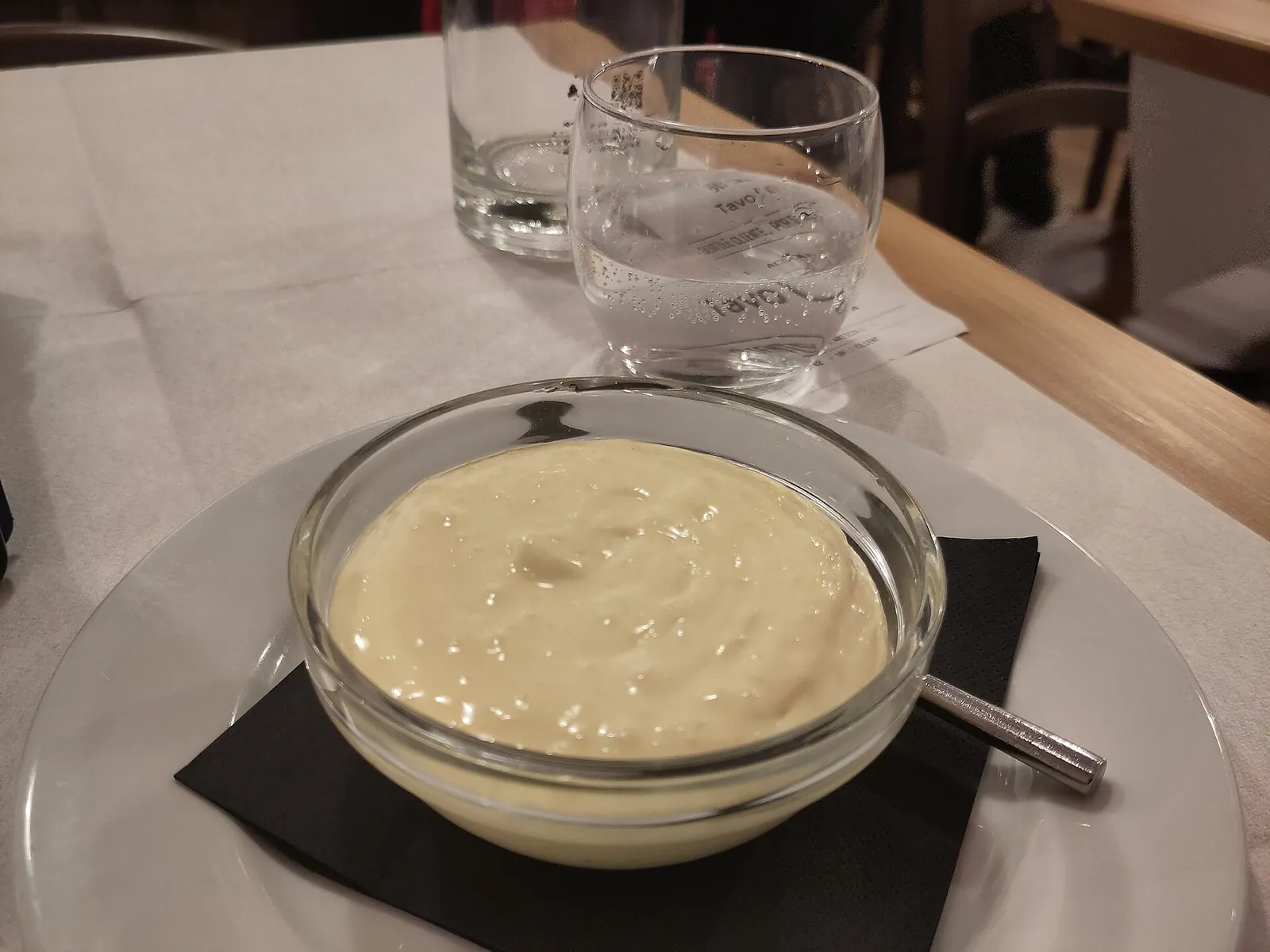
You heat the cream, add lemon juice, cool it, and let the fridge and a piece of cheesecloth do the rest.
Mascarpone is cream with the water taken out, not milk with fat added, which is why it takes so few steps. Treccani, the Italian reference dictionary, defines it as a soft fresh cheese from lower Lombardy, around Lodi, made by coagulating cow's cream with diluted tartaric acid. This quick version swaps in lemon juice, which most kitchens already have. The mascarpone page covers fat, uses and substitutes.
Quick mascarpone at a glance
Quick mascarpone at a glance: two ingredients, one pot, and a night in the refrigerator.
| Yield | About 1 cup (230 g) from 2 cups of cream |
| Active time | About 20 minutes |
| Key temperature | 185°F (85°C) |
| Total time | 12 to 24 hours, mostly draining |
| Best for | Tiramisu, cheesecake, fruit, risotto |
| Keeps | A few days at 40°F (4°C) or below |
How to make quick mascarpone
This method makes about a cup of mascarpone from two cups of cream, and most of the time is the unattended draining.
Ingredients for quick mascarpone
The ingredients for quick mascarpone are few, and the quality of the cream sets the quality of the cheese.
- 2 cups (480 ml) heavy cream, 36 percent fat or higher, with no added thickeners if you can find it
- 1 tablespoon (15 ml) fresh lemon juice
- 1 teaspoon (5 ml) more lemon juice, held back in case the cream needs it
- 1 pinch fine salt, optional, for savory use
Steps for making quick mascarpone
These steps for making quick mascarpone run about 20 minutes of work, then a long rest.
- Pour the cream into a small heavy saucepan and heat it over medium-low, stirring gently, until a thermometer reads 185°F (85°C).
- Stir in the lemon juice and keep the cream at 185°F for 5 minutes, stirring slowly and often.
- Test it: lift the spoon, and the cream should coat the back and leave a clear line when you draw a finger through it; if it is still thin, stir in 1/4 teaspoon more lemon juice and wait 2 minutes.
- Take the pot off the heat and let it cool to room temperature, about 45 minutes, without stirring.
- Line a fine sieve with a double layer of cheesecloth or a clean coffee filter and set it over a bowl.
- Pour in the thickened cream, fold the cloth over the top, and cover the bowl.
- Refrigerate for 12 to 24 hours, until the cheese is thick and holds a spoon; the longer it drains, the firmer it gets.
- Scrape the mascarpone into a clean container, discard the whey, and keep it refrigerated.
Cream for quick mascarpone
The best cream for quick mascarpone is plain heavy cream with a high fat content and as few additives as possible. A 2020 paper in Molecules describes commercial mascarpone as made from cream with about 80 percent of its dry weight as fat, so rich cream matters. Heavy whipping cream fits; half-and-half is too thin and gives a runny result.
Ultra-pasteurized cream is common in US stores and still thickens, but its extra processing can make the result a little softer. Check the label for gums such as carrageenan, which can make the cheese slick.
Lemon juice or tartaric acid for mascarpone
Lemon juice or tartaric acid both set mascarpone, and the Molecules paper lists acetic, citric, tartaric and lactic acids, vinegar and lemon juice among the acids makers use. Traditional makers use tartaric acid, as Treccani notes. Lemon juice is easier to find and leaves a faint brightness, which is pleasant in desserts. Use fresh lemon juice, since bottled juice varies in strength.
Go slowly with the acid. Too much makes the cream curdle into grainy bits instead of a smooth, thick mass, and the cheese tastes sour.
Heating the cream for mascarpone
Heating the cream for mascarpone to 185°F (85°C) is the right spot: the Molecules paper gives a range of 85 to 95°C (185 to 203°F). The heat changes the proteins so that the acid thickens the cream gently, which is why mascarpone is smooth and rich rather than curdy like ricotta.
Use a thermometer. Under 180°F the cream stays thin, and a full boil can scorch it and cause it to split.
Draining mascarpone
Draining mascarpone is where the texture forms. The Molecules paper describes about 20 hours of draining after coagulation, and 12 to 24 hours in the refrigerator is a good range at home. A shorter drain gives a soft, spreadable cheese for dessert toppings. Longer gives a firmer one for frosting and tiramisu.
Do not press or squeeze the cloth. Pressing forces out fat and leaves a grainy cheese.
Quick mascarpone mistakes and fixes
Quick mascarpone mistakes are mostly about heat, acid and patience.
Mascarpone that is runny
Runny mascarpone means the cream was too cool or the acid too small. Drain it longer, or return it to the pot, heat it to 185°F again and add a little more lemon juice.
Mascarpone that is grainy
Grainy mascarpone means too much acid or heat. Next time stop at 185°F, add the juice slowly and do not squeeze the cloth.
Mascarpone that tastes sour or lemony
Sour mascarpone needs less acid. Use 2 teaspoons of lemon juice per cup of cream and add more only if the cream will not coat the spoon.
Storing and using homemade mascarpone
Storing homemade mascarpone means keeping it cold. Refrigerate it covered at 40°F (4°C) or below and use it within a few days. The main mascarpone page covers why warm mascarpone is a safety problem and why frozen mascarpone cracks. Stir it smooth while cold, then fold in whipped cream for lift.
The classic use is the cream in tiramisu, where it is beaten with egg yolks and sugar. Spoon it over berries with honey, swirl a few tablespoons into risotto, or use it in a no-bake cheesecake. Cream cheese vs mascarpone explains how they differ in recipes.
Questions about making quick mascarpone
These are the questions people ask most about quick mascarpone.
Can you make mascarpone with half-and-half?
You can make mascarpone with half-and-half, but the result is thin and slow to drain; heavy cream gives the rich, spoonable result.
How much mascarpone does 2 cups of cream make?
Two cups of cream makes about 1 cup of mascarpone after draining overnight.
Does mascarpone need rennet?
Mascarpone does not need rennet or a culture, because heat and acid alone thicken the cream.
Why is homemade mascarpone runny?
Homemade mascarpone is runny when it has not drained long enough or the cream did not reach 185°F; drain it longer or reheat and add a little more acid.
Can you use the whey from mascarpone?
The whey from mascarpone is thin and can go into baking, soup or smoothies, though there is little of it.
Your first mascarpone
Your first mascarpone needs a pint of heavy cream, a lemon and a thermometer. Start it in the evening and spoon it onto fruit the next morning. When you are comfortable, go on to making mozzarella and the other basic cheesemaking equipment it calls for.
Sources
- Mascarpone (vocabolario), Treccani
- Mascarpone cheese production overview, Molecules 2020, via PubMed Central
- The basics of cheesemaking, Oregon State University Extension