
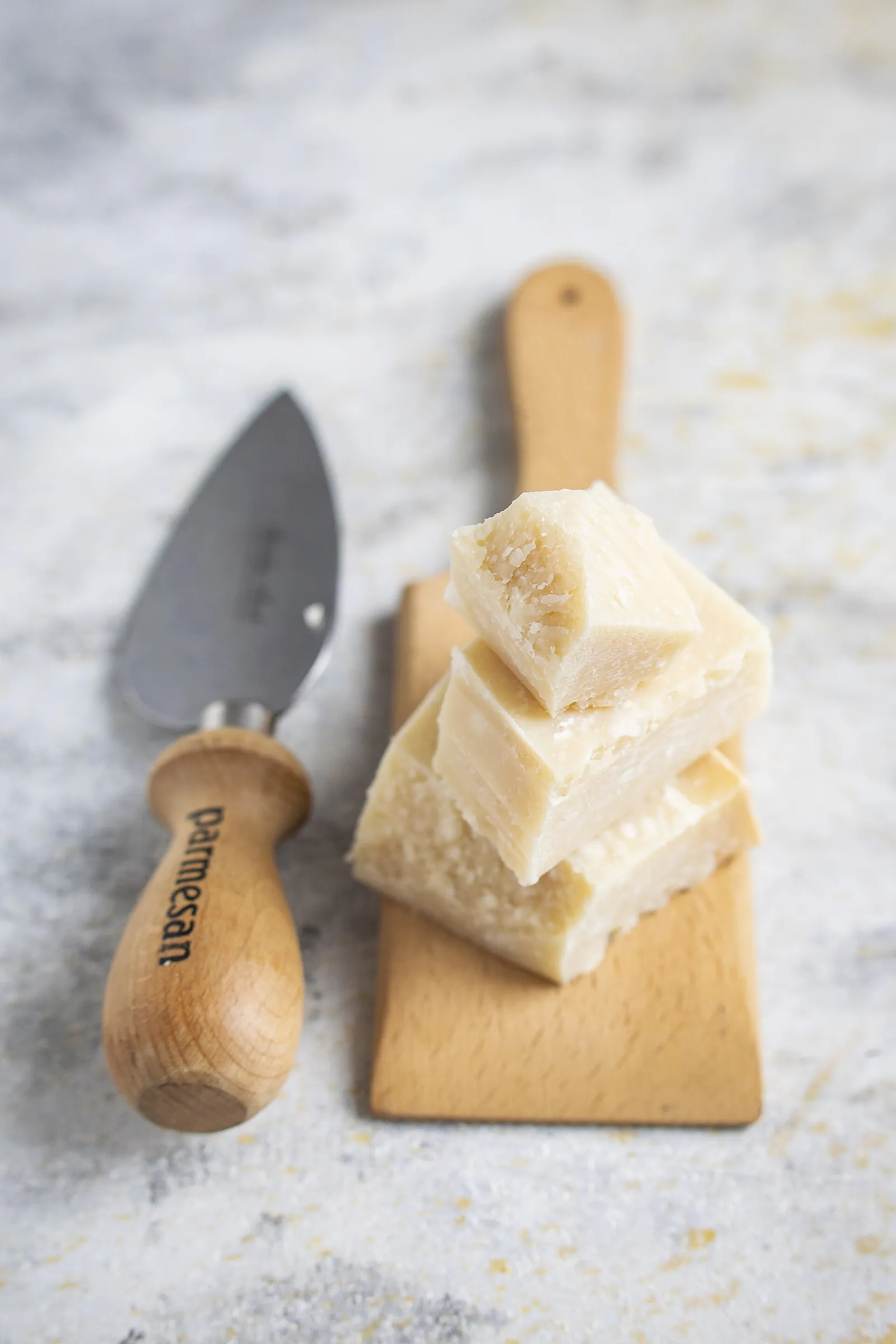
Cut off the hard, cracked or sweaty edge, then grate the rest or melt it into something hot, and you have lost very little. The exceptions are mold on soft or shredded cheese and anything slimy or foul smelling, which should go in the trash.
Dry and spoiled are different problems. Dry cheese has lost water to the fridge's cold, dry air, so it is firmer and sharper but otherwise the same. Spoiled cheese has grown something, and no amount of grating fixes that.
Dried out cheese at a glance
This dried out cheese table shows what each type does when it dries and what to do with it. The fix column is guidance.
| Cheese | What drying looks like | Best fix |
|---|---|---|
| Cheddar, Gouda, Swiss | Hard, cracked or oily edge | Trim, then grate or melt |
| Parmesan, Pecorino | Rock hard, pale | Grate, or simmer the rind |
| Mozzarella, provolone | Leathery, shrunken surface | Shred for pizza or bakes |
| Brie, Camembert | Cracked, chalky rind, firm center | Bake or melt, or cut away the rind if it tastes bitter |
| Cream cheese, ricotta, cottage | Crust and weeping | Not a drying problem, check dates and discard if off |
Why cheese dries out
Why cheese dries out is a matter of surface area and air. A cut face has no rind to protect it, so moisture leaves it quickly in a cold fridge, and the loss is worst at corners and thin edges. Cheese stored unwrapped, or under a loose lid, dries within days. Wrapping it wrongly causes the opposite problem, which is sweating and slime.
Hard cheese keeps longer than soft cheese, which is why it dries more slowly and spoils more slowly too. USDA FoodKeeper gives hard cheese such as cheddar, Swiss and block Parmesan 3 to 4 weeks after opening in the fridge. The storage guide explains how to wrap it so it lasts that long.
Is dried out cheese safe to eat?
Dried out cheese is safe to eat when it smells normal and shows no mold or slime, because drying removes water and does not add anything. A hard, crumbly texture, a darker cut face or tiny white crystals on an aged cheese are not warning signs. The white crystals in aged cheeses like Parmesan are usually protein or salt, which is guidance rather than a tested finding.
Mold is where the rules matter. The USDA's guidance on molds in food says to cut off at least 1 inch around and below a moldy spot on hard cheese, keeping the knife out of the mold. Soft cheeses such as cottage cheese, cream cheese, Neufchatel, chevre and Bel Paese should be discarded if moldy, and so should all crumbled, shredded or sliced cheese. Surface mold on Gorgonzola or Stilton can be trimmed 1 inch like hard cheese. The white mold guide helps you tell fuzz from bloom.
How to revive dried out cheese
How to revive dried out cheese depends on how far the drying goes. If only the surface has dried, you can recover a little softness, though you cannot restore a cheese that has dried through. This is kitchen guidance, not a tested method.
- Trim first. Slice off the hardened layer, about an eighth of an inch, until you reach cheese that bends slightly.
- Wrap in damp paper. Lay a barely damp paper towel against the cut face, not dripping, then wrap the wedge in parchment or cheese paper.
- Rest it in the fridge. Leave it a day or two, then check the surface.
- Rewrap dry. Replace the damp towel with fresh paper so moisture does not become mold.
Keep the towel off long-term, since constant dampness invites mold. Bring a revived cheese to room temperature before eating it, and it will taste softer and fuller. The soft versus hard storage guide shows how to wrap each type.
Cooking with dried out cheese
Cooking with dried out cheese is the best use, because melting puts the water back in. Grated hard cheese dissolves into sauce, and it is more forgiving than fresh cheese in many recipes. Some ideas.
- Grate it over pasta and risotto. Dry Parmesan, Pecorino and aged Gouda do this well, and the real versus fake Parmesan guide explains what the cheese should taste like.
- Melt it into mac and cheese. Dried cheddar still makes a good sauce, particularly mixed with a creamier cheese; see best cheese for mac and cheese.
- Make fondue. Hard Alpine cheeses, even dry ones, work in a cheese fondue because wine and heat do the softening.
- Top soups and gratins. Shredded dry cheese browns well under the broiler on French onion soup.
- Simmer the rind. A hard rind adds savory flavor to soup or beans; see what to do with cheese rinds.
- Freeze grated cheese. If you cannot use it now, grate it and freeze it. See freezing cheese.
More ideas are in the leftover cheese guide.
Dried out cheese mistakes that waste it
Dried out cheese gets thrown away for the wrong reasons, so here are the common mistakes.
- Tossing a wedge for a hard edge. The inside is fine.
- Soaking in water. Water makes the surface slimy. Use barely damp paper only.
- Grating soft dry cheese. A dry Brie or mozzarella clumps; melt or bake it instead.
- Keeping a dry cheese too long. If it has dried and also passed its time, FoodKeeper lists 3 to 4 weeks opened for hard cheese, so use it or lose it.
- Storing in plastic wrap alone. Tight plastic against a cut face traps sweat, so layer paper under it.
Questions about dried out cheese
These questions about dried out cheese cover what readers usually ask.
Can you eat dried out cheese?
You can eat dried out cheese if it smells normal and has no slime or mold on soft or shredded cheese. Trim the dry edge, then eat or cook with the rest.
How do you soften hard dried cheese?
To soften hard dried cheese, trim the dry layer and rest it in the fridge wrapped in barely damp paper for a day or two. It will not fully recover.
What can you do with dried out cheese?
Dried out cheese can be grated over pasta, melted into sauces or fondue, shredded onto pizza or soup, or frozen as grated cheese.
How do you know if dried out cheese has gone bad?
Dried out cheese has gone bad if it is slimy, smells sour or rotten, or shows mold on soft, shredded or sliced cheese. Hard cheese with mold can be trimmed by 1 inch.
Why does cheese get hard and dry?
Cheese gets hard and dry because moisture escapes from the cut surface into the fridge's dry air, especially when it is not wrapped well.
Trim it, grate it, then rewrap
For dried out cheese, trim the dry edge, grate or melt the rest, and rewrap what is left in fresh paper. Next, check any mold against the USDA rules before you cook with it.
Sources
- Molds on Food: Are They Dangerous?, USDA Food Safety and Inspection Service
- FoodKeeper App, FoodSafety.gov (USDA)
- Freezing Milk and Cheese, University of Nebraska-Lincoln Extension