
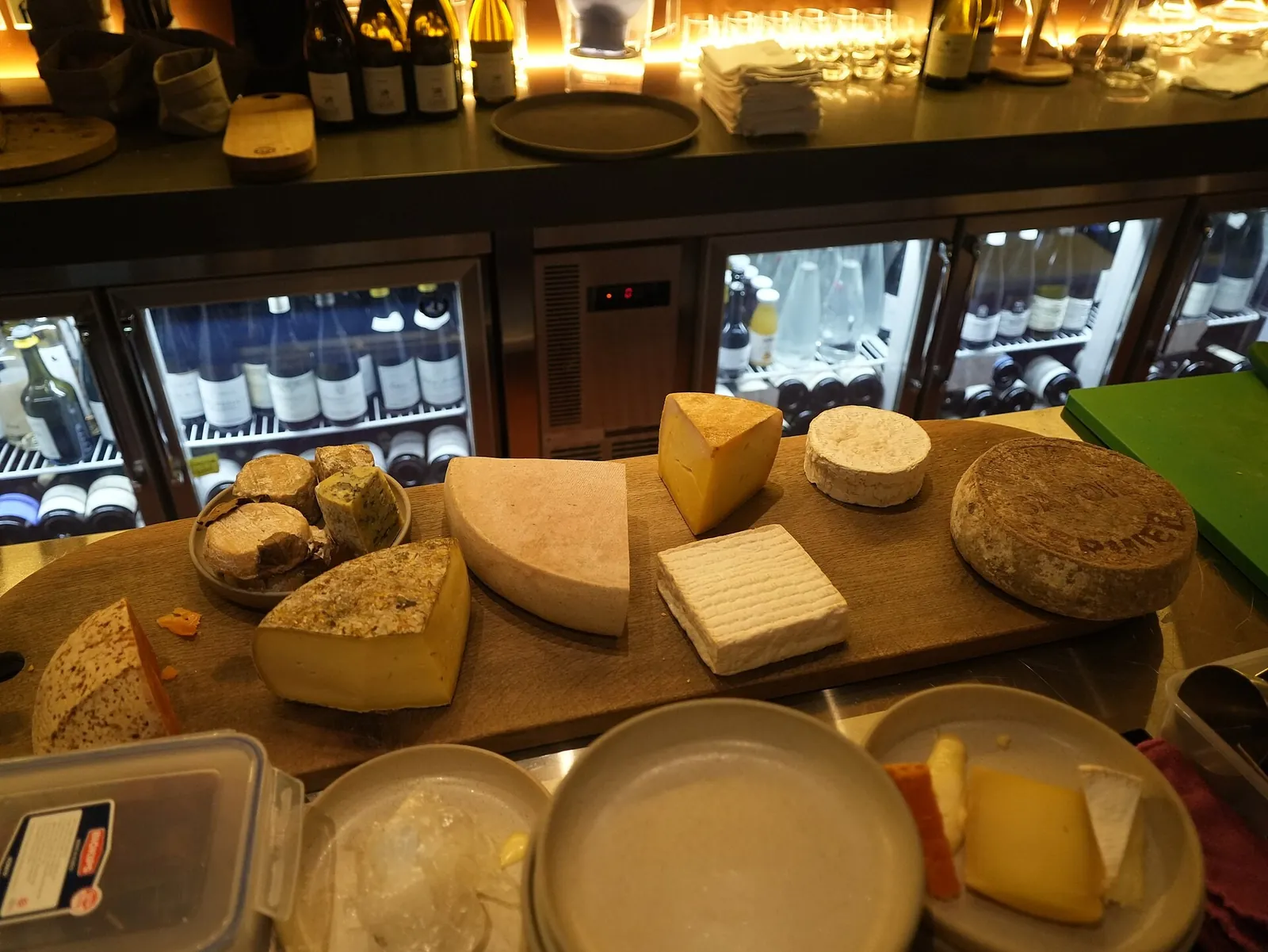
When you do not know what to pour, ask where the cheese is from and look for something from the same region.
The idea is summed up as "what grows together goes together." It is a starting point, not a rule, and this page states each match only as far as a source supports it.
Why regional pairings work
Regional pairings work, according to the usual explanation, because the food and drink of a place developed side by side. Wikipedia's wine and food pairing article notes that the culinary and winemaking traditions of a region often evolved together, creating a natural pairing between the local wine and the local cuisine. The Sancerre example below puts the same idea in terms of land: vines and goats share limestone soils, a temperate climate and an artisan culture.
That gives a useful shortcut but not a guarantee. A matching origin tells you the pairing has been tried for a long time, not that it suits every taste. If you are choosing between two bottles, go local first and adjust from there.
Regional pairings from France
Regional pairings from France start with the Loire, where goat cheese and white wine come from the same hills. The producer-side description of the Sancerre match says the wine's crisp acidity cuts through the creaminess of the cheese and cleans the palate between bites, while the cheese's saltiness softens the wine's liveliness (see Le Stang 1573 on the pairing). Crottin de Chavignol is a goat's-milk cheese from the Loire Valley, usually matured three to four weeks today, and Culture magazine says it pairs very well with Sancerre or Sauvignon Blanc.
Roquefort is the other French standard. It is a blue made from Lacaune sheep's milk in southern France, and only cheeses aged in the natural Combalou caves of Roquefort-sur-Soulzon may bear the name, according to Wikipedia. The classic partner is a sweet wine such as Sauternes, whose sweetness balances the salt. That is a tradition and a matter of taste, so treat it as a strong suggestion. Read more on the Roquefort page.
Regional pairings from Spain
Regional pairings from Spain include one of the clearest cheese and drink matches in Europe. Cabrales is a blue cheese from Asturias, made in the Picos de Europa mountains, which matures for two to five months in natural limestone caves according to Wikipedia. Asturian cider, or sidra natural, is fermented with wild yeasts on a single fermentation, and Whisk & Spatula lists Cabrales among the foods that suit its refreshing tartness. To qualify for the protected designation, the cider must have at least 5 percent alcohol and be made only from 76 listed apple varieties.
For Manchego, the Institute of Culinary Education offers Spanish olives or jamón as the regional match, in a cheese pairing guide that uses terroir as one of its principles. See the Manchego page for the cheese itself, and the Cabrales page for the blue.
Regional pairings beyond wine
Regional pairings beyond wine include cider, beer, spirits and plain food. The Asturian cider match above is the best-documented example. The ICE guide also gives Gruyère with Alpine-style accompaniments as a regional pairing in the same way, which shows that a regional match can be a food as much as a drink.
For other combinations, such as Normandy cheeses with cider or German cheeses with local beer, the regional idea is widely repeated, but this page does not state specifics without a source. The cider and cheese guide and the beer and cheese guide cover those drinks style by style.
How to build a regional cheese board
How to build a regional cheese board is easier than a general one, because the region has already made the choices. Pick one region, then buy one or two cheeses, one drink and one local food.
A Loire board could hold a Crottin de Chavignol and another goat cheese, a Sancerre or Sauvignon Blanc, and a plain baguette. A Spanish board could hold Manchego and Cabrales, a dry cider, olives and sliced jamón. Allow the usual amounts, about 2 ounces of cheese a person as an appetizer, and let the board builder do the arithmetic.
When regional pairings fail
Regional pairings fail when the origin is the only reason for the match. The Adelaide wine and cheese study, summarized by UC Davis, found that consumers and experts generally agreed on ideal matches, but not always: consumers preferred Gruyère to goat cheese with Sauvignon Blanc, and rated Sauvignon Blanc the least versatile wine with cheese. A regional classic is a good place to start, and your own palate has the last word.
There is a practical limit too. US shelves rarely carry the local pairing for a given cheese, so match on style instead: a dry, high-acid white for a fresh goat cheese, a sweet wine for a salty blue. The wine and cheese pairing guide explains how.
Regional drinks do not have to contain alcohol. A tart apple juice stands in for cider, and the non-alcoholic pairings guide has more ideas.
Questions about regional pairings
These questions about regional pairings come up often.
What does "what grows together goes together" mean?
"What grows together goes together" means that the foods and drinks of one region developed alongside each other, so they tend to suit one another.
What is a classic regional pairing for goat cheese?
A classic regional pairing for goat cheese is Crottin de Chavignol with Sancerre, both from the Loire, with the wine's acidity cutting the cheese's creaminess.
What drink goes with Cabrales?
The drink that goes with Cabrales in its home region is Asturian cider, and a source on the cider lists the blue as a recommended match.
Do regional pairings always work?
Regional pairings do not always work for every palate. The UC Davis summary of a consumer study shows that experts' classic matches were usually, but not always, confirmed.
Can you do regional pairings with American cheeses?
Regional pairings with American cheeses work on the same idea: pick a wine, cider or beer made near the cheese, and judge the result by taste.
Try a regional pairing
To try a regional pairing, pick one cheese from the examples above, buy its local partner, and taste them together against a neutral cracker. Start with Crottin de Chavignol and a Sancerre, or Cabrales and a dry cider. Browse the pairing guide for more cheeses.
Sources
- Wine and food pairing, Wikipedia
- Sancerre and Crottin de Chavignol Pairing, Le Stang 1573
- Crottin de Chavignol, Culture: The Word on Cheese
- All About Asturian Cider, Whisk & Spatula
- Understanding Cheese Pairings, Institute of Culinary Education
- Summary 223: Ideal wine and cheese combinations, UC Davis Viticulture and Enology