
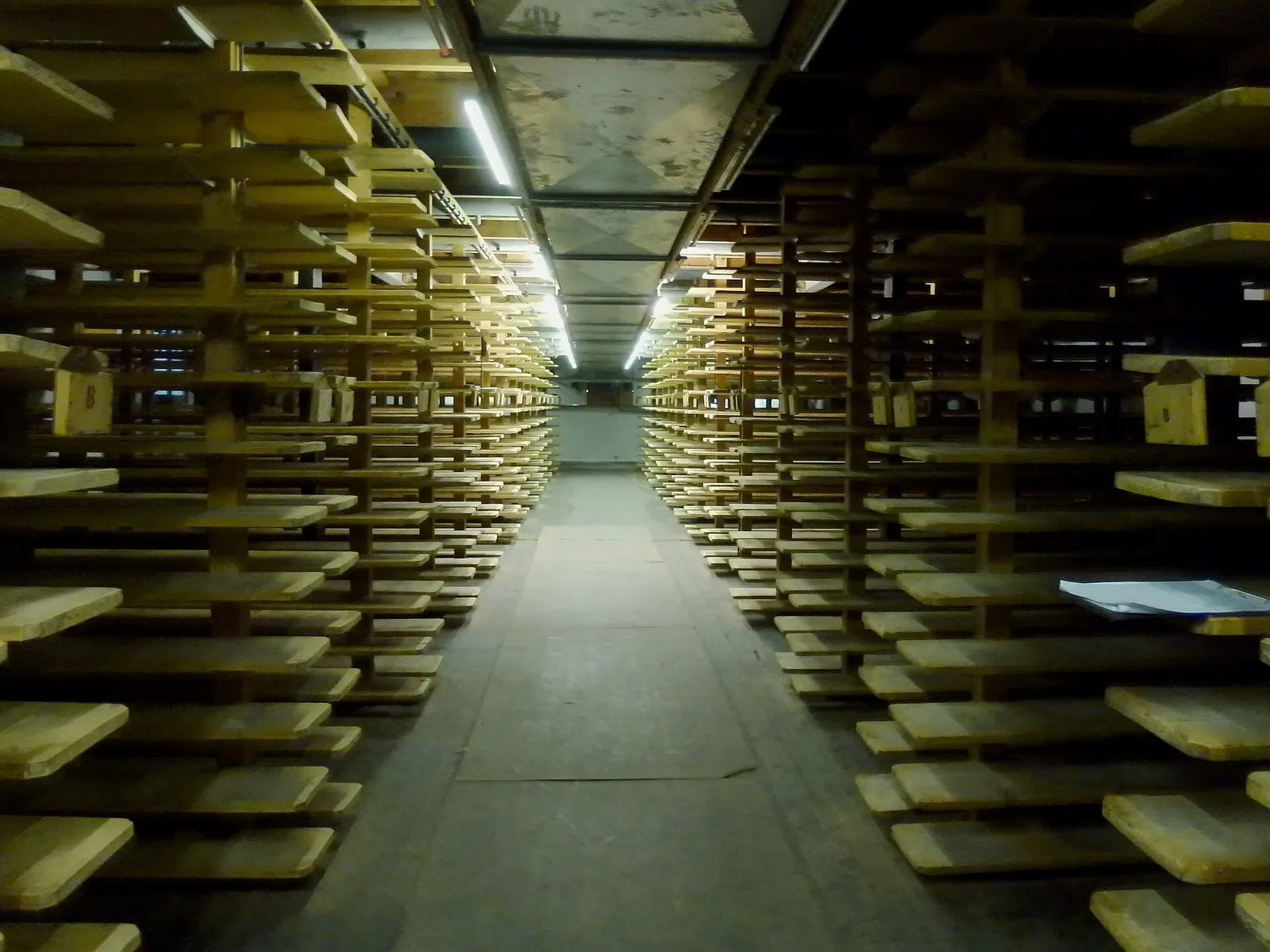
Both are protected in the EU, along with a handful of regional and farmhouse cheeses.
This page covers the main Dutch cheeses, what the protected names require and how to find them in the US.
Dutch cheese at a glance
Here is Dutch cheese at a glance: the cheeses worth knowing, their style and whether the name is protected.
| Cheese | Milk | Style | Protected name |
|---|---|---|---|
| Gouda Holland | Cow, Dutch dairy farms | Semi-hard, mild when young, caramel when aged | PGI, 2010 |
| Noord-Hollandse Gouda | Cow, Noord-Holland only | Gouda from one province | PDO, 1996 |
| Edam Holland | Cow, Dutch dairy farms | Mild, springy, lower fat, often red-waxed | PGI, 2010 |
| Maasdam | Cow | Swiss-style holes, sweet and nutty | None checked |
| Boerenkaas, Leyden, Kanterkaas | Cow | Farmhouse, cumin and clove cheeses | Protected, dates not checked |
Dutch cheese tradition
Dutch cheese tradition is a cow's milk one, and it is built for export: wheels with waxed or sealed rinds that travel and keep. The guide to the cheeses of the Netherlands covers the full range, and the Gouda and Edam pages go deeper on the two big names.
The country's cheeses are mostly judged by age. A young Gouda is mild, elastic and sliceable, and after a year or more it turns deep golden, firm and crunchy, as the EU's Gouda Holland page puts it.
Protected Dutch cheese names
Protected Dutch cheese names split into broad ones, covering the whole country, and narrow ones tied to a small area. The PDO and PGI guide explains the labels.
Gouda Holland
Gouda Holland is a PGI registered in 2010, and its single document sets clear numbers. The milk must be exclusively cow's milk from Dutch dairy farms, pasteurized at 161°F (72°C) for 15 seconds or more. The cheese ripens at least 28 days at 54°F (12°C) or above. Fat in dry matter runs 48 to 52 percent, moisture is capped at 42.5 percent, and wheels weigh 2.5 to 20 kg (about 5.5 to 44 pounds).
Noord-Hollandse Gouda
Noord-Hollandse Gouda is a PDO registered in 1996, and the EU page says it is made only with milk from the province of Noord-Holland. Gouda Holland, by contrast, can use milk from dairy farms across the country.
Edam Holland
Edam Holland is a PGI from 2010, and its single document describes a ball with flattened top and bottom, or a loaf or block. It uses cow's milk only, ripens at least 28 days (21 for the baby size) and carries 40 to 44 percent fat in dry matter, which is why it is lower in fat than Gouda. The standard ball weighs 1.5 to 2.5 kg, about 3.3 to 5.5 pounds.
Boerenkaas and spiced Dutch cheeses
Boerenkaas is a farmhouse cheese made from raw milk, and the Netherlands also protects Boeren-Leidse met sleutels, the cumin cheese from Leiden with crossed keys on the rind, and Kanterkaas from Friesland and Groningen, made with cumin or cloves. Both are protected, and the farmhouse and spiced cheeses are the ones to ask a cheese counter about by name, because supermarkets rarely stock them. Cumin in Leyden cuts the sweetness of the mild base, so it suits dark bread and mustard.
Maasdam and Dutch holes
Maasdam is the Dutch cheese with big Swiss-style holes, sweet, nutty and mild, a sandwich and snack cheese that melts easily and works where you might otherwise reach for Emmental. See the Maasdam profile and Leerdammer vs. Maasdam.
How to find Dutch cheese in the US
To find Dutch cheese in the US, look for "Gouda Holland" or "Edam Holland" on the label and check the age, since wedges of the same Gouda can differ by years. Young is mild, matured is firmer and old (oud) has crunchy crystals.
Most supermarkets stock young Gouda and red-waxed Edam. Aged Gouda and boerenkaas turn up at counters that cut to order. Raw-milk cheese sold in the US must age at least 60 days, covered in the raw-milk cheese guide, which is why imported boerenkaas usually arrives as aged wheels.
How the Dutch eat cheese
Dutch cheese is mostly a sandwich and snack cheese: sliced thin on bread, or cubed with mustard. The pairing data on this site matches Gouda with beer such as bock, an amber ale or a Belgian dubbel, and Edam with a pilsner. Dark chocolate and stroopwafel are listed pairings for aged Gouda. The pairing guide has the rest,; Gouda and Edam differ in fat, shape and age.
What most Dutch cheese guides get wrong
Most Dutch cheese guides get the protected names wrong: they treat Gouda as one cheese. Gouda Holland (a PGI, from Dutch dairy farms) and Noord-Hollandse Gouda (a PDO, from one province) are separate names with different rules.
A second miss is that Edam is lower in fat than Gouda by rule: 40 to 44 percent fat in dry matter against 48 to 52 percent.
Questions about Dutch cheese
These are the most common questions about Dutch cheese.
What is the most famous Dutch cheese?
The most famous Dutch cheese is Gouda, followed by the red-waxed Edam.
Is Gouda a protected Dutch cheese?
Gouda is protected in two forms: Gouda Holland is a PGI from 2010 and Noord-Hollandse Gouda is a PDO from 1996.
What is the difference between Gouda and Edam?
Gouda and Edam differ in fat and shape: Gouda has 48 to 52 percent fat in dry matter, Edam 40 to 44 percent, and Edam is usually a ball.
How long is Dutch cheese aged?
Dutch cheese under the Gouda Holland and Edam Holland names is aged at least 28 days, and Gouda can go past a year.
Where to start with Dutch cheese
Start with Dutch cheese by buying a young Gouda and a matured one, and tasting them side by side with apple slices or mustard. Notice how age, not the name on the label, changes the cheese most. Add a red-waxed Edam. The Belgium page covers the neighbor.
Sources
- Gouda Holland PGI / Noord-Hollandse Gouda PDO, European Commission
- Commission Regulation (EU) No 1122/2010, Gouda Holland (PGI), with single document, legislation.gov.uk
- Commission Regulation (EU) No 1121/2010, Edam Holland (PGI), with single document, legislation.gov.uk
- Dutch food which has officially protected status within the EU, DutchNews.nl