
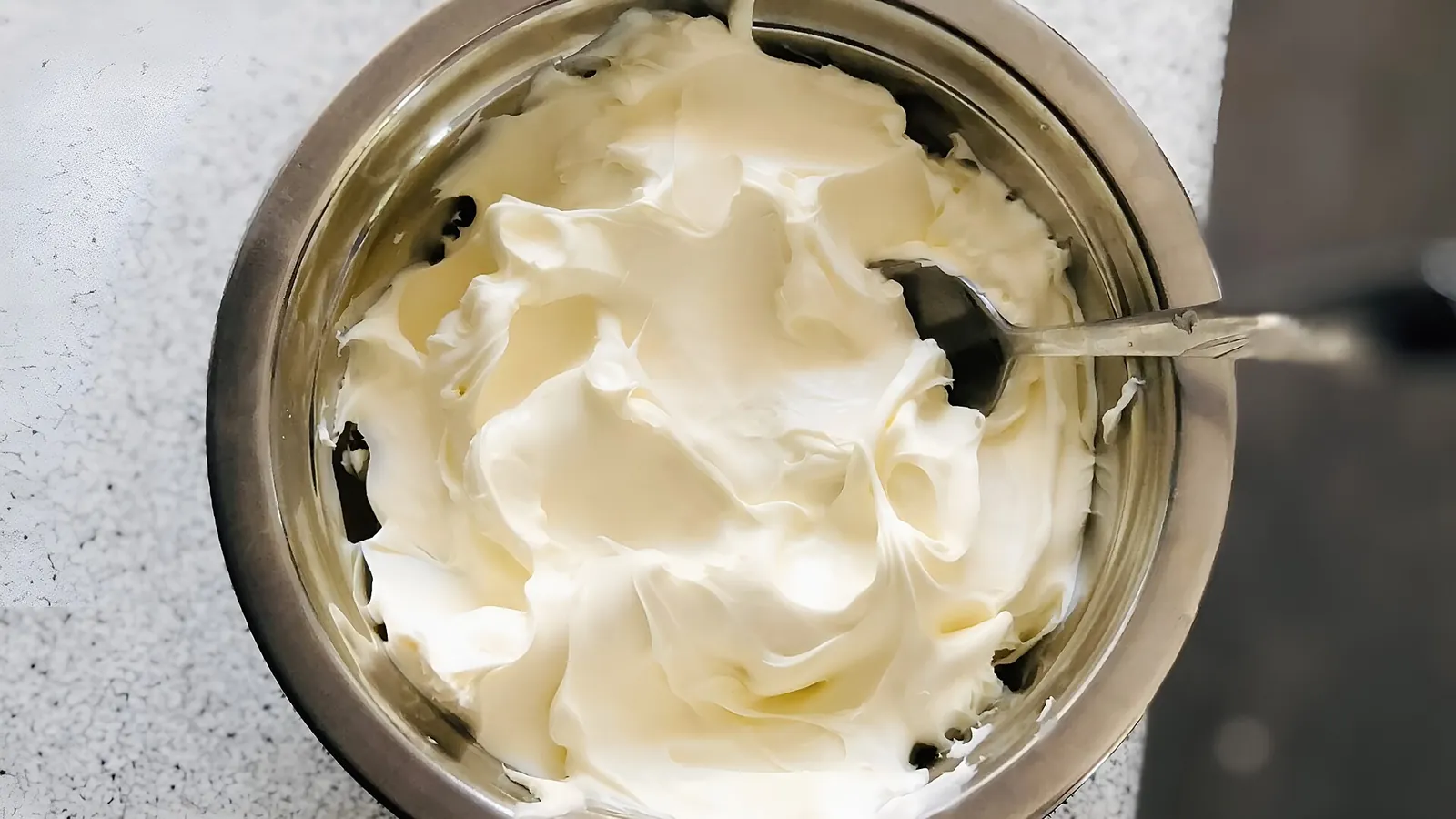
The two look alike in the tub and both spread, which is why recipes swap them. The swap works in some dishes and fails in others, and the reason is in how each is made.
Cream cheese vs mascarpone at a glance
This cream cheese vs mascarpone table compares the two cheeses where they differ, using the FDA standard, USDA data and Italian composition tables.
| Cream cheese | Mascarpone | |
|---|---|---|
| Origin | United States | Lower Lombardy, Italy |
| Starting milk | Milk and cream | Cream |
| How it is set | Lactic culture, with or without a clotting enzyme | Heat and acid, no culture or rennet |
| Legal standard | 21 CFR 133.133: at least 33% milkfat, at most 55% moisture | No federal standard |
| Fat per 100 g | 34.4 g (USDA) | 47 g (Italian CREA tables) |
| Fat per ounce | 9.8 g | 13.3 g |
| Stabilizers | Up to 0.5% gums allowed | None needed |
| Flavor | Mild and tangy | Milky, slightly sweet, mild tang |
| Texture | Dense, holds its shape | Soft, spoonable, like thick whipped cream |
| Best for | Cheesecake, frosting, bagels, dips | Tiramisu, fruit toppings, risotto |
The real differences between cream cheese and mascarpone
The real differences between cream cheese and mascarpone start with the method. Mascarpone is cream heated to 185 to 203°F (85 to 95°C) and set with an acid, which a 2020 paper in Molecules describes as stirring acid into the hot cream until it coagulates. Treccani, the Italian dictionary, names diluted tartaric acid and calls it a specialty of Lower Lombardy, around Lodi. Cream cheese starts with pasteurized milk and cream soured by a lactic culture, then drained and worked smooth, a process USDA's 1953 cheese handbook describes.
Fat follows from that. Draining cream removes mostly water, so mascarpone ends near 47 percent fat, about 85 percent of its solids, while cream cheese sits just above its legal floor: the FDA standard, 21 CFR 133.133, requires at least 33 percent milkfat, and USDA measures 34.4 grams per 100 grams. An ounce of mascarpone carries about 13.3 grams of fat and an ounce of cream cheese 9.8.
Flavor and texture differ in the same direction. The culture gives cream cheese its tang, and the gums it may contain, up to 0.5 percent, keep it firm and smooth. Mascarpone has no culture to sour it, so it tastes milky and slightly sweet, and it spoons like thick whipped cream. Each cheese has its own page: cream cheese covers block vs tub and Neufchâtel, and mascarpone covers fat, safety and storage.
Cream cheese vs mascarpone for baking and desserts
Cream cheese vs mascarpone for baking is a choice between structure and richness. Cream cheese has the firmer body and the tang that define a New York cheesecake, and its block form takes frosting without going runny; the New York cheesecake guide has the method. Mascarpone gives a softer, richer, less tangy result, and the mascarpone page notes it can replace half the cream cheese in a cheesecake for a richer slice.
Tiramisu is the dish where the choice matters most. The cream is beaten from cold mascarpone, egg yolks and sugar, and its sweet, milky richness is the point; the tiramisu guide has the full dessert. Cream cheese makes a tangier, denser filling. For no-bake desserts either works, and the no-bake cheesecake guide shows how to set them.
Heat treats them differently. Mascarpone is set by heat but is fragile afterward: it softens and can split if beaten hard or boiled, so stir it into hot dishes at the end over low heat. Cream cheese holds up better in a baked filling, which is how cheesecake works.
Which to buy: cream cheese or mascarpone
Which to buy, cream cheese or mascarpone, depends on the job:
- Tiramisu: mascarpone, for its sweet richness.
- Cheesecake and frosting: cream cheese in block form, or half and half for a richer slice.
- Bagels, dips and spreads: cream cheese, in a tub for spreading.
- Fruit, honey and desserts served cold: mascarpone.
- Risotto and pasta sauces: mascarpone, stirred in at the end for body without tang.
- Less fat: cream cheese, at 9.8 grams an ounce against 13.3, or Neufchâtel with less still.
- A swap: see the next section; the substitute finder lists other matches.
Substituting cream cheese for mascarpone
Substituting cream cheese for mascarpone works best when you loosen it. Beat 8 ounces (227 g) of softened cream cheese with 1/4 cup (60 ml) of heavy cream until smooth to stand in for 1 cup of mascarpone. The result is tangier and less rich, so it suits cheesecake, frosting and fruit dips better than tiramisu. Going the other way, mascarpone replaces cream cheese in desserts and spreads, as Wisconsin cheesemakers suggest in the cream cheese page's sources, though the result is milder and softer. If you want a tangier cultured cream instead, see mascarpone vs crème fraîche.
What most cream cheese vs mascarpone advice gets wrong
Most cream cheese vs mascarpone advice repeats three shortcuts: that mascarpone is just Italian cream cheese, that both are cultured, and that the swap is one for one.
Mascarpone is not cream cheese with an accent. It is cream set with heat and acid, with no culture or rennet, while cream cheese is cultured and set by a clotting enzyme in the usual method. They are different cheeses in different families.
Only cream cheese carries a legal standard here. The FDA sets at least 33 percent milkfat and at most 55 percent moisture for cream cheese, while mascarpone has none, so read the label and the ingredient list, which should be cream and an acid.
The swap is not one for one. Cream cheese has about a quarter less fat than mascarpone, so use it straight and the filling turns out denser and tangier. Loosen it with cream, and expect tang either way.
Questions about cream cheese vs mascarpone
These are quick answers to common questions about cream cheese vs mascarpone.
What is the difference between cream cheese and mascarpone?
The difference between cream cheese and mascarpone is the method and the fat: mascarpone is cream set with heat and acid, about 47 percent fat, mild and sweet, while cream cheese is cultured milk and cream, about 34 percent fat, firmer and tangier.
Can you use cream cheese instead of mascarpone?
You can use cream cheese instead of mascarpone, but beat 8 ounces with 1/4 cup of heavy cream first. It will be tangier and less rich, which suits cheesecake better than tiramisu.
Can you use mascarpone instead of cream cheese?
You can use mascarpone instead of cream cheese in desserts and spreads. It is richer, softer and less tangy, so frosting and cheesecake come out softer.
Is mascarpone healthier than cream cheese?
Mascarpone is not lighter than cream cheese. It has about 13.3 grams of fat per ounce against 9.8, so cream cheese or Neufchâtel is the lower-fat choice.
Which is better for cheesecake, cream cheese or mascarpone?
Cream cheese is better for classic cheesecake, because its tang and firm body define the style. Mascarpone makes a richer, smoother, milder slice, and half and half works well.
Choosing between cream cheese and mascarpone
Choosing between cream cheese and mascarpone is easy once you know the dish: mascarpone for tiramisu and cold desserts, cream cheese for cheesecake, frosting and bagels. Taste a spoonful of each side by side to hear the difference in tang. For a third option, compare mascarpone with crème fraîche.
Sources
- 21 CFR 133.133, Cream cheese, Electronic Code of Federal Regulations (FDA standard of identity)
- Cheese Varieties and Descriptions (Agriculture Handbook No. 54, 1953), U.S. Department of Agriculture
- USDA FoodData Central (SR Legacy): cream cheese (173418)
- Mascarpone, Treccani Vocabolario
- Mascarpone method paper, Molecules, 2020