
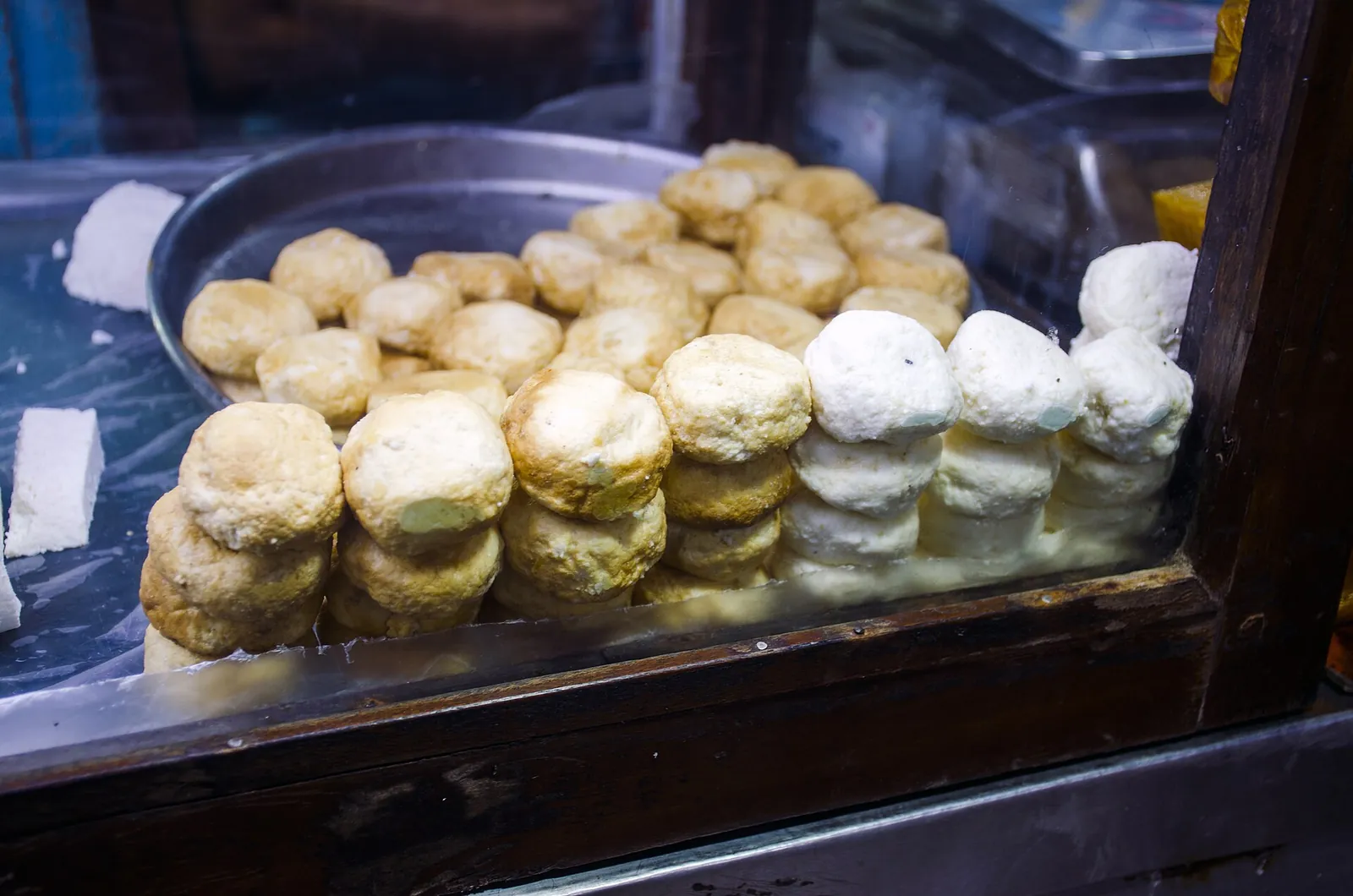
Paneer is the famous result, and chhena, kalari, Bandel and chhurpi each do a different job, from sweets to street food to a Himalayan chew.
This page maps India's cheeses, how they differ and where to find them in the US.
Indian cheese at a glance
Here is Indian cheese at a glance: the main styles, where each comes from and what it is used for.
| Cheese | Region | Milk | Style | Protected name |
|---|---|---|---|---|
| Paneer | Nationwide | Cow's, also buffalo | Pressed, firm, does not melt | No EU protected name |
| Chhena | Odisha, West Bengal | Cow's | Soft, fresh, for sweets | No EU protected name |
| Kalari | Jammu (Chenani, Ramnagar) | Cow's, sometimes goat's | Chewy outside, soft inside | No EU protected name |
| Bandel | West Bengal | Cow's | Dry, salty, usually smoked | No EU protected name |
| Chhurpi | Himalayas | Yak's, cow's | Soft or very hard | No EU protected name |
Indian cheese tradition
Indian cheese tradition is mostly a fresh-cheese tradition, with little of the aged, rind-ripened cheese Europe is known for. The Wikipedia entry on Indian cheeses calls paneer the most widespread cheese of the subcontinent, an unaged, acid-set, non-melting farmer cheese, and says its origin is debated: ancient Indian, Afghan-Iranian and Portuguese-Bengali origins have all been proposed.
The acid method matters. Because the curd is set with acid and heat rather than rennet, it does not stretch or melt, which is why Indian cooking fries, grills and simmers its cheese. Paneer itself tastes mild, milky and creamy, which is why it takes on the flavor of whatever it cooks in.
Paneer, the Indian cheese you can buy anywhere
Paneer is the Indian cheese you can buy at almost any US supermarket or Indian grocer, and it is made by adding an acid to hot milk, then draining and pressing the curds in cloth. Pressing time sets the texture, and a longer press gives a firmer block, while a shorter one leaves it softer and more crumbly. Buy it plain rather than marinated if you plan to cook it in a sauce, since the spices in a ready-made pack may clash with yours. Surti paneer, a buffalo-milk version ripened in whey, is a regional variation.
Paneer's strength is that it soaks up spices without breaking down: it is the cheese in palak paneer and on skewers for paneer tikka. See the paneer page, the palak paneer recipe and the paneer tikka recipe. If you are choosing between it and a Mediterranean grilling cheese, halloumi vs. paneer explains the difference.
Chhena and the Indian cheese in sweets
Chhena is the soft Indian cheese used for sweets, produced mainly in Odisha and West Bengal, where sweet shops treat it as a daily staple rather than a specialty. It is made the same way as paneer, with acid, but it is not pressed, so it stays moist and can be kneaded smooth. It is the base of Bengali desserts like rosogolla. It rarely appears fresh in US shops, so fresh paneer kneaded smooth is the practical stand-in.
Kalari, Bandel and chhurpi
Kalari, Bandel and chhurpi are India's regional cheeses, and each has a different home. Kalari comes from Chenani in Jammu and Kashmir, and cooks pan-fry it until the outside browns. Bandel comes from the Portuguese-era settlement of Bandel in eastern India, and production is now concentrated near Kolkata: lemon juice separates the curds, which are molded, drained in baskets and smoked. Chhurpi is a yak's-milk cheese influenced by Tibetan food, made soft or very hard.
The Indian cheeses guide goes through each of these, along with the rarer dahi chhana from Cuttack, which is now rarely made.
How to find Indian cheese in the US
To find Indian cheese in the US, start with paneer, which is sold vacuum-packed in blocks at Indian grocers and many supermarkets, often in the refrigerated or frozen section. Look for a block that is firm and white with a clean milky smell. Chhena, kalari, Bandel and chhurpi are rarer: try Bengali sweet shops, Indian specialty importers and Himalayan groceries.
None of these cheeses is covered by an EU protected name, so unlike feta or halloumi the label gives you no seal to look for. Read the ingredients: paneer should list milk and acid, nothing else. Queso fresco, halloumi or ricotta can stand in when no paneer is around, though each behaves differently.
What most Indian cheese lists get wrong
Most Indian cheese lists get one thing wrong: they say India has only paneer. India also has chhena, kalari, Bandel and chhurpi, and the Wikipedia entry notes cheese references in India going back to 1400 BCE. A second mistake is treating paneer as if it were a rennet cheese like mozzarella. It is acid-set, so it will not melt or stretch.
A third is assuming every paneer is the same. Paneer pressed hard for hours slices cleanly for grilling, while a lightly pressed block crumbles into bhurji or fillings, so pick the block to match the dish.
Questions about Indian cheese
These are the most common questions about Indian cheese.
What is the most common Indian cheese?
The most common Indian cheese is paneer, an unaged, acid-set, non-melting cheese made by curdling hot milk.
Is paneer made with rennet?
Paneer is not made with rennet: it is set with an acid such as lemon juice, vinegar or yogurt.
What is chhena used for?
Chhena is used mainly for Bengali and Odia sweets such as rosogolla, sandesh and ras malai.
What is Bandel cheese?
Bandel cheese is a salty cheese from West Bengal, made by curdling milk with lemon juice, molding and draining it, then smoking it.
Does Indian cheese melt?
Most Indian cheese does not melt, because acid-set curds hold their shape under heat, though kalari softens in the center when fried.
Where to start with Indian cheese
Start with Indian cheese by buying a block of paneer and cutting it into cubes for palak paneer or tikka. Once you like it, ask at a Bengali or Himalayan grocery for Bandel or chhurpi. The pairing guide lists drinks to match: the site's data suggests riesling, gewurztraminer or a wheat beer with paneer.
Sources
- Indian cheese, Wikipedia
- Paneer, Wikipedia
- Geographical indications and quality schemes explained, European Commission