
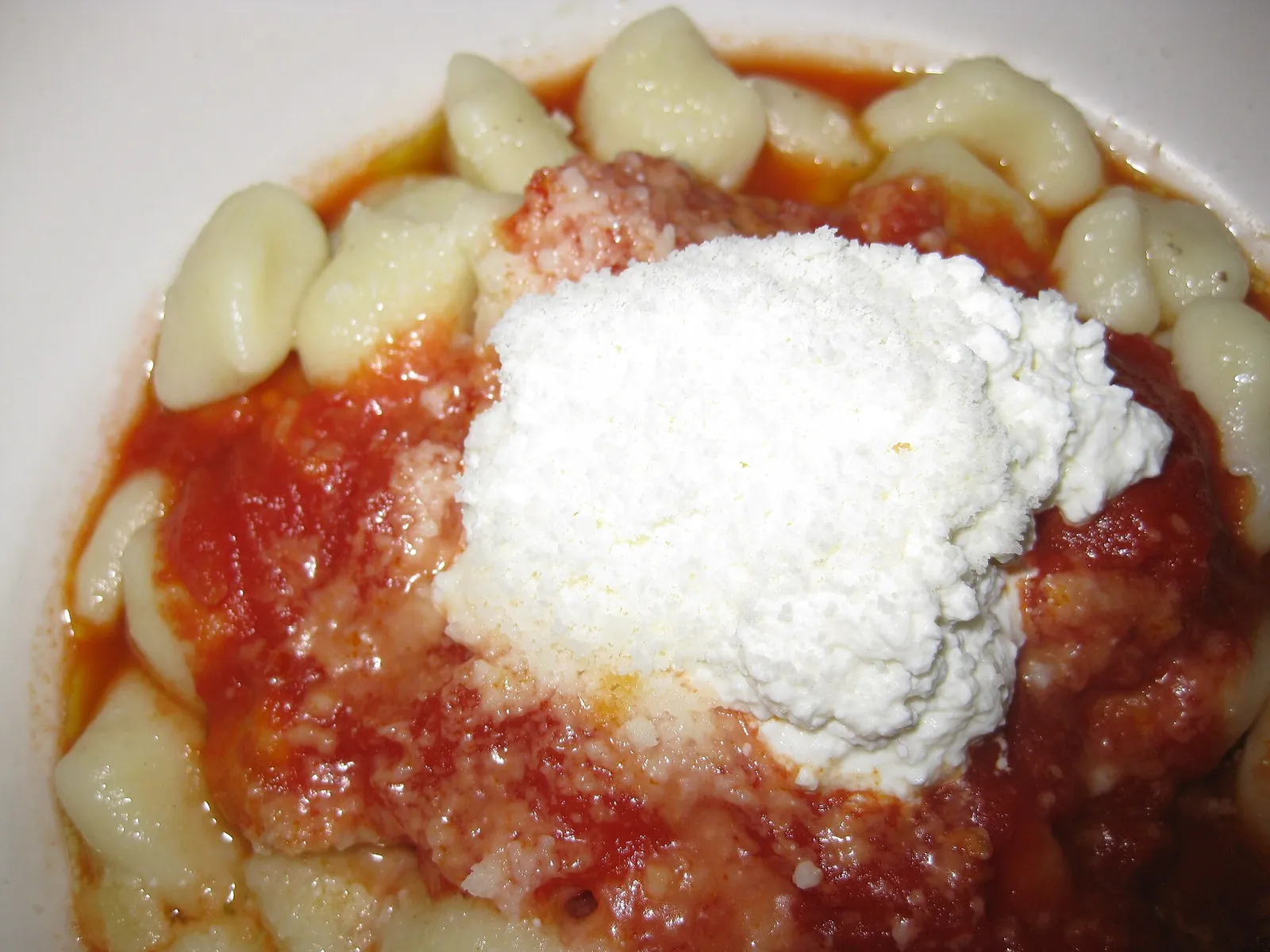
The one thing that decides the result is how much water the ricotta carries into the bowl.
Every extra spoonful of liquid forces in more flour, and more flour means chewy gnocchi. Drain the cheese, handle the dough as little as possible, and boil a test dumpling first. The whole recipe takes about 45 minutes.
Ricotta gnocchi at a glance
This ricotta gnocchi table gives the quick numbers before you start.
| Yield | 4 servings, about 40 small gnocchi |
| Active and total time | 30 minutes to shape, 15 to cook; plus 2 to 12 hours to drain the cheese |
| Cooking method | Simmering salted water, then browned butter in a pan |
| Best cheese | Whole-milk ricotta, with Parmigiano-Reggiano in the dough |
| Make ahead | Shape and freeze raw; cook straight from the freezer |
What makes ricotta gnocchi different
Ricotta gnocchi use fresh cheese in place of the potato, which skips the boiling and ricing and shortens the job. The cheese brings fat and a milky sweetness, and the egg and a little flour bind it.
Ricotta is a soft whey or milk cheese with no federal standard of identity in the US, so tubs vary: much American ricotta is made from whole or part-skim milk and can be wetter than you want. Whole milk gives the tenderest, best tasting dumpling.
How to make ricotta gnocchi
This ricotta gnocchi recipe serves four with a simple sage butter, and it needs a colander, a sieve and a floured board.
Ingredients for ricotta gnocchi
The ricotta gnocchi list below is short on purpose, and the weights matter more than the cups.
- 15 oz (425 g) whole-milk ricotta, drained
- 1/2 cup (50 g) finely grated Parmigiano-Reggiano, plus more to serve
- 1 large egg
- 3/4 cup (95 g) all-purpose flour, plus more for dusting
- 3/4 teaspoon fine salt
- 1 pinch freshly grated nutmeg
- 1 tablespoon salt for the cooking water
- 4 tablespoons (55 g) unsalted butter
- 8 fresh sage leaves
- Freshly ground black pepper
Steps for making ricotta gnocchi
These steps for making ricotta gnocchi take you from draining through the sage butter, and the test dumpling in step 4 saves the batch.
- Line a sieve with cheesecloth or a clean kitchen towel, spoon in the ricotta, set it over a bowl and refrigerate 2 to 12 hours, until it is thick and spreadable and no longer drips.
- Mix the drained ricotta, Parmigiano, egg, salt and nutmeg in a bowl with a fork until just combined, then sprinkle over the flour and fold it in until no dry streaks remain, stopping as soon as the dough comes together.
- Dust a board with flour, divide the dough into 4 pieces, and roll each into a rope about 3/4 inch (2 cm) thick, handling it gently and flouring your hands rather than the dough.
- Bring a wide pot of water to a gentle simmer, salt it, and drop in one cut piece as a test; if it holds together and floats within 2 to 3 minutes, the dough is right, and if it dissolves, work in 1 more tablespoon of flour.
- Cut the ropes into 3/4 inch (2 cm) pieces, lightly roll each in flour, and press a fork lightly across the top if you want ridges for the butter to catch.
- Simmer the gnocchi in batches of about 15 for 2 to 3 minutes, until they float and feel springy, then lift them out with a slotted spoon onto a plate.
- Melt the butter in a large skillet over medium heat, add the sage, and cook 2 to 3 minutes until the butter foams and turns light golden brown and nutty smelling.
- Add the gnocchi to the skillet in one layer and cook 1 to 2 minutes, turning once, until lightly browned in spots, then serve with pepper and more Parmigiano.
The best cheese for ricotta gnocchi
The best cheese for ricotta gnocchi is whole-milk ricotta, because its fat keeps the dumpling tender and its low salt lets the Parmigiano do the seasoning. Part-skim ricotta works if it is drained well, but the gnocchi come out less rich.
Ricotta softens but never melts into strings, which suits a dumpling that should hold its shape. For the Parmigiano, Parmigiano-Reggiano is dry and savory enough to season the dough without making it wet. A fresh tub is better than one that has sat open for days. If you want a ricotta you control, make it at home in 30 minutes, then drain it overnight. Fresh, firm ricotta is the starting point; for a richer, silkier gnocchi some cooks fold in a spoonful of mascarpone.
Ricotta gnocchi mistakes and fixes
Ricotta gnocchi mistakes nearly always trace back to water or to overworking the dough.
- They are gummy or dense. Too much flour, from wet ricotta. Drain longer and use the test dumpling to add flour a spoonful at a time.
- They fall apart in the water. Too little flour, or the water was at a hard boil. Add a tablespoon of flour and keep the pot at a gentle simmer.
- They are tough. The dough was kneaded. Mix just until combined, because working it develops gluten.
- They stick to the board. Flour your hands and the surface lightly, and rest the cut pieces on a floured tray in one layer.
- They taste flat. Salt the dough and the water, and finish with grated cheese and pepper.
Ricotta gnocchi variations
Ricotta gnocchi variations change the sauce and the add-ins while the dough stays the same.
- Lemon: add the zest of one lemon to the dough and finish with a squeeze of juice.
- Spinach: fold in 1/2 cup (about 90 g) of cooked spinach squeezed very dry.
- Tomato: skip the butter and toss with a quick tomato sauce and torn basil.
- Baked: lay the cooked gnocchi in a dish, cover with sauce and bake at 400°F (200°C) for 15 minutes.
Make ahead, store and reheat ricotta gnocchi
To make ahead, store and reheat ricotta gnocchi, shape them, freeze them in one layer on a tray, then bag them and cook from frozen, adding about a minute to the simmer. Raw dough keeps in the refrigerator for a day. Cooked leftovers should follow USDA's guidance: refrigerate perishable food within 2 hours, use most cooked leftovers within 3 to 4 days, and reheat to 165°F (74°C). A skillet with a little butter or water brings them back better than a microwave.
Questions about ricotta gnocchi
These ricotta gnocchi questions come up most once the dough is on the board.
How do you drain ricotta for gnocchi?
To drain ricotta for gnocchi, set it in a cheesecloth-lined sieve over a bowl in the refrigerator for 2 to 12 hours, until it stops dripping and feels thick.
Why do ricotta gnocchi turn gummy?
Ricotta gnocchi turn gummy when wet cheese forces you to add too much flour. Drain the ricotta, use a light hand and test one dumpling before shaping the batch.
Can you use part-skim ricotta for gnocchi?
Part-skim ricotta can make ricotta gnocchi if it is drained very well, though whole-milk gives a richer, more tender result.
How do you know ricotta gnocchi are done?
Ricotta gnocchi are done when they float and feel springy, usually 2 to 3 minutes in simmering water.
Can you freeze ricotta gnocchi?
Ricotta gnocchi freeze well raw, laid on a floured tray until firm and then bagged. Cook them straight from the freezer without thawing.
Ricotta gnocchi, start to finish
Great ricotta gnocchi come from dry cheese, a gentle hand and a test dumpling, so drain the ricotta the night before and cook a single piece first. When you are ready for the next Italian project, see Italy's cheeses.
Sources
- Leftovers and Food Safety, USDA Food Safety and Inspection Service
- Ricotta: The Italian Whey Cheese, cheese.help
- How to Make Ricotta in 30 Minutes, cheese.help