
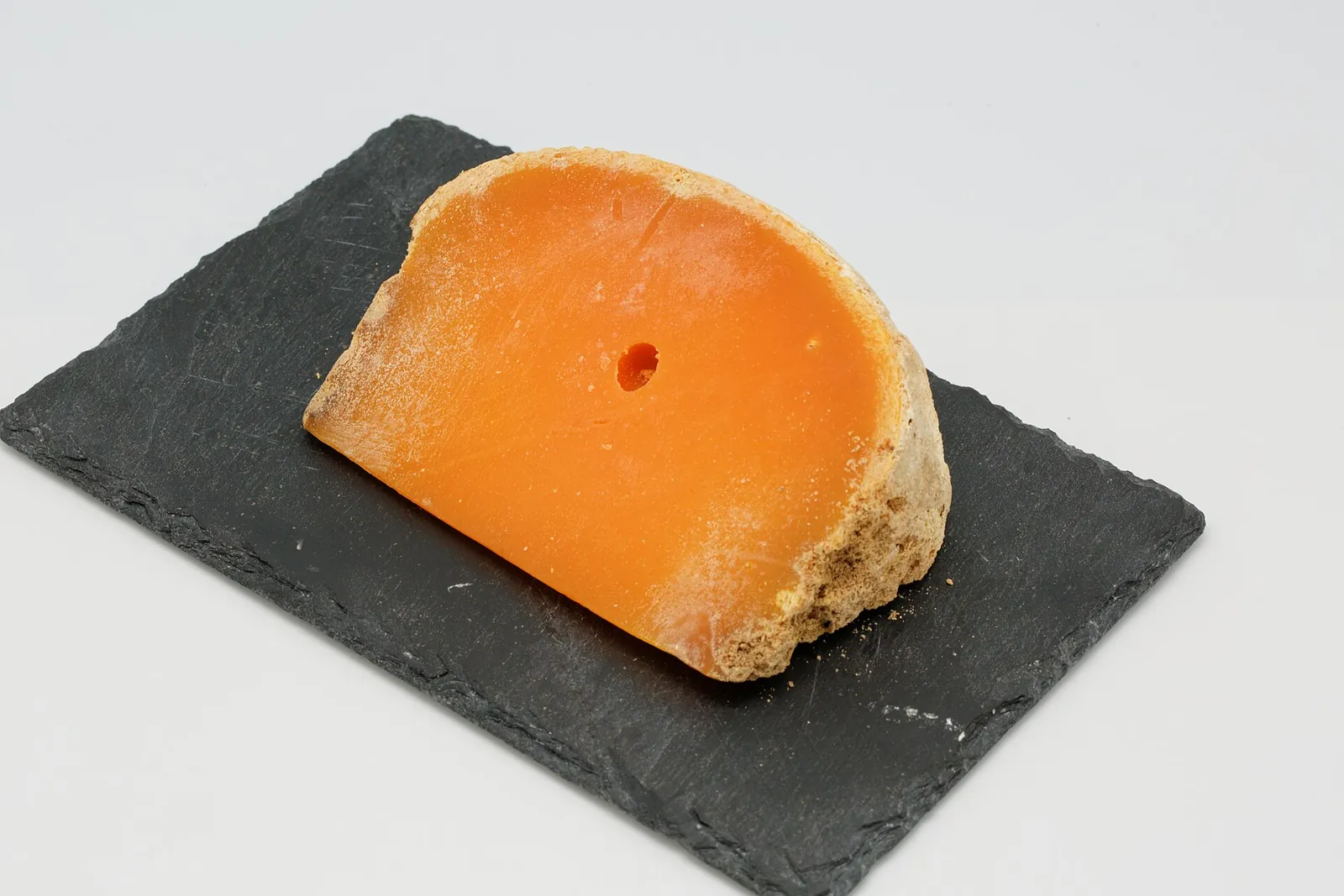
The color is annatto, and the rind is the work of cheese mites, which makers encourage on purpose.
Age is what you are really buying. Young Mimolette is firm and mild, while Vieille and Extra-Vieille turn hard, deep orange and nutty, with a flavor closer to aged Gouda than to anything French in the cheese case.
Mimolette cheese at a glance
Here is Mimolette cheese at a glance, from the culture magazine and reference sources listed below.
| Detail | Mimolette |
|---|---|
| Milk | Cow's milk |
| Made in | Traditionally around Lille, northern France |
| Color | Orange paste, from annatto |
| Shape | A ball, pressed and hard |
| Rind | Gray, pitted and dusty, worked by cheese mites |
| Age bands | Young; mi-vieille (6 to 12 months); Vieille (12 to 18); Extra-Vieille (over 18, up to about 24) |
| Texture | Firm when young; hard, dense and granular when old |
| Flavor | Mild and nutty young; caramel, butterscotch and toasted nuts old |
Where Mimolette cheese comes from
Mimolette cheese is traditionally made around Lille, and the usual story is that Louis XIV and his minister Colbert wanted a French answer to the then-popular Dutch Edam, so the cheese was given a different, orange color. Wikipedia's entry says the dye was first carrot juice and later annatto. The round shape still echoes Edam, and the Gouda versus Edam page shows how those Dutch cheeses compare.
Why Mimolette cheese is orange
Mimolette cheese is orange because of annatto, a natural dye from the seeds of a South American shrub, and not because of age or any flavor in the milk. Culture magazine credits annatto for the color. The same dye colors some cheddars, so a deep orange alone tells you nothing about quality.
What the mites in Mimolette do
The mites in Mimolette cheese are cheese mites that live on the surface of aged cheese and feed on microscopic molds. For Mimolette they are encouraged, because they aerate the rind, let other microbes in and add flavor of their own. According to NPR's reporting, makers remove them with compressed air and hand-brushing, but some always remain.
The brown dust on an aged rind is the sign of that work. At 24 months the rind is dark tan and deeply pitted. A shop wedge should look brushed clean, and most people trim the rind anyway.
Mimolette and the FDA
Mimolette was caught in an FDA dispute in 2013. The agency detained about a ton of French Mimolette that spring, and an FDA official said the target standard was no more than six mites per square inch, which she called near impossible for this cheese. The agency said it had not banned the cheese and only blocked shipments with unacceptable mite levels, as DairyReporter reports. The restriction was lifted in 2014, so Mimolette is back at US cheese counters.
Mimolette cheese flavor by age
Mimolette cheese flavor changes with age, and age matters more here than in most cheeses. Under about six weeks the cheese is moist and mild. By Vieille, at 12 to 18 months, it is hard and nutty. Extra-Vieille, past 18 months and up to about 24, has toasted nuts, bacon, caramel and butterscotch notes with an underlying sweetness, per Culture magazine. Old wheels are brittle and break into grainy shards, and can be tough to cut.
How to buy Mimolette cheese in the US
Buying Mimolette cheese in the US means choosing an age first, since the label may say Vieille or Extra-Vieille. Ask for a piece cut from the wheel, so you can see a deep, even orange and a thin, dry rind. Extra-Vieille is the one to buy for shaving, while a younger piece is better for snacking. If your counter has none, buying cheese online is the fallback.
How to use Mimolette cheese
Use Mimolette cheese as a snacking and shaving cheese. Chunks of Vieille go on a board with dried apricots, almonds and brown ale or tawny port; shave Extra-Vieille over salad, roasted squash or soup, or grate it over pasta the way you would a hard cheese. It does not melt as well as Gruyère and gives grainy results in a sauce, so keep it for finishing. The pairing guide has wine and beer matches.
Mimolette cheese substitutes
The best Mimolette cheese substitutes are aged Dutch cheeses. Aged Gouda is the nearest in caramel flavor and crunch, and a sharp, aged cheddar gives a similar color and bite. The substitute finder lists more.
What most Mimolette cheese advice gets wrong
Most Mimolette cheese advice stops at the mites. Two other points matter more at the counter.
Orange does not mean old
Orange does not mean old, because it is only annatto, and the color of a Mimolette wedge does not tell you its age. Check the label for the age band, or taste a sample.
The mites are not a defect
The mites are part of how the rind is made, but the FDA's limit means a clean, brushed rind is what you should see. Skip a piece with a thick, powdery or damp-looking crust.
Questions about Mimolette cheese
These are the questions about Mimolette cheese that come up most.
Why is Mimolette cheese orange?
Mimolette cheese is orange because it is colored with annatto, a plant dye, and the color has nothing to do with the milk.
Are there really mites in Mimolette cheese?
Mimolette cheese is worked by cheese mites on purpose; they live on the rind and are mostly brushed off, though some remain.
Is Mimolette cheese legal in the US?
Mimolette cheese is sold in the US; the FDA held shipments in 2013 over mite counts and lifted the restriction in 2014.
What does Mimolette cheese taste like?
Mimolette cheese tastes mild and nutty when young, and caramel, butterscotch and toasted nut when aged.
What is the difference between Vieille and Extra-Vieille Mimolette?
Vieille Mimolette is about 12 to 18 months old, and Extra-Vieille is over 18 months, harder and more intense.
Your first Mimolette cheese
For your first Mimolette cheese, buy a small wedge of Vieille, trim the rind, and eat shavings with a pear and a brown ale. Try Extra-Vieille next to taste the difference age makes.
Sources
- Mimolette, Culture: the word on cheese
- Mimolette "mite" be blocked if levels are too high, says FDA, DairyReporter
- Tiny Mites Spark Big Battle Over Imports of French Cheese, NPR (via KUNC)
- Mimolette, Wikipedia