
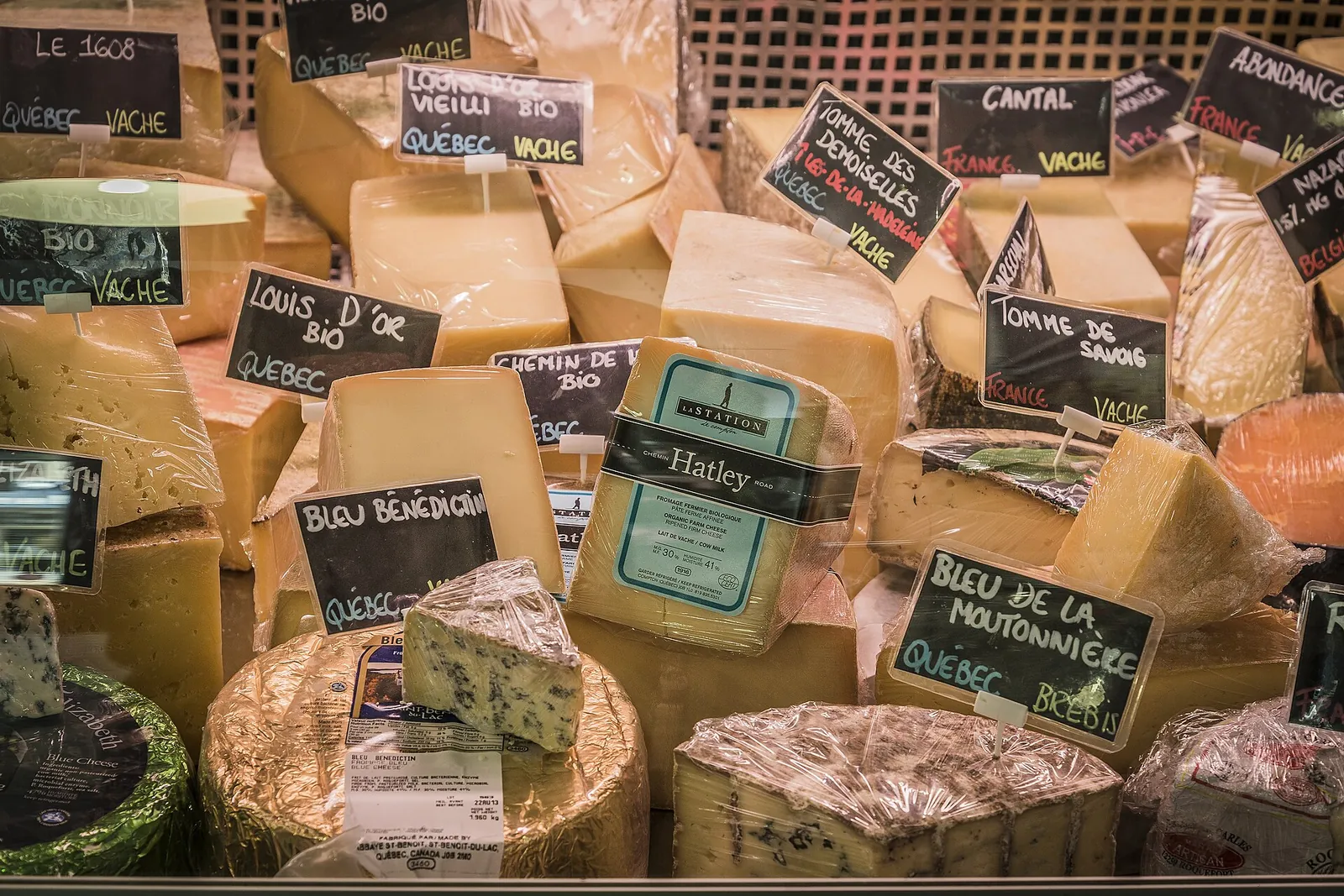
Oka, a washed-rind cheese from Quebec, is the name most often cited as the national classic.
Canada now produces over 1,050 varieties and brands of cheese, with more than half made in Quebec. A good share of that stays in Canada, so some of what follows takes a little hunting in the US.
Canadian cheese at a glance
This table of Canadian cheese picks the main styles to know.
| Cheese | Province | Milk | Style and use |
|---|---|---|---|
| Oka | Quebec | Cow | Semi-soft, washed rind, nutty |
| Cheddar | Ontario and beyond | Cow | Firm, mild to sharp, aged |
| Cheese curds | Quebec, Ontario | Cow | Fresh, squeaky, for poutine |
| Quebec artisan cheeses | Quebec | Cow, goat, sheep | Bloomy, washed, blue and farmstead |
Oka and Quebec cheese
Oka is the best known Canadian cheese outside Canada, a semi-soft washed-rind cheese with a copper-orange rind. It was created in 1893 at the Trappist Abbey of Notre-Dame du Lac in Oka, Quebec, where Brother Alphonse Juin adapted a Port-du-Salut recipe. The aroma is pungent and the flavor soft, creamy and often described as nutty and fruity. The regular version is aged about 4 weeks and the Classic about 2 months.
The monks sold the recipe to the Agropur cooperative in 1981, and production continues in Oka. Oka also comes in several forms, including a Raclette style that suits the raclette treatment of a hot, scraped slice over potatoes.
Beyond Oka, Quebec is the artisan heartland. The province has roughly 700 varieties from over 100 cheesemakers as of 2013, after a manufacturing boom from 2001 to 2008. The range includes bloomy rinds, washed rinds, blues and farmstead cheeses, so shop for the style you like rather than hunting one name. Cheesemaking in the province expanded after the Canadian-American Reciprocity Treaty of 1854 to 1866.
Canadian cheddar and Ontario cheese history
Canadian cheddar is the cheese that turned Ontario farms into an export industry. The first commercial cheese factory, called The Pioneer, opened in Norwich, Ontario in 1864 by American Harvey Farrington. After a wheat midge outbreak pushed farmers to dairy, Ontario had 200 cheese factories by 1867 and 1,242 cheddar factories by 1900. By 1904, cheddar exports reached 234 million pounds, Canada's second-largest export after timber.
Today a good aged Canadian cheddar is sharp, crumbly and sometimes studded with calcium crystals. Look for ones aged a year or more for the most flavor, and read cheddar's origin and uses for how age changes taste. Mild young cheddar is better for sandwiches and sauce.
Cheese curds and poutine
Canadian cheese curds are fresh, squeaky bits of young cheddar, eaten from the bag and served on poutine. Poutine began in central Quebec in the late 1950s, and there are rival claims: Fernand Lachance at Le Café Idéal in Warwick in 1957, and Le Roy Jucep in Drummondville in 1958.
Freshness is the whole point. Curds are best under a day old, since they lose elasticity and squeak over time. A curd stays squeaky because its proteins are still tightly bound, and the same structure lets it soften in hot gravy without dissolving. For quantities, timing and gravy, use the poutine recipe. In the US, look for curds at cheese shops, farm stands and dairies, and eat them the day you buy them. Ask the counter when the curds were made, and skip any bag that looks wet or has lost its squeak, because the texture is the reason to buy them.
What most Canadian cheese guides miss
Canadian cheese guides often stop at "Oka and poutine," but the useful point is that Canada's cheese is not one flavor. The cheddar side is British in origin and best aged. The Quebec side is French in style and best bought young and ripe, from raw or pasteurized milk depending on the maker.
The other overlooked point is the US border. Some Canadian cheeses, especially raw-milk ones, are hard to find in US shops because the FDA requires raw-milk cheeses to be aged at least 60 days before sale. Look for importers, not just the grocery aisle, and for a Quebec washed-rind or blue to stand in when Oka is out of stock.
How to enjoy Canadian cheese
Enjoying Canadian cheese works best with a plan: a slice of Oka, an aged cheddar, and a blue or bloomy rind from Quebec make a three-cheese board. Add apples and maple syrup, which suit the cheddar, plus crusty bread.
For drinks, a Canadian craft beer works with Oka, as in the beer and cheese guide, while ice wine suits a blue or a rich washed rind. Let the cheese sit out about an hour before serving.
Questions about Canadian cheese
These questions about Canadian cheese come up most.
What is Canada's most famous cheese?
Canada's most famous cheese is Oka, a semi-soft washed-rind cheese from Quebec first made by Trappist monks in 1893. Cheddar is the other contender.
Where is Canadian cheese made?
Canadian cheese is made in every province, but more than half of Canada's varieties come from Quebec, with Ontario known for cheddar.
Why are cheese curds squeaky?
Cheese curds are squeaky because they are fresh, and their tight protein structure rubs against the teeth. They lose the squeak after a day or two.
Who invented poutine?
Nobody knows for sure who invented poutine. It appeared in Quebec in the late 1950s, with Warwick and Drummondville both claiming it.
Can you buy Canadian cheese in the US?
You can buy Canadian cheese in the US, mostly cheddar and Oka at larger stores and cheese shops, but raw-milk Canadian cheeses face the 60-day aging rule.
Try Canadian cheese
To try Canadian cheese, start with a bag of fresh curds and a wedge of aged cheddar, then add an Oka when you find one. Browse cheddar for more on the style.
Sources
- Canadian cheese, Wikipedia
- Oka cheese, Wikipedia
- Poutine, Wikipedia
- 21 CFR Part 133: Cheeses and Related Cheese Products, Electronic Code of Federal Regulations