
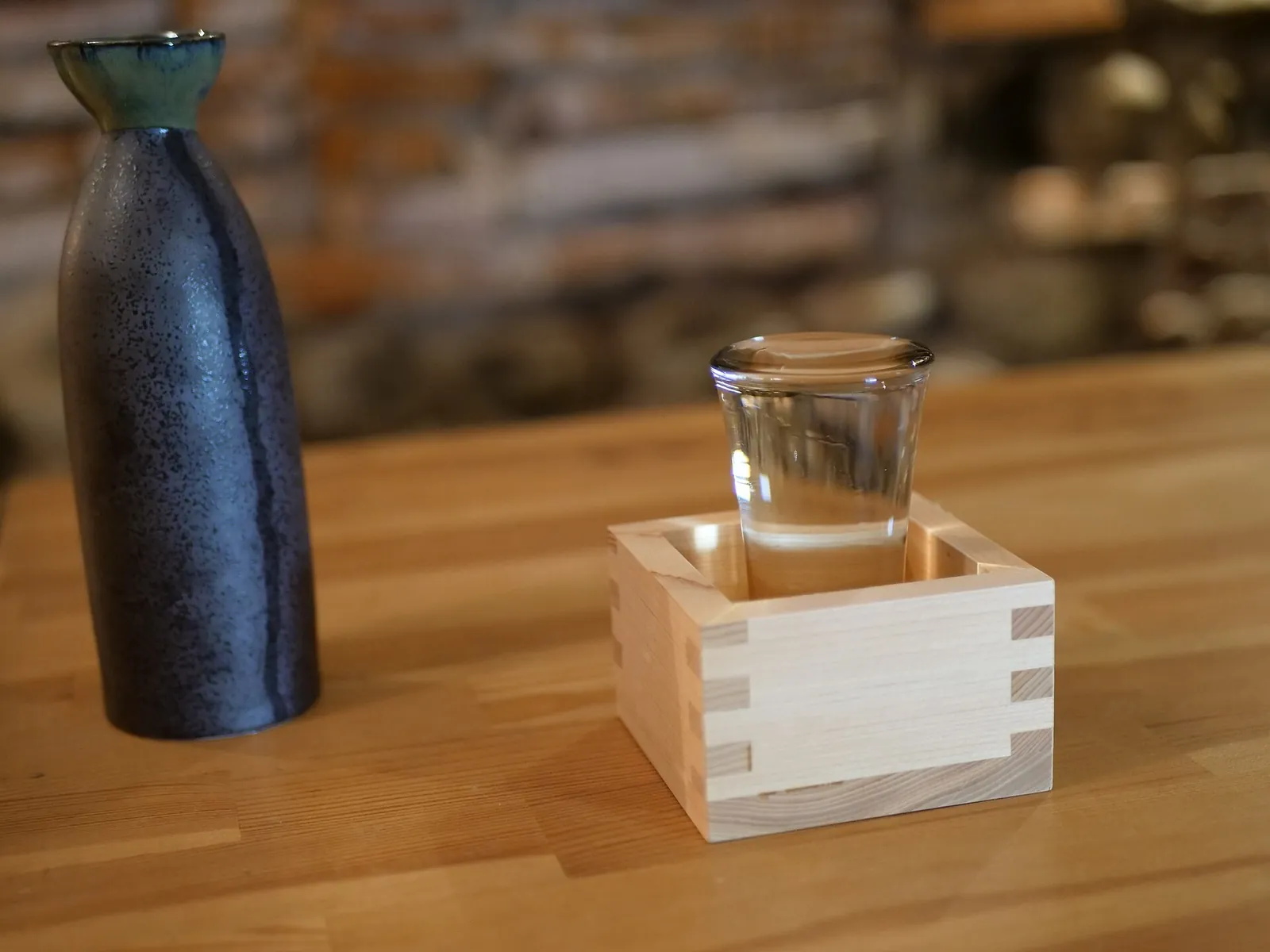
In short, a light ginjo suits creamy cheeses, a fuller junmai suits aged ones, and a rich, earthy yamahai suits the strong ones.
The reason this works starts with how sake is made. It is rice, water, koji mold and yeast, and it has no grape acid or oak. Knowing that explains why the match with cheese is gentle rather than sharp.
How sake is made and why it matters for cheese
How sake is made explains its flavor. Sake is brewed from rice by what researchers call multiple parallel fermentation: the mold Aspergillus oryzae (koji) turns rice starch into sugar while sake yeast turns that sugar into alcohol, in the same tank at the same time. Beer separates those two jobs; sake does both at once. According to the Food in Japan site, koji's enzymes include protease, which breaks proteins down into savory amino acids, and undiluted sake can reach 18 to 20 percent alcohol before brewers usually dilute it to about 15 to 16 percent.
Those savory amino acids matter. Aged cheese is also full of amino acids from protein breakdown, which is why a sake and an aged cheese taste like they belong together. This is a pairing idea, not a tasting-lab result: the savory character of both is why they bridge well.
Sake is also lower in alcohol than a cocktail and higher than most wines. That puts it near wine in strength and means you can match its weight to cheese much as you would a wine.
Sake styles and cheese at a glance
This sake and cheese table shows four styles, how they taste, and the cheeses they suit.
| Sake style | Taste | Cheese to try | Why |
|---|---|---|---|
| Ginjo or daiginjo | Fruity, floral, light | Brie, fresh goat cheese, burrata | Delicate, so it will not flatten creamy cheese |
| Junmai | Fuller, rice-forward, savory | Aged Gouda, Parmigiano-Reggiano, Comté | Savory depth meets savory aged cheese |
| Yamahai or kimoto | Earthy, rich, a little tangy | Taleggio, Gruyère, aged cheddar | Complex enough for pungent cheese |
| Nigori (cloudy) | Creamy, slightly sweet | Salty blue, Manchego | Sweetness balances salt |
A word on the labels. A ginjo is made from rice polished to at least 60 percent of the original grain, which usually gives lighter, more aromatic sake. "Junmai" means pure rice sake, with no added alcohol. Yamahai and kimoto are the traditional starter methods: a yamahai-type starter relies on lactic acid made naturally by bacteria and usually takes about a month, 2 to 4 times longer than the quick sokujo method, which takes 1 to 2 weeks. According to a sake glossary from Hiroshima, kimoto dates to the Edo period and yamahai came later, in the late Meiji era, by skipping the labor-heavy mashing step. The slower starters tend to give sake with more body and tang.
Ginjo with creamy cheese
Ginjo with creamy cheese is the safest first try. A chilled, fruity ginjo has enough aroma to be noticed but not enough weight to flatten a brie or a young chèvre. The sake's melon and pear notes are almost like fruit served beside the cheese. Burrata is another good one: burrata is creamy and mild, and a cold ginjo keeps it from feeling heavy.
Weak spot: big, funky cheeses will bury a delicate ginjo. Keep it with mild ones.
Junmai with aged cheese
Junmai with aged cheese is the classic umami-on-umami match. A junmai served cool or at room temperature has a fuller body and a rice sweetness that sits beside the crunchy, nutty flavor of 2 year aged Gouda, Parmigiano-Reggiano or Comté. Sake has no tannin or oak, so none of the bitterness that sometimes shows up when a red wine meets aged cheese. If you are tasting several, go from the lightest cheese to the strongest.
Sake with blue and washed-rind cheese
Sake with blue and washed-rind cheese is where sake is more flexible than wine. Strong cheeses such as Taleggio, whose washed rind gives it a pungent aroma, often fight with wine. A yamahai or a slightly sweet nigori has enough body and a little sweetness to meet them. For blue cheese, think salt versus sweet: a creamy blue such as Gorgonzola dolce with a sweet-leaning sake works like blue cheese with honey, which the blue cheese pairing guide covers further.
How to serve sake with cheese
How to serve sake with cheese is mostly about temperature. Serve delicate ginjo chilled, and richer junmai or yamahai cool or just slightly warm; very hot sake dulls aroma and makes cheese oily. Take cheese out of the fridge 30 minutes ahead so it is soft and flavorful. Use small cups so each pour is a sip or two. Aim for about 2 oz of cheese per person for a tasting, matching the board builder.
If someone at the table is not drinking alcohol, see cheese with non-alcoholic drinks for options that fit the same board.
Sake and cheese mistakes to avoid
Sake and cheese mistakes tend to be about balance. Big, pungent cheese with a delicate sake wipes out the sake. A very sweet sake against an already-sweet cheese is cloying. And flavored or heavily smoked cheeses can overwhelm everything in the glass. When unsure, choose a medium-strength cheese and a medium-bodied sake and adjust from there. Pairing by intensity is the framework to use.
Questions about sake and cheese
These questions about sake and cheese cover the common doubts of first-time tasters.
Does sake go with cheese?
Sake goes with cheese well, because it has no tannin and a soft, savory character that suits creamy and aged cheeses alike.
What sake goes with brie?
The sake that goes with brie is a chilled, fruity ginjo, light enough not to overwhelm the creamy cheese.
What sake goes with aged Gouda or Parmesan?
The sake that goes with aged Gouda or Parmigiano-Reggiano is a fuller junmai, whose savory body matches the aged cheese.
Should sake be served warm or cold with cheese?
Sake with cheese is best chilled for light ginjo and cool to slightly warm for richer styles, and never very hot.
Is sake a wine?
Sake is not a wine, since it is made from rice using koji and yeast in a process closer to brewing than to winemaking, though it is similar in strength to wine.
Try sake and cheese at home
For your first sake and cheese tasting, pick one ginjo and one junmai, and three cheeses: brie, aged Gouda and a creamy blue. Taste each cheese with each sake, and note which pairing wins. Then explore the broader pairing guide for more ideas.
Sources
- Metabolite profiling of the fermentation process of "yamahai-ginjo-shikomi" Japanese sake, PLOS ONE via PubMed Central
- Sake Fermentation: How Sake Is Brewed, Food in Japan
- Japanese sake: The glossary of terms, Hiroshima sake brewers guide