
Specialty low-sodium cheddar, mozzarella, Swiss and Parmesan drop to 2 to 18 mg.
The reason is how cheese is made. Salt controls moisture and microbes, so brined and aged cheeses carry the most, while fresh and Swiss-type cheeses carry less. Salt is the lever, and some makers pull it. This page is general information, not medical advice; people on a sodium limit should ask a doctor or registered dietitian for their own number.
Low sodium cheese ranked per ounce
This low sodium cheese table lists USDA's SR Legacy figures per ounce (28 g), from lowest sodium to highest, with calories alongside.
| Cheese (1 oz) | Sodium | Calories |
|---|---|---|
| Process cheddar or American, low sodium | 2 mg | 107 |
| Swiss, low sodium | 4 mg | 106 |
| Mozzarella, low sodium | 4.5 mg | 79 |
| Cottage cheese, 1%, no sodium added | 3.7 mg | 20 |
| Cheddar or Colby, low sodium | 6 mg | 113 |
| Parmesan, low sodium | 17.9 mg | 128 |
| Ricotta, part skim | 28 mg | 39 |
| Ricotta, whole milk | 31 mg | 43 |
| Swiss | 53 mg | 111 |
| Cream cheese | 89 mg | 99 |
| Goat cheese, hard | 120 mg | 128 |
| Mozzarella, whole milk | 138 mg | 85 |
| Brick | 159 mg | 105 |
| Monterey Jack | 170 mg | 106 |
| Cheddar | 185 mg | 114 |
| Feta | 323 mg | 75 |
| Blue cheese | 325 mg | 100 |
| Parmesan, hard | 333 mg | 111 |
| Roquefort | 513 mg | 105 |
Each row comes from the USDA FoodData Central cheese entry of that name. Standard 1% cottage cheese is 115 mg, so the no-sodium-added version is the one to look for.
What low sodium means on a cheese label
What low sodium means on a cheese label is set by law. Under 21 CFR 101.61, "low sodium" means 140 mg or less per reference amount customarily consumed (and, for small reference amounts, per 50 g). "Very low sodium" is 35 mg or less, and "sodium free" is under 5 mg. "Reduced sodium" or "less sodium" means at least 25 percent less than a reference food.
Reduced is not low. A reduced-sodium cheddar could still carry well over 100 mg per ounce. "Light in sodium," "lightly salted" and "no salt added" are not defined in that section as sodium claims, and no salt added carries a disclaimer: "not a sodium free food." Always check the Nutrition Facts panel.
The Daily Value for sodium is 2,300 mg under 21 CFR 101.9, so 140 mg is about 6 percent of a day.
Which cheeses are naturally low in sodium
Cheeses naturally low in sodium come from two families: Swiss-type cheeses and fresh, unbrined cheeses.
Swiss cheese
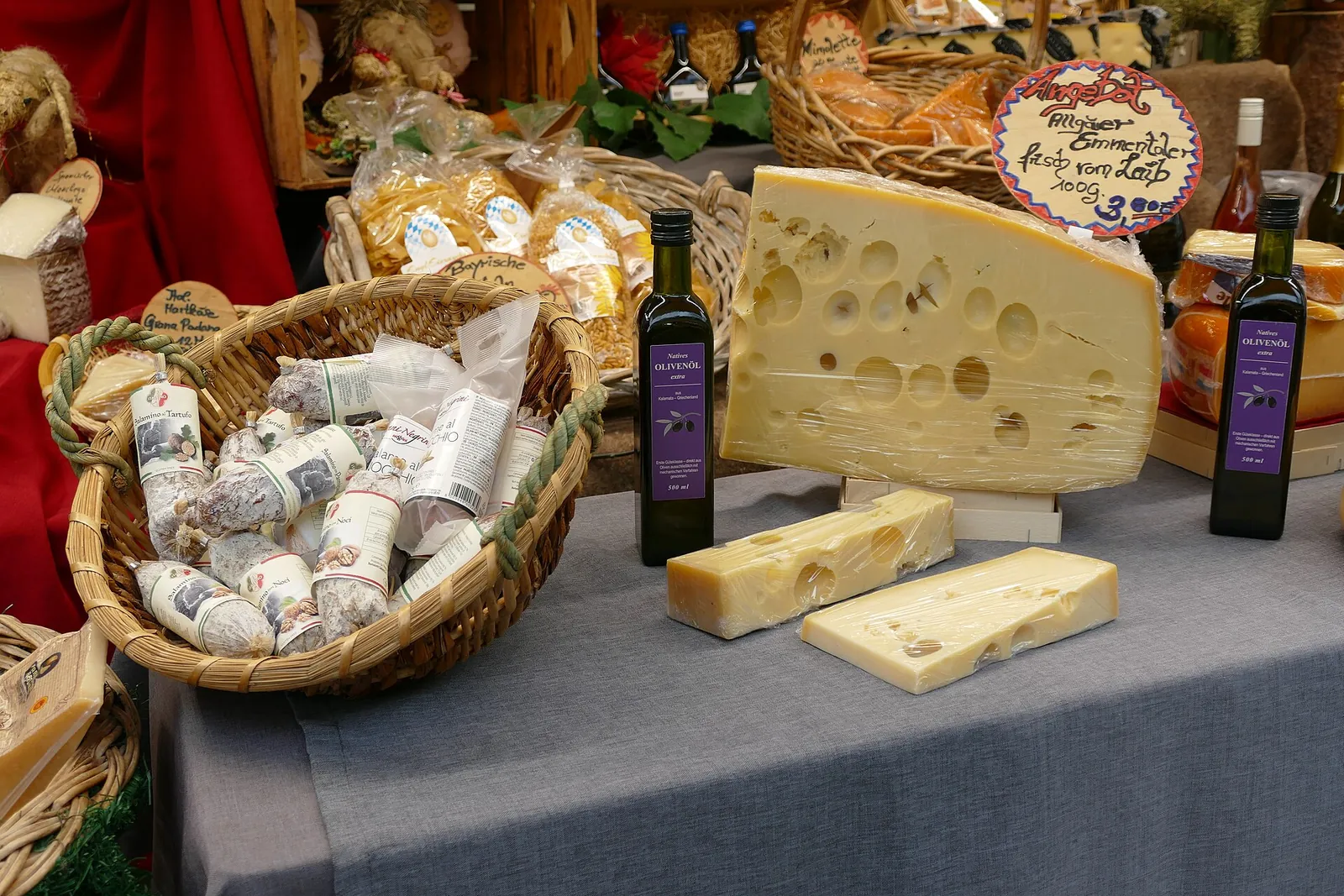
Swiss cheese is the lowest-sodium regular hard cheese in USDA's data, at 53 mg per ounce, with 7.6 grams of protein and 252 mg of calcium. It only slightly misses the "very low" line, but it still sits well under 140 mg. See Swiss vs Gruyère vs Emmental for how the family differs; do not assume every Swiss-style cheese matches this row.
Ricotta
Ricotta has 28 mg of sodium per ounce for part skim and 31 for whole milk. It is made from whey and is not brined, so little salt is added. Check tubs, since brands vary. The ricotta page covers buying it.
Fresh mozzarella and whole-milk mozzarella
Whole-milk mozzarella has 138 mg per ounce, just under the 140 mg "low" line, while part-skim low-moisture mozzarella has 189 mg. Fresh mozzarella is often kept in brine, so its label is the final word.
Cheeses to limit on a low sodium diet
Cheeses to limit on a low sodium diet are the brined, blue and cured ones. USDA lists Roquefort at 513 mg per ounce, grated Parmesan at 511, queso seco at 513, cotija at 397, feta at 323 and blue at 325. Processed American slices run 364 to 474 mg. The feta page explains why brine adds salt.
One ounce of Roquefort uses about 22 percent of the 2,300 mg Daily Value.
How to cut sodium when you eat cheese
Cutting sodium when you eat cheese is mostly about portion and choice. Guidance that holds up:
- Use less of a salty cheese. A tablespoon of grated Parmesan weighs about 5 grams, so the sodium is a small fraction of an ounce's.
- Swap by recipe. Ricotta or Swiss in a sandwich replaces cheddar or processed slices.
- Soak brined cheese. Rinsing feta or soaking it in fresh water for a while pulls out some surface salt; how much varies.
- Check the pairings. Crackers, cured meats and olives add more sodium than the cheese does.
What most low sodium cheese advice gets wrong
Most low sodium cheese advice gets three things wrong.
It names types, not products. The no-sodium-added cottage cheese has 3.7 mg per ounce, while the standard version has 115, so one type spans a factor of 30.
It confuses taste with salt. A mild cheese can be salty and a sharp one can be low; sharpness comes from age, not salt. Cheddar sits at 185 mg regardless of age in the USDA row.
It forgets the serving. A half cup of cottage cheese is about four ounces. A "low" ounce can become a high serving.
Guidance for blood pressure is in cheese and blood pressure, and ranking by overall nutrition is in the healthiest cheeses page.
Questions about low sodium cheese
These answers cover common questions about low sodium cheese.
What is the lowest sodium cheese?
The lowest sodium cheese in USDA data is a specialty low-sodium version, such as processed cheddar at 2 mg or Swiss at 4 mg per ounce. Among regular cheeses, ricotta (28 mg) and Swiss (53 mg) are the lowest.
Is Swiss cheese low in sodium?
Swiss cheese is low in sodium compared with other hard cheeses, at 53 mg per ounce in USDA data. That is under the 140 mg that FDA's low sodium claim allows.
Is mozzarella low in sodium?
Mozzarella is moderate in sodium: USDA lists whole-milk at 138 mg and part-skim at 176 mg per ounce. A low-sodium version has 4.5 mg.
Is cottage cheese low in sodium?
Cottage cheese is not low in sodium by default: USDA lists 1% at 115 mg per ounce, about 459 mg per half cup. The no-sodium-added version has 3.7 mg per ounce.
How do you reduce sodium in cheese?
To reduce sodium in cheese, use less of it, choose a low sodium type, or soak a brined cheese such as feta in fresh water.
Choosing low sodium cheese
Choosing low sodium cheese starts with the Nutrition Facts panel: look for 140 mg or less per serving, or a "no salt added" tub. For a first swap, put Swiss or ricotta where you would use feta or processed slices.
Sources
- USDA FoodData Central (SR Legacy): Cheese, cheddar (173414) and matching rows for each cheese listed, U.S. Department of Agriculture
- 21 CFR 101.61, Nutrient content claims for the sodium content of foods, Cornell Legal Information Institute
- 21 CFR 101.9, Nutrition labeling of food, Cornell Legal Information Institute