
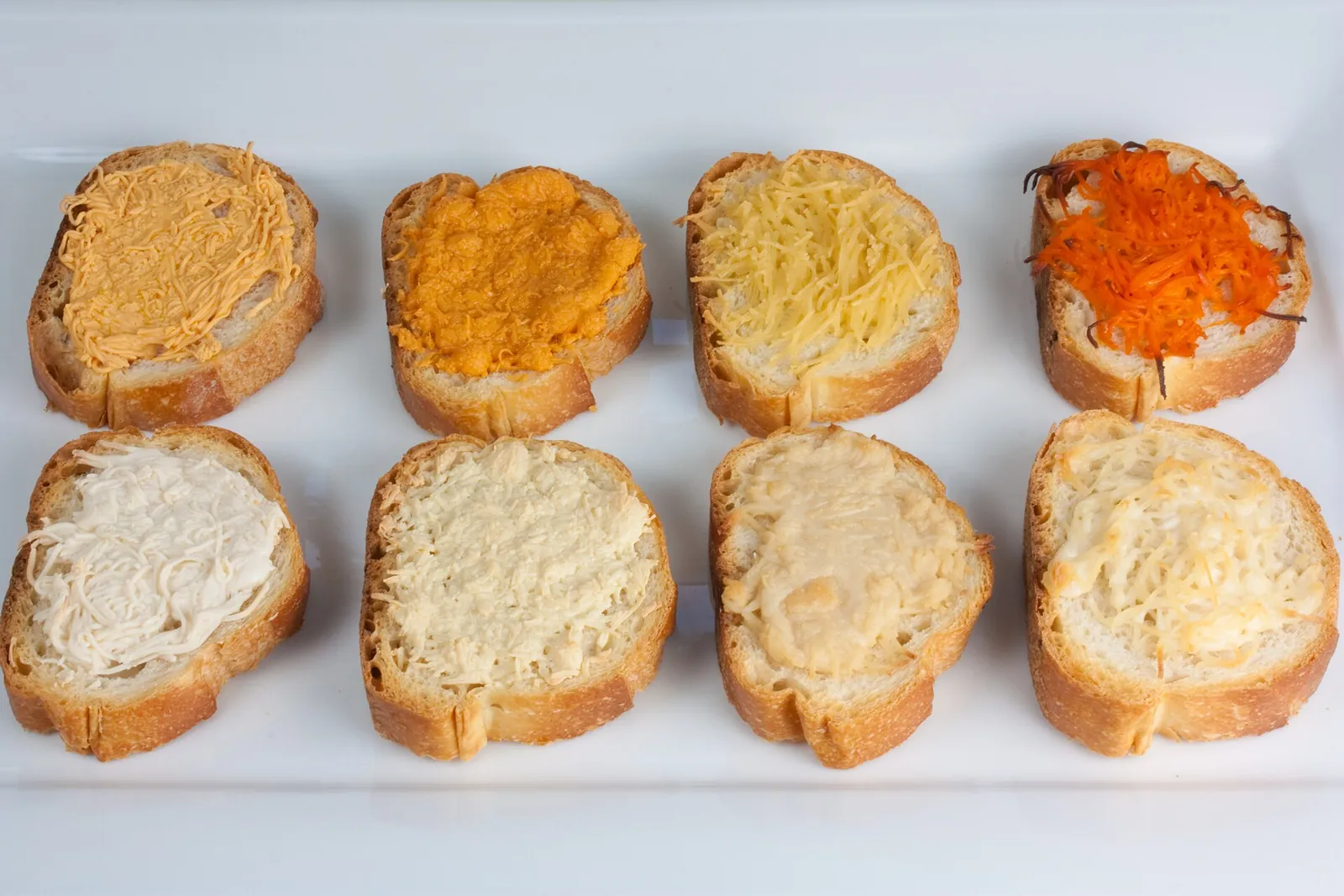
It depends on the base and on what you are swapping it for. A cultured cashew cheese with calcium and B12 added is a sound choice for someone who avoids dairy, while a coconut oil block is low in protein and high in saturated fat, much like a processed dairy cheese.
The verdict below rests on a 2022 review of 245 plant-based cheeses and on FDA Daily Values. The full numbers by base are on the vegan cheese nutrition page, and the dairy side-by-side is in vegan vs dairy cheese. This page is general information, not medical advice.
Is vegan cheese healthy for most people?
Is vegan cheese healthy for most people? The evidence says it is neither better nor worse as a class, because the products are too different. The authors of the 2022 Nutrients review found a median of 0 g of protein per serving, 57 percent of products at 4 g or more of saturated fat, and calcium fortification in only 19 percent.
No study in that review measured health outcomes in people who eat vegan cheese. It is a survey of labels, so it tells you what is in the package, not what happens to the eater.
When vegan cheese is a good swap
Vegan cheese is a good swap in three situations.
- You avoid dairy. For a milk allergy, a vegan diet or personal choice, it is the only cheese-like food on the table. People with allergies should check with their doctor or a registered dietitian.
- You choose a cashew or almond base. Their medians were 1 g and 0 g of saturated fat, against 5 g for coconut oil cheeses.
- You choose a fortified product. If a cheese lists calcium and vitamin B12 in its ingredients, it covers part of what dairy would. The review found B12 in 14 percent of products.
When vegan cheese is not a better choice
Vegan cheese is not a better choice when the goal is more protein, less saturated fat or fewer calories. A coconut oil shred has about the same saturated fat as cheddar: the Follow Your Heart cheddar-style shreds list 5 g per ounce, and USDA lists 5.3 g for cheddar.
The protein gap is larger. Cheddar has 6.5 g per ounce in the USDA table, and 75 percent of the vegan products had 2.5 g or less. If you eat cheese to help meet protein needs, a vegan swap leaves a hole you fill elsewhere.
Saturated fat in vegan cheese against your daily limit
Saturated fat in vegan cheese counts against the same limit as dairy: the FDA Daily Value is 20 g under 21 CFR 101.9. A 5 g serving is 25 percent of it, and shreds are often used by the handful.
The label shows the percent Daily Value directly, so 20 percent or more is high by FDA's own scale. If you have high cholesterol or heart disease, ask your doctor how much saturated fat fits your plan. The saturated fat in cheese page covers the dairy numbers.
Is processed vegan cheese healthy?
Is processed vegan cheese healthy? Processed here means a block or shred built from oil, water and starch, which describes most of the supermarket shelf. These products supply calories and melt, but little protein, and most do not add calcium.
Cultured nut cheeses are made more slowly and use nuts as the main ingredient, which is why they scored better in the review. They also cost more and usually come as wheels and spreads rather than shreds, as the best vegan cheeses guide shows.
What most vegan cheese health advice gets wrong
Most vegan cheese health advice reduces the question to plant-based versus dairy. Two details matter more.
The base beats the label. "Plant-based" says nothing about saturated fat. Look at the line, not the claim.
Nobody should count on it for calcium or B12 unless it says so. Both nutrients are absent from most products. The review authors call them critical for vegans because both may be marginal in vegan diets, so a vegan eating cheese alternatives needs a source elsewhere or a fortified pick.
Questions about whether vegan cheese is healthy
These answers cover the questions people ask most about whether vegan cheese is healthy.
Is vegan cheese healthier than regular cheese?
Vegan cheese is not reliably healthier than regular cheese. It has less protein and often as much saturated fat, though cashew-based types have far less saturated fat.
Is vegan cheese good for weight loss?
Vegan cheese is not shown to help with weight loss. Median calories were 70 to 100 per serving in the review, similar to a light dairy cheese, and no outcome studies were reviewed.
Is vegan cheese healthy for cholesterol?
Vegan cheese and cholesterol is a question for your doctor. Coconut oil cheeses are high in saturated fat, which is the nutrient that most labels flag, so cashew types are the lower-saturated-fat option.
Is vegan cheese healthy for lactose intolerance?
Vegan cheese is lactose free, since it has no milk, which suits lactose intolerance. Some aged dairy cheeses are also low in lactose, as the lactose in cheese guide explains.
Is vegan cheese healthy for kids?
Vegan cheese is a weaker source of protein and calcium than dairy cheese for growing kids, so a pediatrician or dietitian should guide a dairy-free plan.
Is vegan cheese healthy: the short answer
Is vegan cheese healthy enough to eat regularly? Yes, if you pick a cashew or almond base, check the saturated fat line and prefer calcium and B12 on the label. Treat a coconut oil shred as a melting ingredient rather than a nutrient source. Next step: put two labels side by side.
Sources
- Craig WJ, Mangels AR, Brothers CJ. Nutritional Profiles of Non-Dairy Plant-Based Cheese Alternatives, Nutrients, March 2022
- 21 CFR 101.9, Nutrition labeling of food (Daily Values), Cornell Legal Information Institute
- USDA FoodData Central (SR Legacy): Cheese, cheddar (173414), U.S. Department of Agriculture
- Shredded Dairy Free Cheddar-Style: ingredients and nutrition, Follow Your Heart (maker's label)