
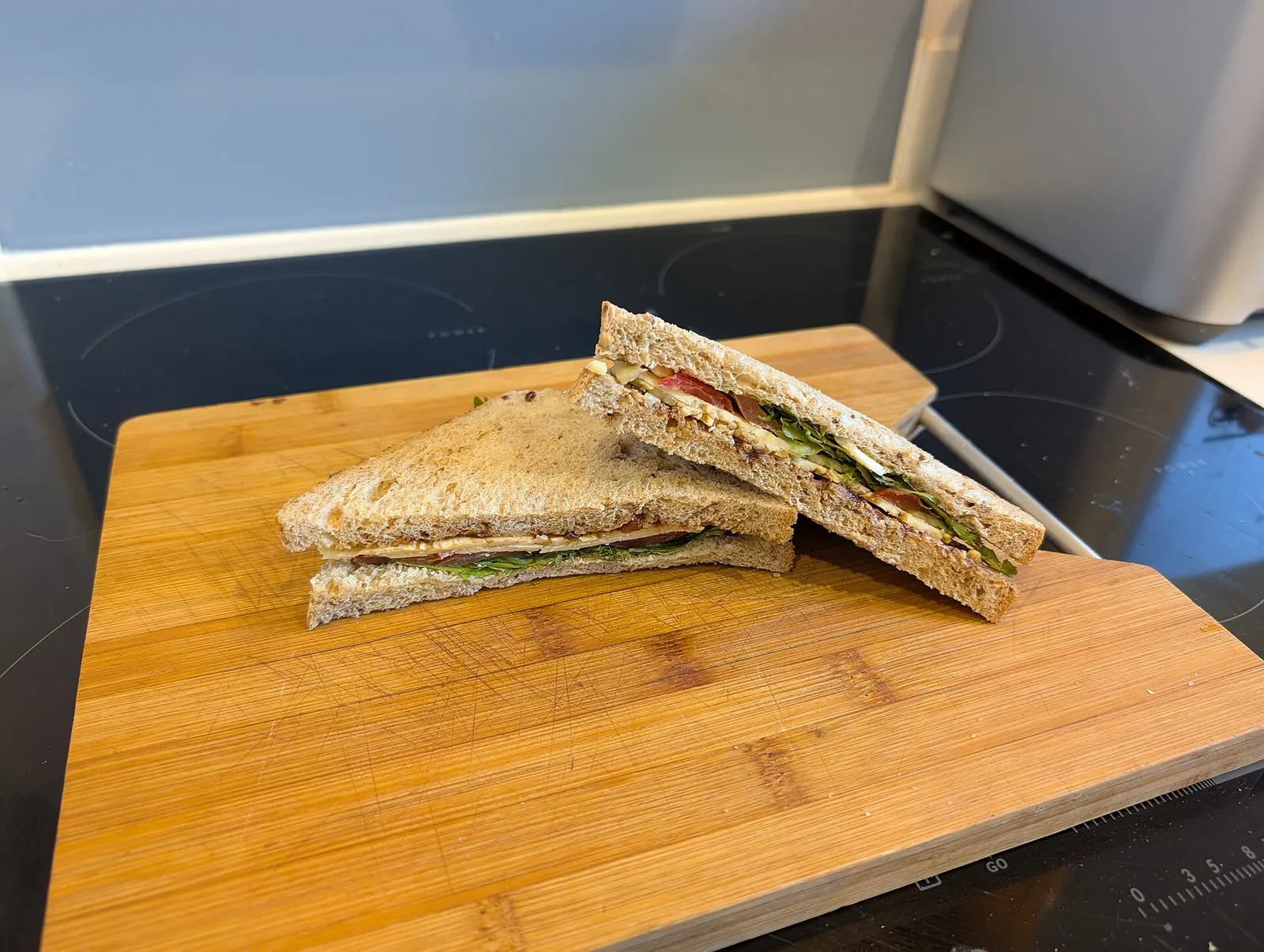
Whether it actually triggers attacks is less settled than most food lists suggest: some people with migraine report cheese as a trigger, and many do not.
A separate and better-documented problem exists for people on certain antidepressants, covered below. This page is general information, not medical advice, and anyone with frequent headaches or on prescription medicine should check with their doctor.
Why cheese is blamed for migraines
Cheese is blamed for migraines because aged cheeses contain tyramine, formed when bacteria break down the amino acid tyrosine during aging. A review in the Journal of Nutrition and Metabolism describes the proposed route: in susceptible people, tyramine may release catecholamines, causing vessels to narrow first and then dilate again, which is the kind of change linked to migraine pain.
A National Headache Foundation resource quotes a neurologist saying aged cheeses can be a very high source of tyramine, and that anything altered from its fresh state, by aging or preservation, tends to be higher. That is a mechanism, not proof, and the next section shows why.
Cheese and migraines: what the evidence shows
The evidence on cheese and migraines is observational and mixed. The 2026 systematic review and meta-analysis by Alzahrani pooled patient-reported trigger rates from 8 studies (7 with usable data), with sample sizes from 62 to 65,169 people. It found chocolate named as a trigger by 13.9 percent (95 percent confidence interval 7.0 to 21.0), caffeine by 12.0 percent (6.0 to 19.0) and cheese by 8.0 percent (3.0 to 12.0).
Two cautions apply. These are self-reported rates, and heterogeneity between studies was very high (a heterogeneity statistic above 95 percent), so the pooled number is a rough guide. The authors conclude that individual trigger identification with a headache diary should guide diet, not universal avoidance.
Put plainly: cheese is a reported trigger for a minority, and a person who notices a pattern may have a real sensitivity while most people do not.
Which cheeses have more tyramine
Which cheeses have more tyramine follows aging. The review and the NHF resource tie tyramine to aged cheese; neither source gives per-cheese tyramine measurements, so no numbers appear here. As a general rule from the mechanism, long-aged hard cheeses and blues are the likeliest to carry more, and fresh cheeses such as ricotta, cottage cheese and fresh mozzarella are the likeliest to carry less. The fresh vs aged cheese page explains what aging changes.
Tyramine is not the same as histamine, which has its own page: aged cheese and histamine intolerance.
Tyramine, MAOIs and cheese
Tyramine, MAOIs and cheese are a firm, well-documented combination. A 2012 Journal of Clinical Psychiatry update by David Flockhart reports that the first hypertensive crisis in a patient taking a monoamine oxidase inhibitor (MAOI) was a reaction to cheese. MAOIs block the enzyme that breaks tyramine down.
For someone on an irreversible MAOI, the article says a mild reaction can follow only 6 to 10 mg of tyramine and a severe one 10 to 25 mg. Aged cheeses and meats, draft beer, soy products and some yeast extracts can exceed 6 mg per serving. The restrictions apply to irreversible MAOIs; reversible inhibitors such as moclobemide, and low-dose transdermal forms, carry much less dietary risk.
If you take an MAOI, follow your prescriber's and pharmacist's food list exactly, and do not change your medicine on your own.
How to test cheese as a migraine trigger
To test cheese as a migraine trigger, use a diary rather than a guess. This is general guidance and not a treatment plan.
- Note each attack with the date, time and what you ate in the prior day.
- Record other known triggers such as sleep, stress, missed meals and alcohol, since a reported trigger can be a coincidence.
- If cheese keeps showing up, discuss a supervised trial of cutting it with your doctor.
- Keep eating other foods; there is no reason to drop all dairy.
What most migraine and cheese advice gets wrong
What most migraine and cheese advice gets wrong is treating tyramine as settled. Lists of "foods to avoid" are often copied between sites, though the review found trigger rates for cheese under 10 percent. They also mix up two different issues: the occasional migraine trigger and the MAOI interaction, which is serious.
Questions about cheese and migraines
Here are quick answers on cheese and migraines.
Can cheese cause migraines?
Cheese can cause migraines in some people, as it can be a trigger for some people. In a 2026 meta-analysis, about 8 percent of people with migraine named it as a trigger, so many people do not react.
What cheese is bad for migraines?
The cheese most often blamed for migraines is aged cheese: aged cheeses are the ones reported most, as they are higher in tyramine. Fresh cheeses are generally lower.
Is tyramine really a migraine trigger?
Tyramine as a migraine trigger is debated, and the evidence is mixed, with individual responses varying widely.
Is cheese safe on an MAOI?
Aged cheese on an MAOI is not safe to assume. Ask your prescriber, since irreversible MAOIs carry the strictest rules.
Do people with migraines have to give up cheese?
People with migraines do not have to give up cheese, since giving it up is not required by the evidence. A headache diary and your doctor's advice are the way to decide.
Cheese and migraines, the short version
Cheese and migraines is a personal question: track your attacks, watch aged cheese first, and if you take an MAOI, follow the medication's food rules exactly.
For related reading, see saturated fat in cheese for the heart side of the cheese question, and cheese and blood pressure for sodium. Both are separate topics from migraine, so they are worth a look only if they apply to you. If headaches are frequent, new or severe, a doctor visit comes before any diet change, because food is only one of several possible triggers and a dietitian can help structure a safe elimination trial without cutting out calcium and protein.
Sources
- Alzahrani H. Assessment of Chocolate, Cheese, and Caffeine as Migraine Triggers, Journal of Nutrition and Metabolism, 2026
- Flockhart DA. Dietary restrictions and drug interactions with monoamine oxidase inhibitors: an update, Journal of Clinical Psychiatry, 2012
- Tyramine Headache: Foods, Triggers, and What to Know, National Headache Foundation