
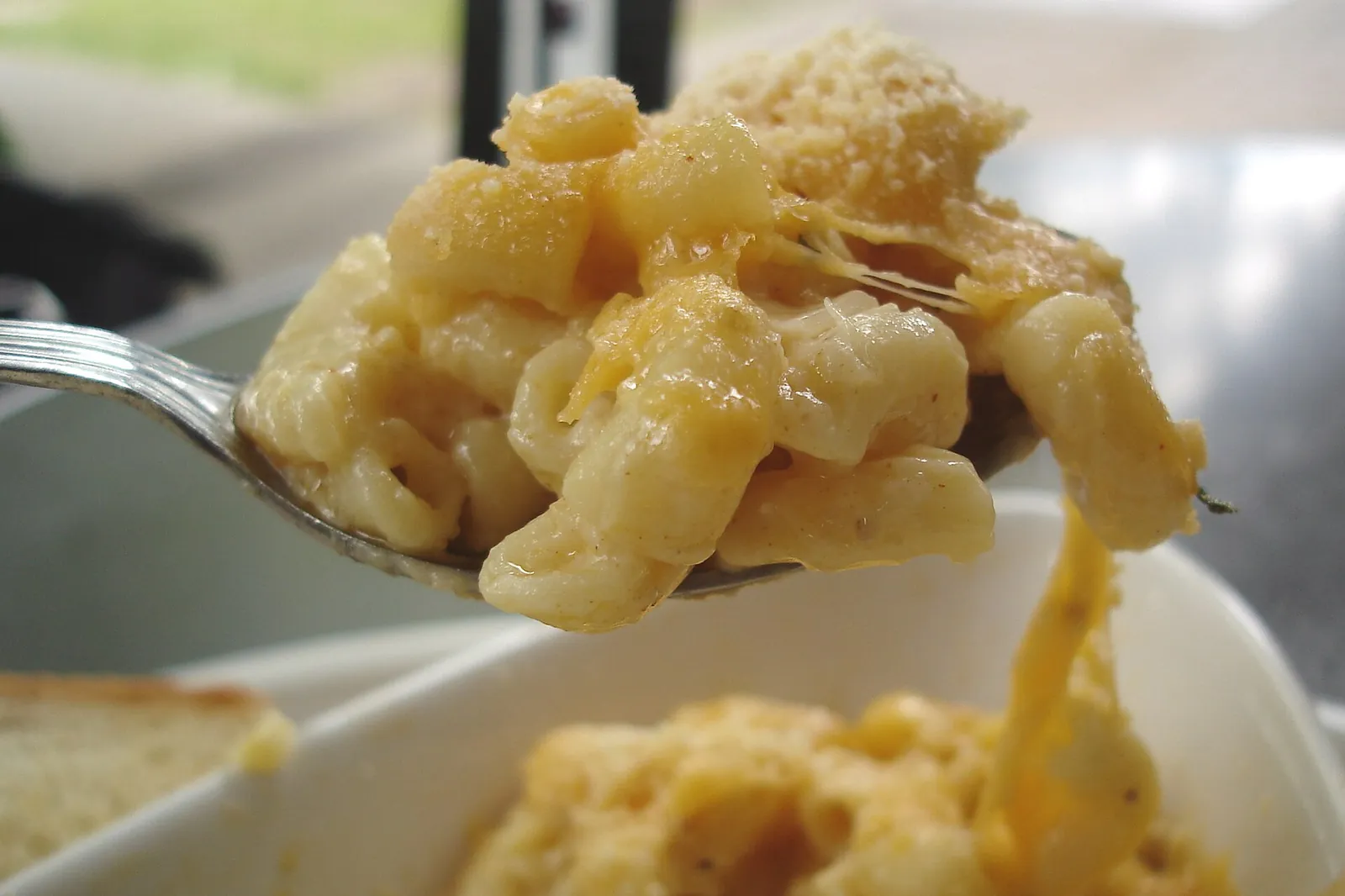
The popular claim goes further and says cheese is addictive like a drug because of casomorphins. That claim is not proven. This page is general information, not medical advice, and if eating feels out of control, talk to a doctor or dietitian.
Why cheese cravings happen
Why cheese cravings happen comes down to what cheese is. An ounce of cheddar carries about 9 grams of fat and, per USDA, 185 milligrams of sodium, and savory umami flavor comes with aged cheese. Fat, salt and savory flavor are a combination the palate rewards, and cheese packs all three into a small, melting bite.
Context adds to it. Cheese is often eaten with other high-appeal foods, such as pizza, burgers, mac and cheese and crackers, and it is easy to eat past hunger. Salt and richness keep a snack interesting for a long time. These are general food-appeal points, not findings from a single cheese study.
What casomorphin is
What casomorphin is helps explain the myth. Casomorphins are short protein fragments (peptides) released when the milk protein casein is digested. One of them, beta-casomorphin-7, is released from the A1 variant of beta-casein and, according to a 2026 review in npj Science of Food, binds mu-opioid receptors, the same receptor type opioid drugs act on. The same review says concerns persist about its adverse effects, which shows the topic is still open.
Cheese is concentrated milk protein, so articles reasoned that cheese must deliver a drug-like dose. Binding a receptor is not the same as causing addiction, though. As neuroscientist Nicole Avena put it in a Lead Stories fact check, many things bind opioid receptors without causing addiction. The same piece quotes the National Institute on Drug Abuse saying cheese is not addictive, and dietitian Jennifer Nasser saying definitive experiments have not shown any food or food component to be addictive.
What the research on addictive-like eating found
What the research on addictive-like eating found is more about processing than casein. In a 2015 study in PLOS ONE, Schulte, Avena and Gearhardt had people rate 35 foods for addictive-like eating behaviors. Processed foods higher in fat and glycemic load were rated most often, and processing was a large positive predictor. The authors call the findings preliminary.
In the paper's second study, 384 adults rated 35 foods, and pizza ranked first and cheese tenth; in the first study, with 120 students, cheese came 16th. Cheese was also the only food in that top ten the authors did not class as processed. That is a ranking of what people reported, not a measurement of dependence. It also suggests pizza's mix of refined carbohydrate, fat and cheese is more at issue than cheese alone.
How much casomorphin do you actually eat?
How much casomorphin people eat is a question researchers have only recently tried to estimate. A 2025 study in the International Journal of Food Sciences and Nutrition built what it called the first reliable estimate of dietary beta-casomorphin-7 exposure for European consumers, using simulated digestion, and said its effects remain controversial. It did not test cravings.
What this page cannot say is how much, if any, reaches the brain from a normal serving.
What most cheese craving advice gets wrong
Most cheese craving advice picks one cause, either "it's a drug" or "it's all in your head."
"Dairy crack" overstates the evidence. A lab fragment that binds a receptor is not a clinical addiction, and the reviews cited here do not claim one.
Craving is not diagnosis. Wanting cheese when you smell a pizza or feel stressed is a normal appetite response. If eating feels compulsive or distressing, a clinician can help sort that out.
Portion and pairing change the pull. Pre-portioning an ounce or two, as in the cheese per person guide, makes overeating less automatic than eating from a block. Strong aged cheeses such as Parmesan, listed by USDA at 10.1 grams of protein per ounce, are satisfying in small amounts. The high-protein cheeses page ranks more of them.
Questions about cheese cravings
These are short answers about cheese cravings.
Why do people crave cheese?
People crave cheese mostly because of fat, salt, umami and a creamy texture, which together are highly rewarding to eat. Cheese is also easy to overeat in snacks and on pizza.
Is cheese addictive like a drug?
Cheese is not shown to be addictive like a drug. Casomorphins from casein bind opioid receptors in lab terms, but the sources here did not show that they cause addiction in people.
What are casomorphins in cheese?
Casomorphins are peptides released when casein is digested. Beta-casomorphin-7 comes from the A1 beta-casein variant and has opioid-like binding properties.
Why is pizza so hard to stop eating?
Pizza ranked first among 35 foods for addictive-like eating in a 2015 study. Processed, high-fat, high-glycemic foods were rated as most problematic, and pizza combines all three.
Does craving cheese mean a nutrient deficiency?
Craving cheese does not reliably indicate a nutrient deficiency, and none of the sources here supports that claim. If cravings are new or intense, mention them to your doctor.
Closing: managing cheese cravings
For cheese cravings, the useful step is practical: pick a cheese you love, portion 1 to 2 ounces onto a plate, and eat it slowly with something fresh. The addiction story makes good headlines, but the evidence cited here points to ordinary appetite for rich, salty, savory food. See cheese and weight loss for portion planning. This page is general information, not medical advice.
Sources
- Schulte EM, Avena NM, Gearhardt AN. Which foods may be addictive? The roles of processing, fat content, and glycemic load, PLOS ONE, 2015
- Fact Check: Cheese Is NOT Proven To Be Addictive, Lead Stories, October 2022
- beta-casomorphin-7: a review of occurrence, identification, techno-functionality, and effects on human health, npj Science of Food, 2026
- Estimating beta-casomorphin-7 exposure from milk and dairy product consumption, International Journal of Food Sciences and Nutrition, 2025
- USDA FoodData Central (SR Legacy): Cheese, cheddar (173414), U.S. Department of Agriculture