
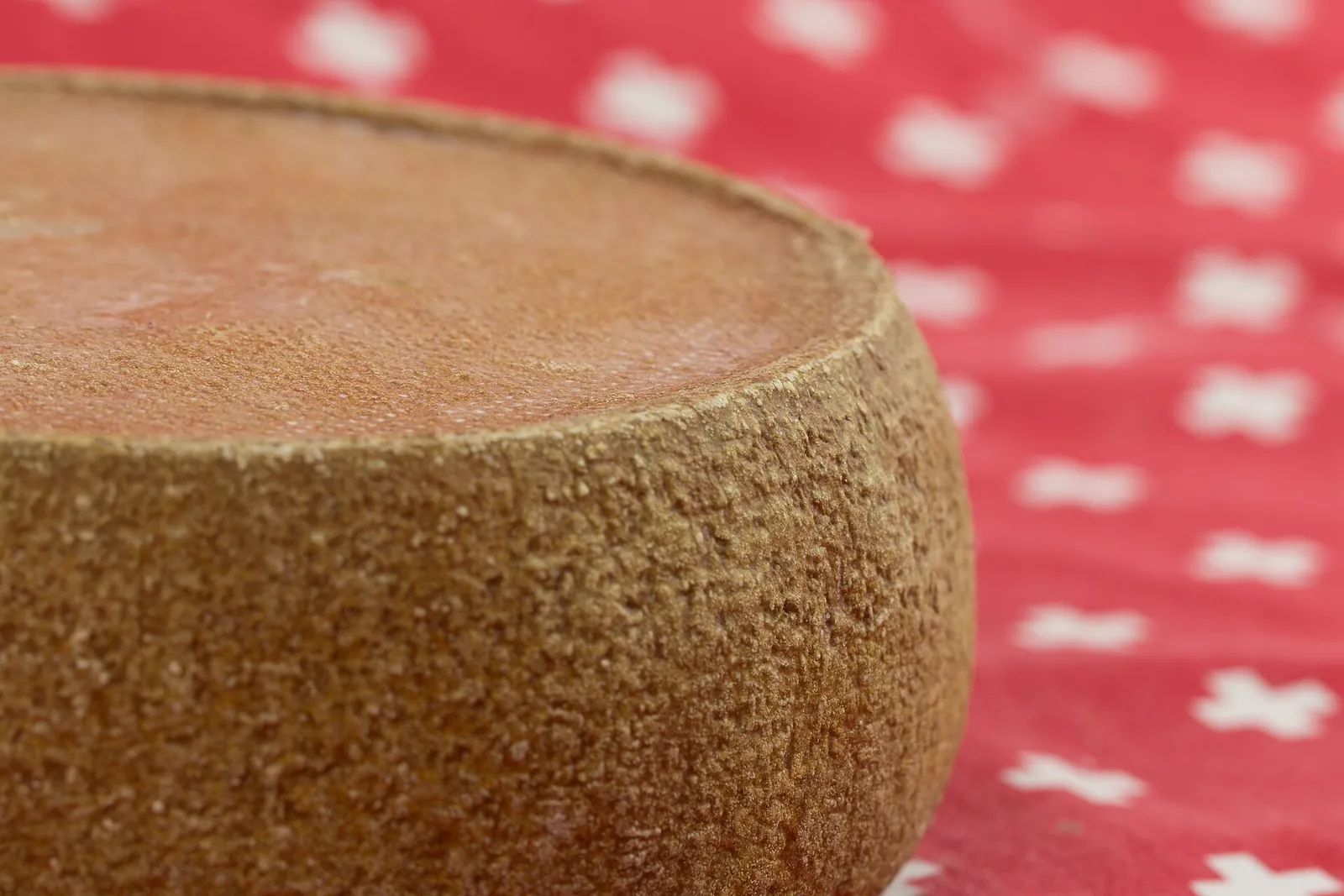
Good cheese looks fresh and right for its type, smells pleasant and characteristic, and has a texture that matches its age. Bad cheese is slimy, sour or rotten-smelling, or carries mold it was not made with.
Each type has its own normal. A washed-rind cheese smells strong by design, and a blue cheese is moldy on purpose, so the skill is knowing what is expected and spotting what is not.
Judging cheese quality by sight
Judging cheese quality by sight starts with the whole cheese and then the cut face. A good one looks fresh and well kept: even color, a healthy rind and a paste that is creamy where it should be creamy and firm where it should be firm. White crystals in an aged hard cheese are normal, as the guide to crystallized vs spoiled cheese explains.
Warning signs include a slimy or sticky surface where there should not be one, a deep yellow or brown dried edge, a cracked or sunken look, and mold in colors the cheese is not meant to have, such as pink, black or green on a cheese that should not be moldy. A wet, weeping surface on a cheese that should be dry is another flag.
Judging cheese quality by smell
Judging cheese quality by smell works best when you know the type. A good cheese smells clean and characteristic: milky, nutty, earthy, mushroomy or buttery, and pungent in an appealing way for washed-rind and blue cheeses. Smell is the first thing to trust for a soft cheese you cannot taste.
- Fresh cheeses should smell clean and milky; sour or yeasty is a bad sign.
- Bloomy-rind cheeses such as brie should smell mild and mushroomy; a sharp ammonia sting means overripe, as the ripe brie guide explains.
- Washed-rind cheeses smell strong normally; judge them by a change from their usual aroma.
- Hard cheeses smell nutty and savory.
A sour, rotten or "off" smell is a warning, and pungency alone is not. Goat cheese has its own normal: the Cheese Science Toolkit explains that the goaty note comes from fatty acids released from the milk fat, so it is character, not a defect.
Texture and taste: the other two checks
Texture and taste are the last two checks, and they confirm what the eyes and nose suggested. The texture should match the age: a young cheese is supple, an aged one firmer and sometimes crumbly. A hard, dry, cracked paste in a cheese that should be soft suggests it was kept badly. Slimy paste on a hard cheese is a bad sign.
When a cheese counter offers a taste, take it. The flavor should be clean, with no bitter, soapy or sour edge that the type does not call for. A cheese you cannot taste first is a judgment call; if the smell and look are good, buy a small piece.
Mold on cheese: what USDA says
Mold on cheese is judged by the type of cheese, and USDA's rules are specific. The USDA's Food Safety and Inspection Service page Molds on Food: Are They Dangerous? gives the following guidance, which is paraphrased here.
Hard cheese with mold
Hard cheese with mold can be saved: cut off at least 1 inch around and below the mold spot, keeping the knife out of the mold so it does not spread, then re-cover the cheese in fresh wrap. Mold generally cannot penetrate deep into a hard cheese. Cheddar, Parmesan and Gouda fit here, and the mold prevention guide covers storage that stops it recurring.
Soft cheese with mold
Soft cheese with mold should be discarded. USDA lists cottage cheese, cream cheese, Neufchatel, chevre and Bel Paese, along with crumbled, shredded and sliced cheese of all types, because foods with high moisture can be contaminated below the surface. Clemson Extension gives the same advice for soft cheese, loose-knit curd cheese such as some Colbys, and shredded or sliced cheese.
Cheeses made with mold
Cheeses made with mold are treated differently. USDA says to discard soft cheeses such as brie and Camembert if they contain molds that are not part of the manufacturing process, and to trim hard ones such as Gorgonzola and Stilton by 1 inch if surface mold appears. The white rind on a brie is intended, as the white mold guide explains.
Room temperature and storage
Room temperature and storage affect quality as much as age. Clemson Extension says to refrigerate cheese between 35 and 40°F in its original wrapping, and to throw out soft cheeses left at room temperature for more than four hours. It gives hard natural cheeses a shelf life of several months and softer ones one to three weeks after opening. See cheese paper vs plastic for wrapping.
Mistakes people make judging cheese quality
Mistakes people make judging cheese quality are mostly about expecting the wrong normal.
Treating strong smell as bad quality
A strong smell is not bad quality in washed-rind or blue cheeses. A rotten smell, not pungency, is the warning.
Trimming soft cheese like hard cheese
Trimming soft cheese like hard cheese is unsafe because moisture lets mold spread below the surface. Discard it.
Ignoring the cut face
Ignoring the cut face misses a lot. A cheese with a good rind can hide a dry, gray or chalky paste. Ask for a cut piece if you can see one.
Questions about judging cheese quality
These are the questions people ask about how to judge cheese quality.
How can you tell if cheese is good quality?
You can tell cheese is good quality when it looks fresh, smells pleasant and characteristic, and has a texture that suits its type and age. Taste confirms it.
What does bad cheese smell like?
Bad cheese smells sour, rotten or sharply of ammonia. Pungency alone is normal in washed-rind and blue cheeses.
Can you cut mold off cheese?
You can cut mold off hard cheese by removing at least 1 inch around and below the spot, per USDA. Discard soft cheese with unexpected mold.
Is white mold on cheese safe?
White mold is safe when it is the rind of a cheese like brie, but unexpected mold on a soft cheese means discard it.
How do you know if cheese has gone bad?
Cheese has gone bad when it is slimy, smells rotten or sour, or has unexpected mold, especially on soft or shredded cheese. When in doubt, throw it out.
Your cheese quality checklist
Your cheese quality checklist is simple: look at the surface and cut face, smell for a clean aroma that suits the type, check the texture for its age and taste if you can. Apply the 1-inch rule for hard cheese at home and discard soft cheese with unexpected mold.
Sources
- Molds on Food: Are They Dangerous?, USDA Food Safety and Inspection Service
- Handling of Cheese for Safety and Quality, Clemson Cooperative Extension
- Goaty flavor, Cheese Science Toolkit